THE ADVENTURE COLLECTIVE® · Independent discovery and booking for outdoor travel

Turn Narbonne into a live puzzle: use GPS and an audio guide to find market stalls, Roman road fragments and canal-side views at your own pace. This flexible 2–3 hour e-scavenger hunt blends local history with family-friendly gameplay.
Turn Narbonne into a live puzzle: use GPS and an audio guide to find market stalls, Roman road fragments and canal-side views at your own pace. This flexible 2–3 hour e-scavenger hunt blends local history with family-friendly gameplay.
You start in Les Halles, the market's iron skeleton ringing with vendors and the smell of citrus and fresh bread. The app pings; a riddle points you toward a canal lock, and the city rearranges itself into a course of clues. Streets that once carried Roman carts now test your eye for detail.
Verified experiences and guided adventures in the surrounding area.
Operated by Qula · Narbonne, Occitanie
You start in Les Halles, the market's iron skeleton ringing with vendors and the smell of citrus and fresh bread. The app pings; a riddle points you toward a canal lock, and the city rearranges itself into a course of clues. Streets that once carried Roman carts now test your eye for detail.
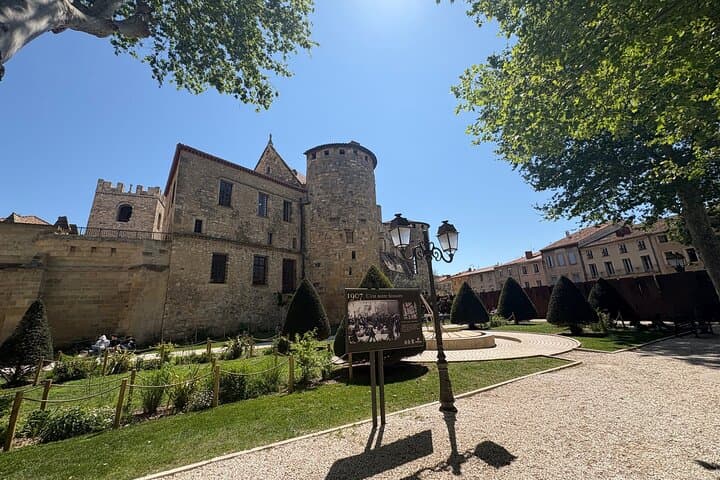
Narbonne was founded in 118 BCE as the first Roman colony in Gaul, a crossroads on the Via Domitia. The Voie Domitienne, the Gothic spire of Cathédrale Saint-Just-et-Saint-Pasteur and the lateral Canal de la Robine trace layers of trade, religion and engineering. The game uses those layers—archaeology becomes a waypoint, the market an interactive checkpoint, the canal a scenic stretch where the water dares you to pause and read the next clue.
The scavenger hunt blends a GPS-guided route with short assignments and an audio guide in several languages. Expect 2–3 hours on foot, flat cobblestones and paved towpaths; no special fitness is required but wear supportive shoes for uneven surfaces. The experience is flexible—start when you want, pause as needed, and play at your own pace. It is wheelchair and stroller friendly and family-oriented with content suited for mixed ages.
Practical tips: download the app and maps before you go, bring a charged phone and a portable battery, time your walk for morning or late afternoon to avoid market peak crowds, and finish with coffee by the canal. The hunt is as much about curiosity as it is about speed—let the city reveal its facts and small surprises.
easy.
2–3 hours.
Suitable for most fitness levels; requires light walking over mostly flat, sometimes cobbled terrain
Typical playtime is 2–3 hours, but you can start, pause and finish whenever you like—there are no strict time limits.
Yes; the route is family friendly and stroller-accessible, with content designed for mixed ages.
Audio content is offered in English, Spanish, French, German, Italian and Dutch.
No; after booking you receive instructions to start the tour at any time that suits you during operating hours.
Narbonne was founded as a Roman colony in 118 BCE and became a major hub on the Via Domitia; the city’s layout still follows that ancient grid in places.
Stick to pathways near the canal and avoid feeding wildlife; local preservation groups work to maintain the historic market and waterways for community use.
Qula operates guided outdoor trips and adventures with an emphasis on safety, stewardship, and memorable experiences.

You start in Les Halles, the market's iron skeleton ringing with vendors and the smell of citrus and fresh bread. The app pings; a riddle points you toward a canal lock, and the city rearranges itself into a course of clues. Streets that once carried Roman carts now test your eye for detail.
You start in Les Halles, the market's iron skeleton ringing with vendors and the smell of citrus and fresh bread. The app pings; a riddle points you toward a canal lock, and the city rearranges itself into a course of clues. Streets that once carried Roman carts now test your eye for detail.
Narbonne was founded in 118 BCE as the first Roman colony in Gaul, a crossroads on the Via Domitia. The Voie Domitienne, the Gothic spire of Cathédrale Saint-Just-et-Saint-Pasteur and the lateral Canal de la Robine trace layers of trade, religion and engineering. The game uses those layers—archaeology becomes a waypoint, the market an interactive checkpoint, the canal a scenic stretch where the water dares you to pause and read the next clue.
The scavenger hunt blends a GPS-guided route with short assignments and an audio guide in several languages. Expect 2–3 hours on foot, flat cobblestones and paved towpaths; no special fitness is required but wear supportive shoes for uneven surfaces. The experience is flexible—start when you want, pause as needed, and play at your own pace. It is wheelchair and stroller friendly and family-oriented with content suited for mixed ages.
Practical tips: download the app and maps before you go, bring a charged phone and a portable battery, time your walk for morning or late afternoon to avoid market peak crowds, and finish with coffee by the canal. The hunt is as much about curiosity as it is about speed—let the city reveal its facts and small surprises.