THE ADVENTURE COLLECTIVE® · Independent discovery and booking for outdoor travel

A full‑day spring tour from Osaka that threads Nara’s historic heart with its most arresting cherry blossom scenes—from the deer‑dotted lawns of Nara Park to a 300‑year‑old weeping cherry and a 1,000‑tree riverside tunnel.
A full‑day spring tour from Osaka that threads Nara’s historic heart with its most arresting cherry blossom scenes—from the deer‑dotted lawns of Nara Park to a 300‑year‑old weeping cherry and a 1,000‑tree riverside tunnel.
You step off the coach into a field of pink breath—petals drifting across the lawns as deer lift their heads and approach with casual curiosity. The day moves deliberately: wide grassy sweeps of Nara Park, the lantern-lined approach to Kasuga Taisha and the looming timber of Todai‑ji with the Great Buddha framed by spring blooms.
Verified experiences and guided adventures in the surrounding area.
Operated by TOURSTORY · Nara, Nara
You step off the coach into a field of pink breath—petals drifting across the lawns as deer lift their heads and approach with casual curiosity. The day moves deliberately: wide grassy sweeps of Nara Park, the lantern-lined approach to Kasuga Taisha and the looming timber of Todai‑ji with the Great Buddha framed by spring blooms.
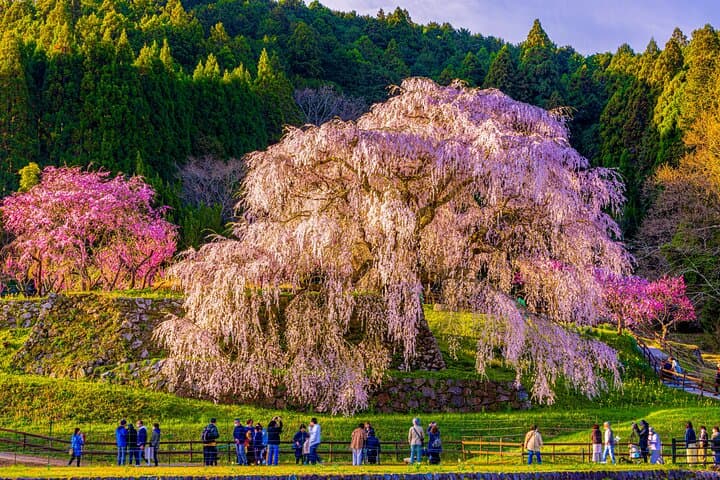
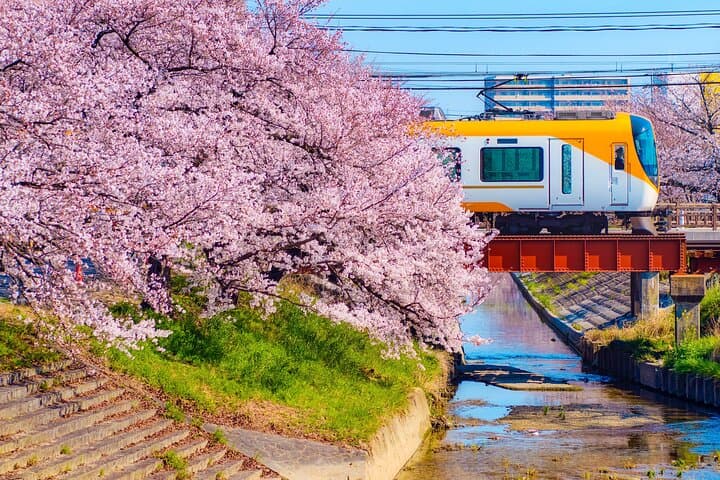
Nara’s story is visible in its stones and trees. Once Japan’s capital in the 8th century, the city preserves wooden halls and Shinto lanes set against low volcanic ridgelines; Mount Wakakusa’s gentle slope gives a clear vantage to read that landscape. Matabei‑zakura, the 300‑year‑old weeping cherry, spills like a floral waterfall over a stone wall, while Takada Senbonzakura’s riverside avenue—about 1,000 trees strong—forms a late‑afternoon tunnel of petals.
Expect a mix of short walks and flat urban strolling totaling a full day (roughly 10 hours). Historic sites often require modest admission and brief climbs or steps; volunteers and signs explain deer etiquette and shrine customs. Cherry bloom timing is weather‑dependent—peak varies annualy—so flowers may be emerging or at full carpet depending on the season.
Practical essentials: wear comfortable walking shoes and a light layer for spring breezes, carry water and cash for small temple fees and snacks, and schedule the tour on a weekday or early start to avoid peak crowds. Bring a camera and patience—this is a cultural stroll as much as a nature spectacle, where quiet lanes and roaming deer share the stage with centuries of history.
easy.
10 hours.
Light fitness sufficient—tour involves repeated short walks, some steps at temples, and standing during visits.
Bloom peaks depend on seasonal weather; the tour follows highlights regardless, but full bloom cannot be guaranteed—organizers may cancel for very poor conditions and offer refunds.
Yes—sites are generally stroller‑accessible though some temple grounds have steps; inform the operator in advance if you’ll bring a stroller.
Yes—Nara Park and major temples have public restrooms and nearby cafés or food stalls, but bring small change for purchases.
Expect multiple short walks between sites and up to an hour of walking at places like the riverside avenue; total walking is moderate within a 10‑hour day.
Nara was Japan’s capital in the 8th century; Todai‑ji’s Great Buddha and Kasuga Taisha reflect the city’s religious and political significance during that era.
Do not feed deer unauthorized food, carry out litter, and stick to marked paths; high visitor numbers during bloom can stress fragile trees and shrine grounds.
TOURSTORY operates guided outdoor trips and adventures with an emphasis on safety, stewardship, and memorable experiences.
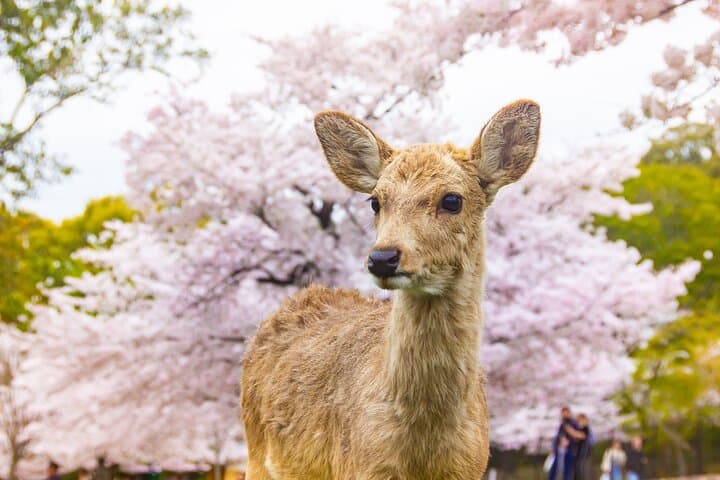
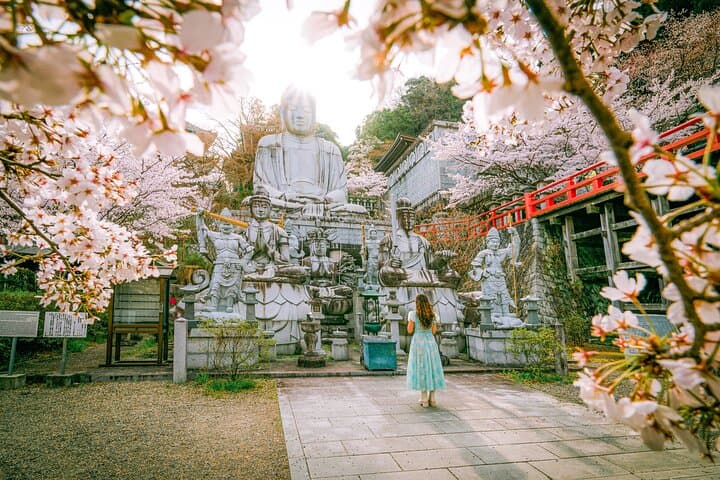
You step off the coach into a field of pink breath—petals drifting across the lawns as deer lift their heads and approach with casual curiosity. The day moves deliberately: wide grassy sweeps of Nara Park, the lantern-lined approach to Kasuga Taisha and the looming timber of Todai‑ji with the Great Buddha framed by spring blooms.
You step off the coach into a field of pink breath—petals drifting across the lawns as deer lift their heads and approach with casual curiosity. The day moves deliberately: wide grassy sweeps of Nara Park, the lantern-lined approach to Kasuga Taisha and the looming timber of Todai‑ji with the Great Buddha framed by spring blooms.
Nara’s story is visible in its stones and trees. Once Japan’s capital in the 8th century, the city preserves wooden halls and Shinto lanes set against low volcanic ridgelines; Mount Wakakusa’s gentle slope gives a clear vantage to read that landscape. Matabei‑zakura, the 300‑year‑old weeping cherry, spills like a floral waterfall over a stone wall, while Takada Senbonzakura’s riverside avenue—about 1,000 trees strong—forms a late‑afternoon tunnel of petals.
Expect a mix of short walks and flat urban strolling totaling a full day (roughly 10 hours). Historic sites often require modest admission and brief climbs or steps; volunteers and signs explain deer etiquette and shrine customs. Cherry bloom timing is weather‑dependent—peak varies annualy—so flowers may be emerging or at full carpet depending on the season.
Practical essentials: wear comfortable walking shoes and a light layer for spring breezes, carry water and cash for small temple fees and snacks, and schedule the tour on a weekday or early start to avoid peak crowds. Bring a camera and patience—this is a cultural stroll as much as a nature spectacle, where quiet lanes and roaming deer share the stage with centuries of history.