THE ADVENTURE COLLECTIVE® · Independent discovery and booking for outdoor travel

Walk from the Duomo through Spaccanapoli and artisan lanes with a local guide who brings Naples’ legends, street art, and culinary stops to life. Perfect as a compact introduction to the city’s history, ritual, and food scene.
Walk from the Duomo through Spaccanapoli and artisan lanes with a local guide who brings Naples’ legends, street art, and culinary stops to life. Perfect as a compact introduction to the city’s history, ritual, and food scene.
Morning light slices down Via Duomo and the city wakes with the clack of scooters and the smell of baking dough. The tour assembles at Naples’ cathedral, where the story of Saint Gennaro’s blood liquefaction anchors a two-hour walk through narrow lanes, muraled facades, and crowded food alleys. Guides move with purpose, translating local rhythms into context as the group threads Spaccanapoli and the artisan lanes beyond.
Verified experiences and guided adventures in the surrounding area.
Operated by Tours of Capri-Private Tours of Amalfi Coast & Pompeii · Naples, Campania
Morning light slices down Via Duomo and the city wakes with the clack of scooters and the smell of baking dough. The tour assembles at Naples’ cathedral, where the story of Saint Gennaro’s blood liquefaction anchors a two-hour walk through narrow lanes, muraled facades, and crowded food alleys. Guides move with purpose, translating local rhythms into context as the group threads Spaccanapoli and the artisan lanes beyond.
Naples wears history on its face: Greek and Roman beneath medieval streets, volcanic soils from Vesuvius shaping harbor settlements, and centuries of religious ritual woven into daily life. Expect stops at San Gregorio Armeno’s nativity workshops, the Gothic clarity of Santa Chiara, and the pop energy of Jorit’s San Gennaro mural—each site a chapter in the city’s ongoing story. Culinary culture is unmissable along Via dei Tribunali, where pizza-making is both craft and local identity.
Practicalities are straightforward. The stroll covers roughly 1.5–2 km on mostly paved but uneven cobbles; it’s an easy pace but requires stable shoes and attention to traffic. Bring small change for street food, a refillable water bottle, and a light layer for shaded alleyways. Early departures avoid the hottest hours and the largest crowds; the guide’s local knowledge adds context that maps alone don’t provide. This small-group walk is an efficient primer on Naples’ legends, material culture, and living streets—compact, sensory, and rooted in place.
easy.
2 hours.
Suitable for most fitness levels; requires standing and walking on uneven cobblestones for up to two hours.
Most interior visits are viewed from outside or brief stops; admission to paid museums or church interiors is generally not included—check the tour details or bring cash for entry.
The route is listed as stroller accessible, but cobblestones and occasional steps can make wheelchairs challenging—contact the operator for specific accessibility needs.
Tours are typically offered in English or the language specified at booking—confirm language availability when you reserve to ensure a local-language guide if needed.
Yes; the tour is family-friendly and physically easy, though younger children may prefer breaks at cafes or piazzas during the walk.
Naples grew from a Greek and Roman port into a layered medieval and Baroque metropolis; many streets follow routes established millennia ago and religious festivals like Saint Gennaro’s tradition reflect deep civic identity.
Historic churches and artisan workshops are sensitive to overtourism—support local craftsmen by buying directly from stalls and avoid touching delicate artworks; use marked paths and dispose of waste responsibly.
Tours of Capri-Private Tours of Amalfi Coast & Pompeii operates guided outdoor trips and adventures with an emphasis on safety, stewardship, and memorable experiences.
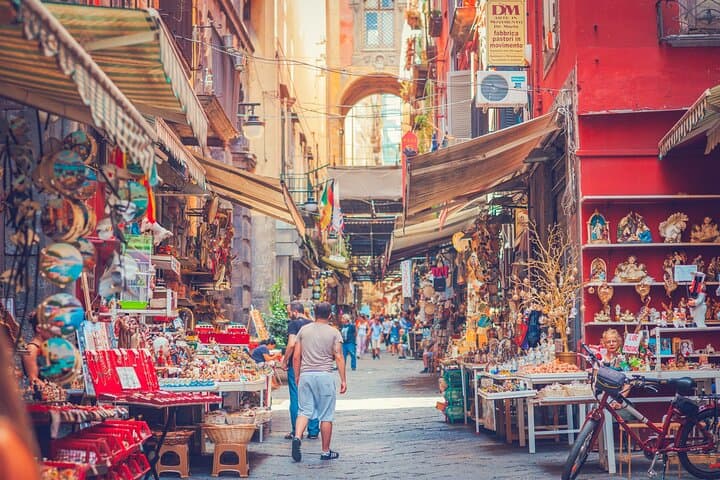


Morning light slices down Via Duomo and the city wakes with the clack of scooters and the smell of baking dough. The tour assembles at Naples’ cathedral, where the story of Saint Gennaro’s blood liquefaction anchors a two-hour walk through narrow lanes, muraled facades, and crowded food alleys. Guides move with purpose, translating local rhythms into context as the group threads Spaccanapoli and the artisan lanes beyond.
Morning light slices down Via Duomo and the city wakes with the clack of scooters and the smell of baking dough. The tour assembles at Naples’ cathedral, where the story of Saint Gennaro’s blood liquefaction anchors a two-hour walk through narrow lanes, muraled facades, and crowded food alleys. Guides move with purpose, translating local rhythms into context as the group threads Spaccanapoli and the artisan lanes beyond.
Naples wears history on its face: Greek and Roman beneath medieval streets, volcanic soils from Vesuvius shaping harbor settlements, and centuries of religious ritual woven into daily life. Expect stops at San Gregorio Armeno’s nativity workshops, the Gothic clarity of Santa Chiara, and the pop energy of Jorit’s San Gennaro mural—each site a chapter in the city’s ongoing story. Culinary culture is unmissable along Via dei Tribunali, where pizza-making is both craft and local identity.
Practicalities are straightforward. The stroll covers roughly 1.5–2 km on mostly paved but uneven cobbles; it’s an easy pace but requires stable shoes and attention to traffic. Bring small change for street food, a refillable water bottle, and a light layer for shaded alleyways. Early departures avoid the hottest hours and the largest crowds; the guide’s local knowledge adds context that maps alone don’t provide. This small-group walk is an efficient primer on Naples’ legends, material culture, and living streets—compact, sensory, and rooted in place.