THE ADVENTURE COLLECTIVE® · Independent discovery and booking for outdoor travel

Move between Naples and the Amalfi Coast with a private Mercedes transfer that includes a focused two-hour stop at Pompeii. This guide explains what you’ll see, how to prepare, and practical tips for making the most of a short archaeological visit.
Move between Naples and the Amalfi Coast with a private Mercedes transfer that includes a focused two-hour stop at Pompeii. This guide explains what you’ll see, how to prepare, and practical tips for making the most of a short archaeological visit.
You step out of a cool Mercedes minivan onto the gravel outside Pompeii’s Porta Marina, the sea air nudging the dust that still clings to the streets. For two hours you walk where Romans lived and worked, lanes cut into stone, frescoes blinking their colours, and Vesuvius watching like an impatient neighbor on the horizon.
Verified experiences and guided adventures in the surrounding area.
Operated by Sorrento Car Tours · Pompeii, Campania
You step out of a cool Mercedes minivan onto the gravel outside Pompeii’s Porta Marina, the sea air nudging the dust that still clings to the streets. For two hours you walk where Romans lived and worked, lanes cut into stone, frescoes blinking their colours, and Vesuvius watching like an impatient neighbor on the horizon.
Pompeii’s story is straightforward and brutal: buried by ash and pumice in AD 79, the site preserves street plans, villas, and public baths that reveal daily Roman life. Geologically, the ash deposit sealed organic material and left ghostly voids that became the famous plaster casts. Culturally, Pompeii sits at the edge of modern Campania, a place of layered histories from Greek traders to Bourbon rule.
Expect cobbled, uneven surfaces and open-air ruins that reflect Mediterranean light; the ruins are exposed, so wind and sun shape your visit. The transfer itself is a pragmatic option for travelers moving between Naples (or Naples Airport) and Sorrento/Amalfi, combining efficient road travel with a focused archaeological stop.
Practical guidance: arrive with sturdy walking shoes and a refillable water bottle, time your visit earlier in the day to avoid heat and afternoon traffic on the SS163, and allow the driver to handle luggage and parking. The stop is two hours—enough for highlights guided or self-directed, but not for every corner of the site. Passport or ID may be requested for ticketing; bring sun protection and a lightweight rain layer depending on season.
easy.
3–4 hours.
Suitable for most fitness levels; expect 1–2 hours of moderate walking over uneven terrain.
No—this transfer includes drop-off at the ruins and two hours free time; entrance fees are typically paid on-site unless otherwise specified.
The standard stop is two hours—enough for highlights like the Forum, House of the Faun, and some frescoed homes, but not for a full in-depth tour.
Yes—the driver handles parking and luggage storage in the vehicle while you visit the site.
A professional guide is available at the site in many bookings but confirm at booking; the transfer provides driver services and transport.
Pompeii was largely buried in ash during the AD 79 eruption of Mount Vesuvius; systematic excavations beginning in the 18th century revealed well-preserved urban layouts and artifacts.
Ongoing conservation balances public access with fragile structures—stick to marked paths, avoid touching frescoes, and follow site rules to limit wear.
Sorrento Car Tours operates guided outdoor trips and adventures with an emphasis on safety, stewardship, and memorable experiences.

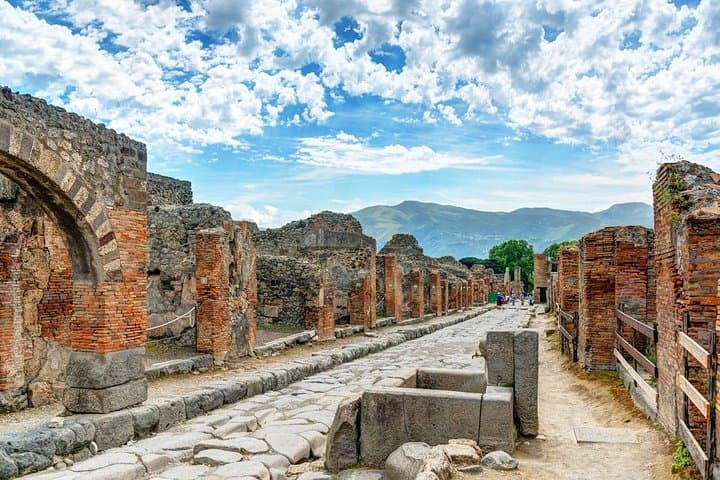


You step out of a cool Mercedes minivan onto the gravel outside Pompeii’s Porta Marina, the sea air nudging the dust that still clings to the streets. For two hours you walk where Romans lived and worked, lanes cut into stone, frescoes blinking their colours, and Vesuvius watching like an impatient neighbor on the horizon.
You step out of a cool Mercedes minivan onto the gravel outside Pompeii’s Porta Marina, the sea air nudging the dust that still clings to the streets. For two hours you walk where Romans lived and worked, lanes cut into stone, frescoes blinking their colours, and Vesuvius watching like an impatient neighbor on the horizon.
Pompeii’s story is straightforward and brutal: buried by ash and pumice in AD 79, the site preserves street plans, villas, and public baths that reveal daily Roman life. Geologically, the ash deposit sealed organic material and left ghostly voids that became the famous plaster casts. Culturally, Pompeii sits at the edge of modern Campania, a place of layered histories from Greek traders to Bourbon rule.
Expect cobbled, uneven surfaces and open-air ruins that reflect Mediterranean light; the ruins are exposed, so wind and sun shape your visit. The transfer itself is a pragmatic option for travelers moving between Naples (or Naples Airport) and Sorrento/Amalfi, combining efficient road travel with a focused archaeological stop.
Practical guidance: arrive with sturdy walking shoes and a refillable water bottle, time your visit earlier in the day to avoid heat and afternoon traffic on the SS163, and allow the driver to handle luggage and parking. The stop is two hours—enough for highlights guided or self-directed, but not for every corner of the site. Passport or ID may be requested for ticketing; bring sun protection and a lightweight rain layer depending on season.