THE ADVENTURE COLLECTIVE® · Independent discovery and booking for outdoor travel

Walk Naples’ monumental streets and then descend into the Bourbon Tunnel to discover a 19th-century military passage, wartime refuges, and layers of the city’s past. This three‑hour guided tour blends surface landmarks with underground archaeology and practical exploration tips.
Walk Naples’ monumental streets and then descend into the Bourbon Tunnel to discover a 19th-century military passage, wartime refuges, and layers of the city’s past. This three‑hour guided tour blends surface landmarks with underground archaeology and practical exploration tips.
The morning light on Naples’ bay bounces off lacquered balconies and then—if you follow the guide—slides into shadow as the tour moves from grand piazzas to the cool, echoing corridor of the Bourbon Tunnel.
Verified experiences and guided adventures in the surrounding area.
Operated by Campania Overland · Naples, Campania
The morning light on Naples’ bay bounces off lacquered balconies and then—if you follow the guide—slides into shadow as the tour moves from grand piazzas to the cool, echoing corridor of the Bourbon Tunnel.
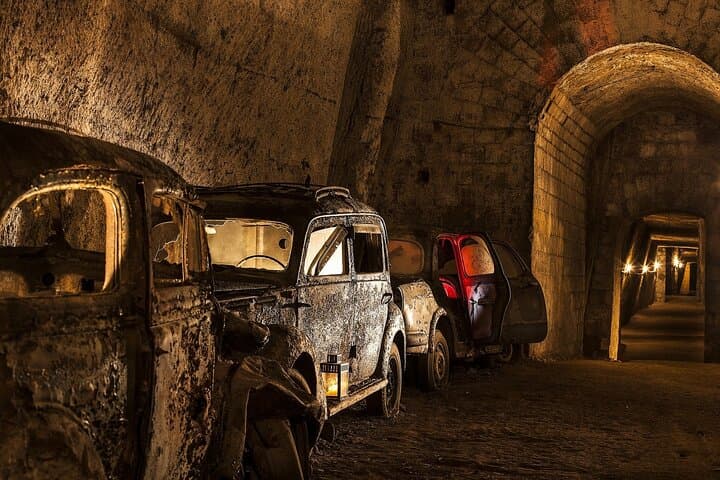
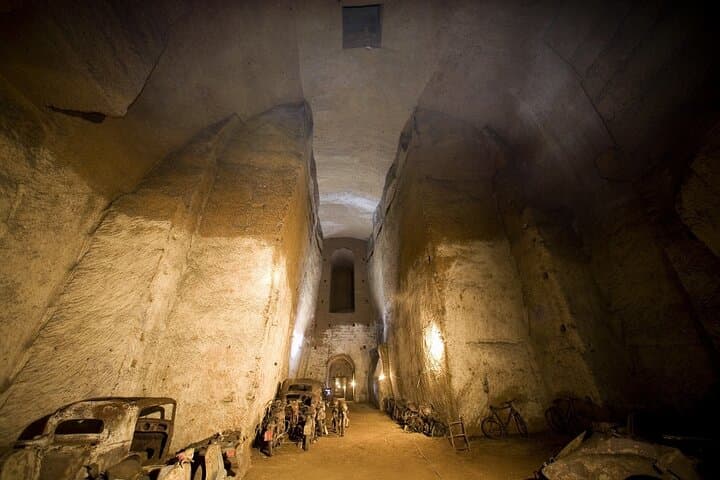
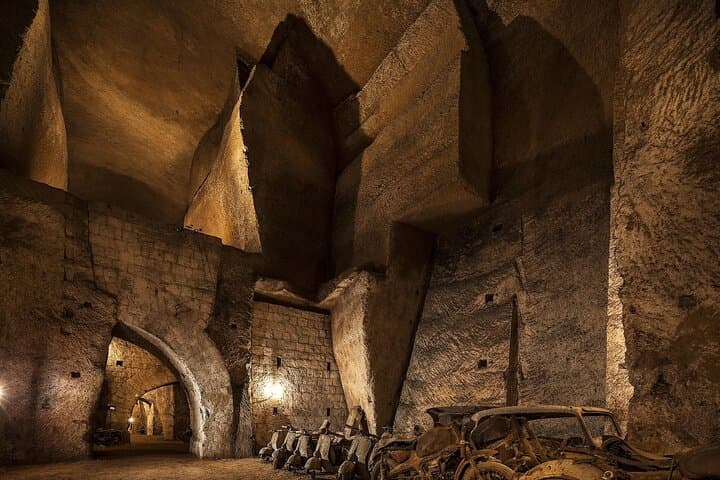
On surface streets the group will pass centuries of civic life: Baroque facades, a fortress that once watched over maritime traffic, and public squares that held proclamations and protests. Below, the tunnel built under Ferdinand II of Bourbon in the mid-19th century reveals a different city: military passages, cistern fragments from the Bolla aqueduct, and relics left by emergency teams that turned this civil-engineering feat into a wartime refuge. Geology here is urbanized limestone and tufa—easily carved rock that made Naples’ underground network practical and extensive.
Culturally the route connects the city’s ruling dynasties, its role as a Mediterranean port, and modern rediscovery since 2005, when restorations re-opened the gallery to the public. Local guides narrate anecdotes about royal strategy, archaeological finds, and how the subsoil has shaped Neapolitan identity.
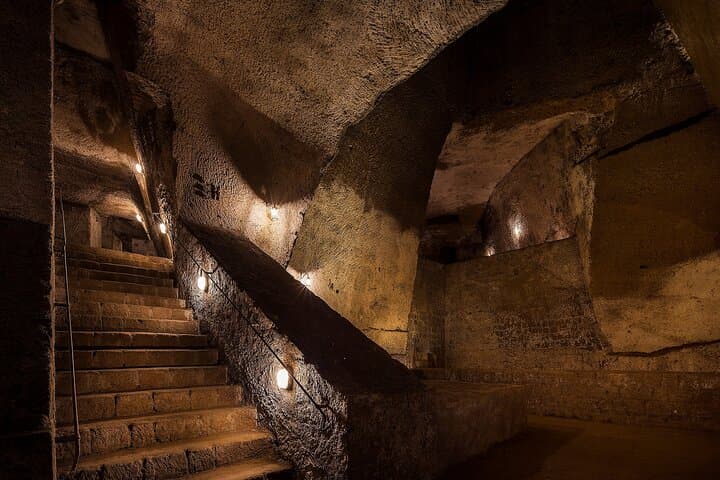
Practical guidance: the full experience lasts about three hours and includes roughly an hour underground; expect stairs, low ceilings, dim lighting, and uneven surfaces. Wear sturdy shoes, bring a light jacket (it’s cooler underground), and carry water. Photography is allowed but respect barriers and exhibits. Tours operate on set days and require moderate fitness. For travelers who like history with tactile texture—stone, rusted hardware, and narrow passages—this combination of urban walk and subterranean exploration delivers a compact, visceral view of Naples’ layered past.
moderate.
3 hours.
Moderate fitness; must be able to handle stairs, short walks on uneven surfaces, and up to an hour underground
The tour lasts about three hours and includes a guided walk through historic squares and exteriors, plus a roughly one-hour guided visit to the Bourbon Tunnel with entrance included.
The route includes stairs and uneven surfaces; it is not fully accessible for wheelchairs or people with limited mobility—contact the operator to discuss accommodations.
Guides typically speak Italian and English on scheduled departures; confirm language availability when booking or request a specific language if required.
Full refund available if you cancel at least 24 hours before departure; tours require a minimum number of participants and may be canceled if not met.
The Bourbon Tunnel was commissioned by Ferdinand II in the mid‑19th century as a discreet military route and rediscovered for public visits after extensive restoration beginning in the early 2000s.
Visitor access is managed to protect fragile underground structures; follow guide instructions and avoid touching exposed masonry or artifacts to limit deterioration.
Campania Overland operates guided outdoor trips and adventures with an emphasis on safety, stewardship, and memorable experiences.
The morning light on Naples’ bay bounces off lacquered balconies and then—if you follow the guide—slides into shadow as the tour moves from grand piazzas to the cool, echoing corridor of the Bourbon Tunnel.
The morning light on Naples’ bay bounces off lacquered balconies and then—if you follow the guide—slides into shadow as the tour moves from grand piazzas to the cool, echoing corridor of the Bourbon Tunnel.
On surface streets the group will pass centuries of civic life: Baroque facades, a fortress that once watched over maritime traffic, and public squares that held proclamations and protests. Below, the tunnel built under Ferdinand II of Bourbon in the mid-19th century reveals a different city: military passages, cistern fragments from the Bolla aqueduct, and relics left by emergency teams that turned this civil-engineering feat into a wartime refuge. Geology here is urbanized limestone and tufa—easily carved rock that made Naples’ underground network practical and extensive.
Culturally the route connects the city’s ruling dynasties, its role as a Mediterranean port, and modern rediscovery since 2005, when restorations re-opened the gallery to the public. Local guides narrate anecdotes about royal strategy, archaeological finds, and how the subsoil has shaped Neapolitan identity.
Practical guidance: the full experience lasts about three hours and includes roughly an hour underground; expect stairs, low ceilings, dim lighting, and uneven surfaces. Wear sturdy shoes, bring a light jacket (it’s cooler underground), and carry water. Photography is allowed but respect barriers and exhibits. Tours operate on set days and require moderate fitness. For travelers who like history with tactile texture—stone, rusted hardware, and narrow passages—this combination of urban walk and subterranean exploration delivers a compact, visceral view of Naples’ layered past.