THE ADVENTURE COLLECTIVE® · Independent discovery and booking for outdoor travel

A 12‑day private trekking loop from Fairy Meadows to Rakaposhi Base Camp and Hunza showcases two legendary Karakoram peaks, high alpine meadows, and cultural stops in Karimabad. Expect jeep transfers, overnight cottages, and high‑altitude camping with experienced local guides.
A 12‑day private trekking loop from Fairy Meadows to Rakaposhi Base Camp and Hunza showcases two legendary Karakoram peaks, high alpine meadows, and cultural stops in Karimabad. Expect jeep transfers, overnight cottages, and high‑altitude camping with experienced local guides.
Dawn breaks over a sweep of alpine grass and the face of Nanga Parbat looms like a pared‑back wall of stone, snow streaking its ribs as if the mountain itself is breathing hard. You arrive here after a hair‑raising jeep ride to Tato, then a steady climb onto Fairy Meadows where tents and wooden cottages sit exposed to sky and glacier light.
Verified experiences and guided adventures in the surrounding area.
Operated by Crossroads Adventure · Fairy Meadows (Raikot), Gilgit-Baltistan
Dawn breaks over a sweep of alpine grass and the face of Nanga Parbat looms like a pared‑back wall of stone, snow streaking its ribs as if the mountain itself is breathing hard. You arrive here after a hair‑raising jeep ride to Tato, then a steady climb onto Fairy Meadows where tents and wooden cottages sit exposed to sky and glacier light.
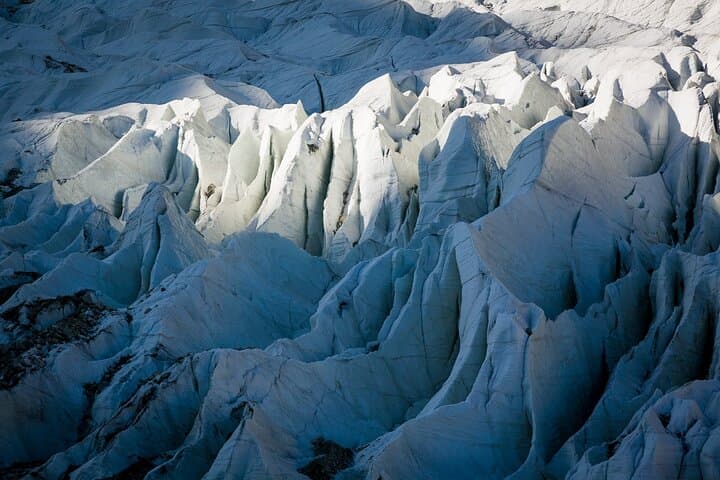
This route threads two of the Karakoram’s most dramatic shoulders: Nanga Parbat, historically infamous for its difficulty, and Rakaposhi, famed for its near‑perfect cone. Geology on show ranges from moraine‑scarred valleys to glacial streams that shape the terraces of Hunza. Culturally, the trek crosses Wakhi and Burusho communities—stone houses, flat roofs, and centuries of mountain agriculture—while Baltit and Altit forts nearby speak to Hunza’s strategic role along ancient trade corridors.
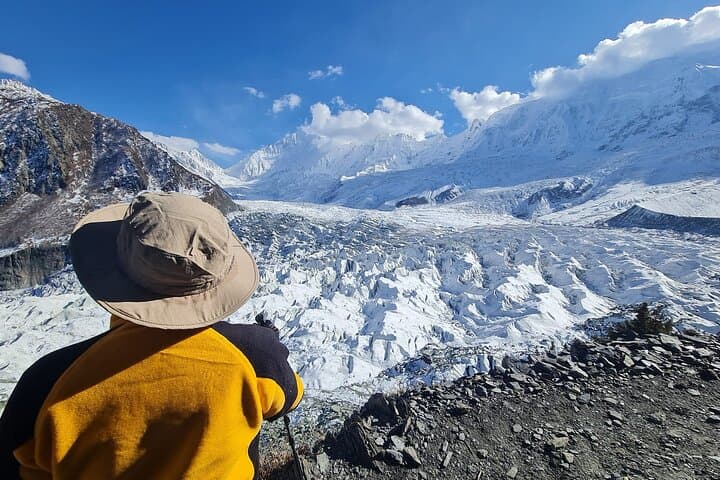
Expect long days outdoors: alpine meadows and scree on Nanga Parbat approaches, greener, orchard‑lined paths around Karimabad, and high‑altitude tents above Minapin for Rakaposhi approaches. Weather can swing quickly; wind and sun both demand respect.
Practical guidance: allow time to acclimatize, carry layered insulation and a warm sleeping bag for 3,800–4,200m nights, and use a local guide and porters for technical sections and village logistics. Hydrate, pace uphill sections, and plan for jeep transfers, basic cottage stays at Fairy Meadows, and camping at higher base camps. With reasonable fitness and good boots, this 12‑day route rewards persistent trekkers with some of Pakistan’s most uncompromising mountain views.
challenging.
10–12 days.
Best for hikers with good endurance—able to hike 6–8 hours on mixed terrain and handle long drives.
Trek days involve sustained uphill sections and high elevation (up to ~4,200m); it's challenging but non‑technical—good fitness and acclimatization are essential.
Accommodation ranges from basic wooden cottages at Fairy Meadows to tented camping at higher base camps; expect simple facilities and local meals.
Travel in Gilgit‑Baltistan typically requires local permits and coordination with guides; reputable operators handle permits and logistics.
Summer (June–September) offers the most stable weather and open roads; shoulder seasons increase avalanche and road‑closure risk.
The Hunza corridor has long been a crossroads of Silk Road routes; forts like Baltit reflect the valley’s strategic and cultural importance over centuries.
Fairy Meadows and surrounding high alpine habitats are fragile—practice pack‑in/pack‑out, respect grazing areas, and support local community‑based tourism initiatives.
Crossroads Adventure operates guided outdoor trips and adventures with an emphasis on safety, stewardship, and memorable experiences.
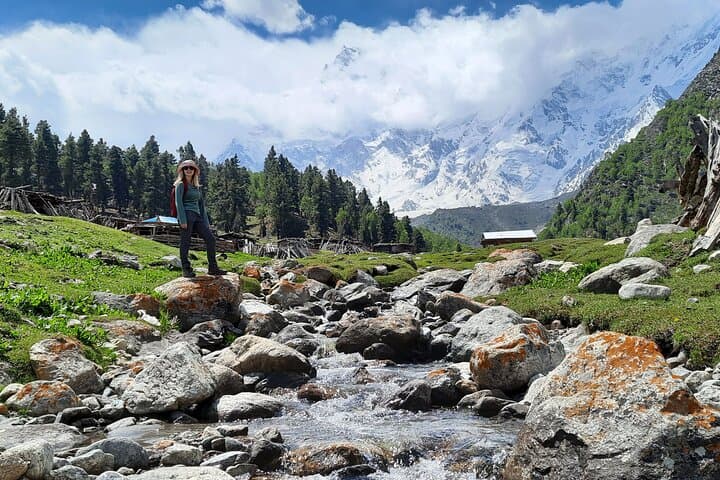
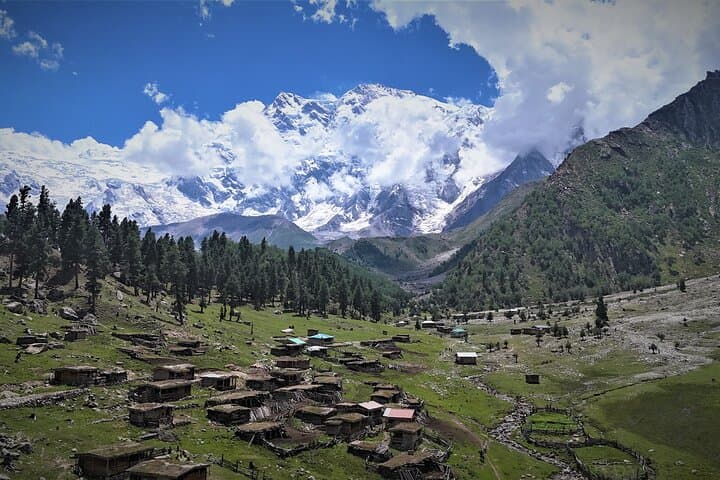
Dawn breaks over a sweep of alpine grass and the face of Nanga Parbat looms like a pared‑back wall of stone, snow streaking its ribs as if the mountain itself is breathing hard. You arrive here after a hair‑raising jeep ride to Tato, then a steady climb onto Fairy Meadows where tents and wooden cottages sit exposed to sky and glacier light.
Dawn breaks over a sweep of alpine grass and the face of Nanga Parbat looms like a pared‑back wall of stone, snow streaking its ribs as if the mountain itself is breathing hard. You arrive here after a hair‑raising jeep ride to Tato, then a steady climb onto Fairy Meadows where tents and wooden cottages sit exposed to sky and glacier light.
This route threads two of the Karakoram’s most dramatic shoulders: Nanga Parbat, historically infamous for its difficulty, and Rakaposhi, famed for its near‑perfect cone. Geology on show ranges from moraine‑scarred valleys to glacial streams that shape the terraces of Hunza. Culturally, the trek crosses Wakhi and Burusho communities—stone houses, flat roofs, and centuries of mountain agriculture—while Baltit and Altit forts nearby speak to Hunza’s strategic role along ancient trade corridors.
Expect long days outdoors: alpine meadows and scree on Nanga Parbat approaches, greener, orchard‑lined paths around Karimabad, and high‑altitude tents above Minapin for Rakaposhi approaches. Weather can swing quickly; wind and sun both demand respect.
Practical guidance: allow time to acclimatize, carry layered insulation and a warm sleeping bag for 3,800–4,200m nights, and use a local guide and porters for technical sections and village logistics. Hydrate, pace uphill sections, and plan for jeep transfers, basic cottage stays at Fairy Meadows, and camping at higher base camps. With reasonable fitness and good boots, this 12‑day route rewards persistent trekkers with some of Pakistan’s most uncompromising mountain views.