THE ADVENTURE COLLECTIVE® · Independent discovery and booking for outdoor travel

A full-day pilgrimage from Kathmandu to Namo Buddha delivers a short hillwalk, a serene stupa, and broad valley views. This practical guide explains what to expect on the road, at the monastery, and how to prepare for the day.
A full-day pilgrimage from Kathmandu to Namo Buddha delivers a short hillwalk, a serene stupa, and broad valley views. This practical guide explains what to expect on the road, at the monastery, and how to prepare for the day.
You arrive at a low cloud line over a green ridge, the road curling through rice terraces and small villages until a white stupa crowns the hill and draws you forward.
Verified experiences and guided adventures in the surrounding area.
Operated by Thirdpole Treks & Travels - Kathmandu to Pokhara/Chitwan bus tickets reservations · Namo Buddha, Kavrepalanchok
You arrive at a low cloud line over a green ridge, the road curling through rice terraces and small villages until a white stupa crowns the hill and draws you forward.
Namo Buddha sits about 40 km southeast of Kathmandu in Kavrepalanchok district; the site is most famous for a Buddhist legend in which the Bodhisattva offers his own body to a starving tigress. The hilltop stupa and monastery occupy weathered hill slopes carved from Miocene-age sediments that frame wide views of the Kathmandu Valley and, on clear days, the high Himalayan skyline.
Culturally the place functions as a living pilgrimage: monks chant, locals bring butter lamps, and the route passes small tea stalls and farm plots. The approach is short—a paved vehicle road followed by a 0.5–1 km walking spur with roughly 100–200 m of gentle elevation gain—so the experience blends an easy hillwalk with concentrated cultural immersion.
Expect stone steps, compacted dirt paths, and moments of open exposure where wind and sun have personality—brisk in the morning, mellow by afternoon. Photography is straightforward but observe quiet zones and dress modestly at the monastery. Practicalities: the tour is a full-day outing (about 8–9 hours including drive), with private transport and a licensed guide typically included; admission to certain monastery buildings may be extra.
Hydrate before the walk, bring a layer for hilltop wind, and allow time to explore Panauti or small village squares nearby if your schedule allows. The trip is accessible to most fitness levels and rewards a calm pace with sharp views and a real sense of place.
easy.
8–9 hours.
Suitable for most people who can manage short uphill walks; minimal sustained cardio required.
The site is approximately 40 km southeast of central Kathmandu; travel time is typically 1–1.5 hours each way depending on traffic and road conditions.
No—the primary walking section is short (0.5–1 km) with modest elevation gain; most visitors of average fitness manage it comfortably.
Some monastery areas may request a small donation or fee; private transport and guide are often included in day-tour packages but confirm with your operator.
Yes—the route is accessible to children and older adults, but keep mobility needs and short stair sections in mind; notify the operator of special requirements.
Namo Buddha is associated with a Buddhist story of the Bodhisattva’s selfless act toward a starving tigress; the site has been a regional pilgrimage point for centuries.
Visitors are encouraged to keep the monastery grounds clean, avoid single-use plastics, and respect quiet zones to minimize cultural and environmental impact.
Thirdpole Treks & Travels - Kathmandu to Pokhara/Chitwan bus tickets reservations operates guided outdoor trips and adventures with an emphasis on safety, stewardship, and memorable experiences.


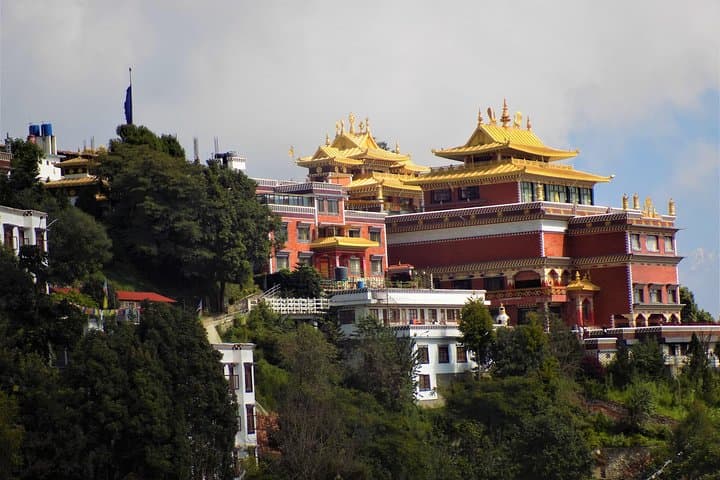

You arrive at a low cloud line over a green ridge, the road curling through rice terraces and small villages until a white stupa crowns the hill and draws you forward.
You arrive at a low cloud line over a green ridge, the road curling through rice terraces and small villages until a white stupa crowns the hill and draws you forward.
Namo Buddha sits about 40 km southeast of Kathmandu in Kavrepalanchok district; the site is most famous for a Buddhist legend in which the Bodhisattva offers his own body to a starving tigress. The hilltop stupa and monastery occupy weathered hill slopes carved from Miocene-age sediments that frame wide views of the Kathmandu Valley and, on clear days, the high Himalayan skyline.
Culturally the place functions as a living pilgrimage: monks chant, locals bring butter lamps, and the route passes small tea stalls and farm plots. The approach is short—a paved vehicle road followed by a 0.5–1 km walking spur with roughly 100–200 m of gentle elevation gain—so the experience blends an easy hillwalk with concentrated cultural immersion.
Expect stone steps, compacted dirt paths, and moments of open exposure where wind and sun have personality—brisk in the morning, mellow by afternoon. Photography is straightforward but observe quiet zones and dress modestly at the monastery. Practicalities: the tour is a full-day outing (about 8–9 hours including drive), with private transport and a licensed guide typically included; admission to certain monastery buildings may be extra.
Hydrate before the walk, bring a layer for hilltop wind, and allow time to explore Panauti or small village squares nearby if your schedule allows. The trip is accessible to most fitness levels and rewards a calm pace with sharp views and a real sense of place.