THE ADVENTURE COLLECTIVE® · Independent discovery and booking for outdoor travel

A self-guided audio road trip that threads Windhoek, the Kalahari, Sossusvlei, Swakopmund and Etosha into a six-day route. Expect long drives, gravel roads and landmark stops that cover geology, culture and wildlife at your own pace.
A self-guided audio road trip that threads Windhoek, the Kalahari, Sossusvlei, Swakopmund and Etosha into a six-day route. Expect long drives, gravel roads and landmark stops that cover geology, culture and wildlife at your own pace.
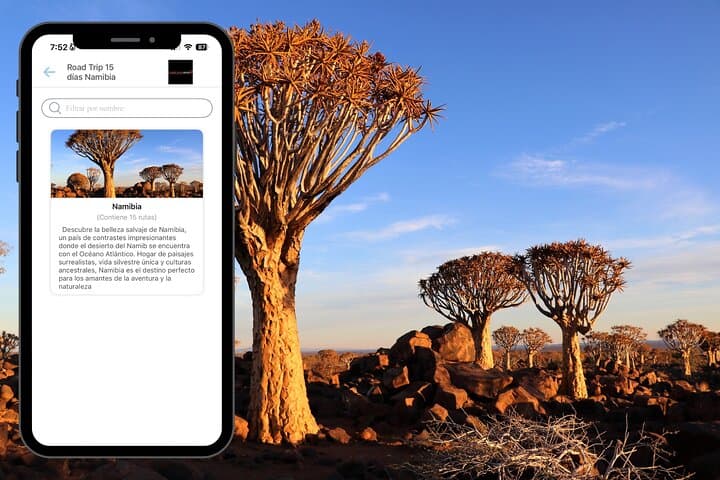
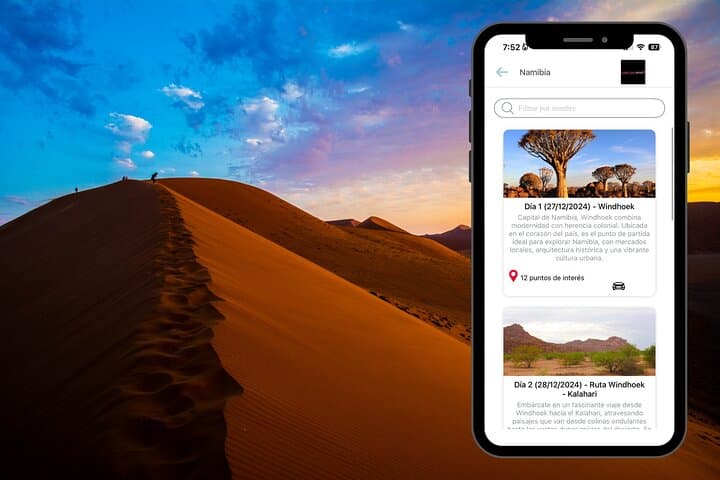
Dust lifts behind your tires as the asphalt gives way to gravel and the horizon stretches like a map with depth. Starting in Windhoek, the route threads through the red Kalahari plains, past sculptural quiver trees, over salt pans and into the towering ochre faces of Sossusvlei’s dunes, then west to the Atlantic and north to Etosha’s open waterholes. The land feels opinionated here — dunes that refuse to be tamed, wind that shapes every ridge.
Verified experiences and guided adventures in the surrounding area.
Operated by BARCELONA LANDS · Windhoek, Khomas Region
Dust lifts behind your tires as the asphalt gives way to gravel and the horizon stretches like a map with depth. Starting in Windhoek, the route threads through the red Kalahari plains, past sculptural quiver trees, over salt pans and into the towering ochre faces of Sossusvlei’s dunes, then west to the Atlantic and north to Etosha’s open waterholes. The land feels opinionated here — dunes that refuse to be tamed, wind that shapes every ridge.
Geologically Namibia is a study in extremes: the Namib is among the planet’s oldest deserts (tens of millions of years), Erongo’s granite outcrops record deep-time uplift, and Twyfelfontein’s rock engravings preserve some of southern Africa’s earliest human marks. Culturally the trip brushes Herero and Damara histories and passes communities where pastoral life still dictates rhythm.
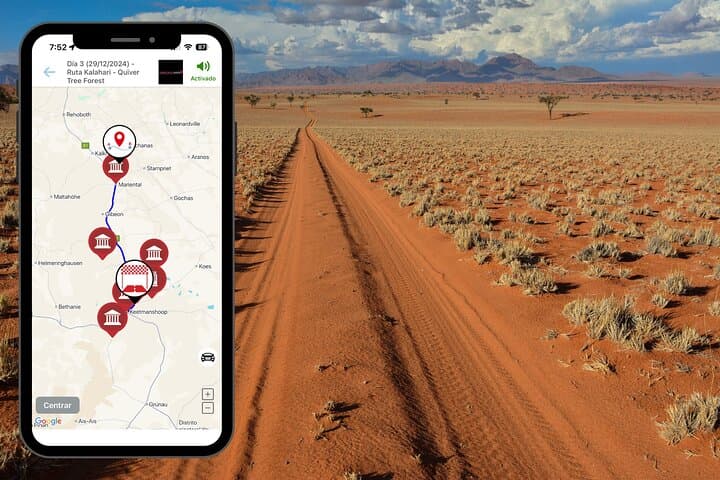
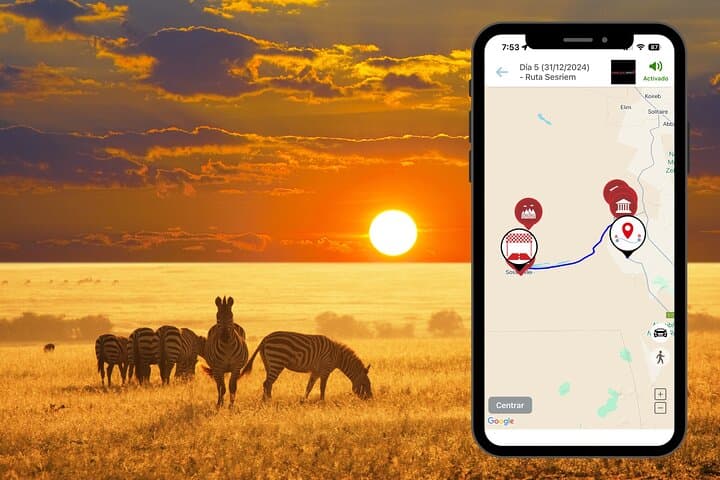
This is a self-guided audio route optimised for independent drivers: 15 routes with roughly 24–30 POIs per leg, narrated in six languages. Expect long driving days — several legs span 250–400 km on a mix of tar and graded gravel. Fuel, water and tyre care are the constants of good planning; national parks require entrance fees and early starts for wildlife viewing. The audio guide delivers turn-by-turn context and cultural background so you can drive at your own pace while learning the why behind each stop.
Practical edge: plan fuel stops, download offline maps, carry extra water and a spare tyre, and schedule dawn at Sossusvlei and dusk at Etosha for the best light and wildlife action.
moderate.
6 days (self-paced).
Suitable for all fitness levels for driving, but expect short hikes on sand and walking on uneven ground; ability to handle long car days recommended.
The guide provides narrated routes and point-of-interest commentary in multiple languages with turn-by-turn instructions; download tracks and maps to your device before leaving cell coverage.
A high-clearance vehicle is recommended; a 4x4 is useful on soft sand but many legs are passable in sturdy two-wheel-drive cars if driven carefully.
Dry winter months (May–September) offer cooler days and better wildlife visibility in Etosha; coastal fog and mild temperatures make Swakopmund pleasant year-round.
This product is an audio guide; park entrance fees and conservancy charges are paid separately at gates or managed sites.
Routes pass Twyfelfontein, where engraved panels date back thousands of years, and regions shaped by pastoralist and colonial histories that influenced settlement patterns.
Many reserves manage waterpoints and visitor pressure to protect fragile desert habitats; stick to marked roads and follow park rules to reduce impact.
BARCELONA LANDS operates guided outdoor trips and adventures with an emphasis on safety, stewardship, and memorable experiences.
Dust lifts behind your tires as the asphalt gives way to gravel and the horizon stretches like a map with depth. Starting in Windhoek, the route threads through the red Kalahari plains, past sculptural quiver trees, over salt pans and into the towering ochre faces of Sossusvlei’s dunes, then west to the Atlantic and north to Etosha’s open waterholes. The land feels opinionated here — dunes that refuse to be tamed, wind that shapes every ridge.
Dust lifts behind your tires as the asphalt gives way to gravel and the horizon stretches like a map with depth. Starting in Windhoek, the route threads through the red Kalahari plains, past sculptural quiver trees, over salt pans and into the towering ochre faces of Sossusvlei’s dunes, then west to the Atlantic and north to Etosha’s open waterholes. The land feels opinionated here — dunes that refuse to be tamed, wind that shapes every ridge.
Geologically Namibia is a study in extremes: the Namib is among the planet’s oldest deserts (tens of millions of years), Erongo’s granite outcrops record deep-time uplift, and Twyfelfontein’s rock engravings preserve some of southern Africa’s earliest human marks. Culturally the trip brushes Herero and Damara histories and passes communities where pastoral life still dictates rhythm.
This is a self-guided audio route optimised for independent drivers: 15 routes with roughly 24–30 POIs per leg, narrated in six languages. Expect long driving days — several legs span 250–400 km on a mix of tar and graded gravel. Fuel, water and tyre care are the constants of good planning; national parks require entrance fees and early starts for wildlife viewing. The audio guide delivers turn-by-turn context and cultural background so you can drive at your own pace while learning the why behind each stop.
Practical edge: plan fuel stops, download offline maps, carry extra water and a spare tyre, and schedule dawn at Sossusvlei and dusk at Etosha for the best light and wildlife action.