THE ADVENTURE COLLECTIVE® · Independent discovery and booking for outdoor travel

Explore Nairobi on a five-hour guided walk that moves from the Kenya National Archives to the Museum, through Masai Market and up to the KICC viewpoint. Expect easy urban walking, cultural insights and local shopping opportunities.
Explore Nairobi on a five-hour guided walk that moves from the Kenya National Archives to the Museum, through Masai Market and up to the KICC viewpoint. Expect easy urban walking, cultural insights and local shopping opportunities.
Morning light hits the broad avenues of central Nairobi and the city hums awake—vendors arrange textiles at the Masai open-air market while traffic threads around colonial-era facades. The tour sets off at the Kenya National Archives, where stacks of government records and photographed pages sketch Kenya’s modern story. Walking here is urban exploration with a historical backbone: pavement underfoot, the occasional breeze from the hillier ridge pushing through, and the constant pulse of a capital city eager to be read.
Verified experiences and guided adventures in the surrounding area.
Operated by MOSHEL TOURS AND TRAVEL · Nairobi, Nairobi County
Morning light hits the broad avenues of central Nairobi and the city hums awake—vendors arrange textiles at the Masai open-air market while traffic threads around colonial-era facades. The tour sets off at the Kenya National Archives, where stacks of government records and photographed pages sketch Kenya’s modern story. Walking here is urban exploration with a historical backbone: pavement underfoot, the occasional breeze from the hillier ridge pushing through, and the constant pulse of a capital city eager to be read.
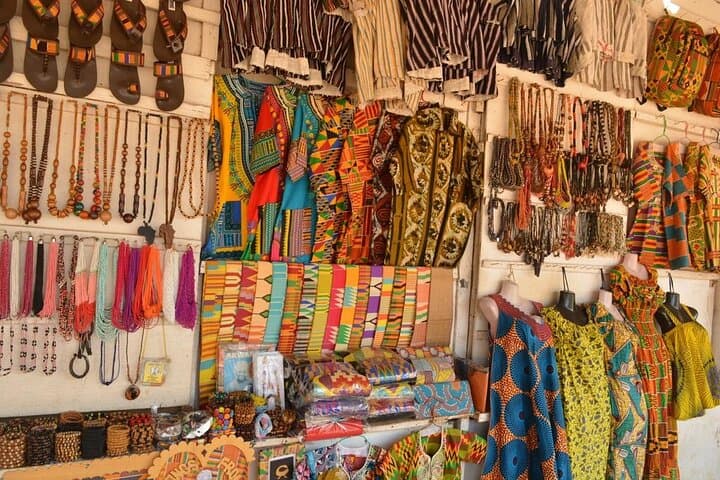
The route moves through the Kenya National Museum, whose exhibits map human origins and regional geology, then through the market where artisans sell beadwork, carvings and fabric—an immediate lesson in contemporary culture and commerce. The itinerary finishes at the KICC rooftop; from the observation deck the cityplateaus and valleys reveal the layout of a place born as a railway camp in the early 20th century and expanded around trade and governance.
Expect five hours of easy, mostly flat walking interspersed with stops for exhibits, shopping and a midday break for lunch. The guide provides local context—how colonial infrastructure shaped neighborhoods and how Nairobi’s geology (gnarled volcanic ridges and river valleys) influenced settlement patterns. Practical points: bring comfortable walking shoes, sunscreen and a small daypack for purchases. Keep water handy (a bottle is provided with the tour) and carry small cash for market goods. Photography is welcomed at most stops but observe exhibit rules inside museums. This urban walk pairs history, tangible culture and a clear city view, suited to travelers wanting grounded context before deeper Kenyan adventures.
easy.
5 hours.
Suitable for a wide range of fitness levels; requires light urban walking and standing during exhibits.
The tour runs five hours and typically starts at 8:00 AM, with a scheduled lunch break mid-route.
Admission to the main itinerary stops is included in the tour price; your ticket will specify included entries.
Yes—infants and small children can use strollers and infant seats are available; the route is rated easy for all fitness levels.
Yes—Masai Market and nearby stalls offer beadwork, textiles and carvings; bring cash in small denominations for easier purchases.
Nairobi began as a railway depot on the Uganda Railway in the late 19th/early 20th century; colonial infrastructure shaped the city’s grid and public buildings such as the Archives and Museum.
Support local artisans rather than buying mass-produced goods, minimize single-use plastics and follow museum rules to help preserve exhibits and public spaces.
MOSHEL TOURS AND TRAVEL operates guided outdoor trips and adventures with an emphasis on safety, stewardship, and memorable experiences.



Morning light hits the broad avenues of central Nairobi and the city hums awake—vendors arrange textiles at the Masai open-air market while traffic threads around colonial-era facades. The tour sets off at the Kenya National Archives, where stacks of government records and photographed pages sketch Kenya’s modern story. Walking here is urban exploration with a historical backbone: pavement underfoot, the occasional breeze from the hillier ridge pushing through, and the constant pulse of a capital city eager to be read.
Morning light hits the broad avenues of central Nairobi and the city hums awake—vendors arrange textiles at the Masai open-air market while traffic threads around colonial-era facades. The tour sets off at the Kenya National Archives, where stacks of government records and photographed pages sketch Kenya’s modern story. Walking here is urban exploration with a historical backbone: pavement underfoot, the occasional breeze from the hillier ridge pushing through, and the constant pulse of a capital city eager to be read.
The route moves through the Kenya National Museum, whose exhibits map human origins and regional geology, then through the market where artisans sell beadwork, carvings and fabric—an immediate lesson in contemporary culture and commerce. The itinerary finishes at the KICC rooftop; from the observation deck the cityplateaus and valleys reveal the layout of a place born as a railway camp in the early 20th century and expanded around trade and governance.
Expect five hours of easy, mostly flat walking interspersed with stops for exhibits, shopping and a midday break for lunch. The guide provides local context—how colonial infrastructure shaped neighborhoods and how Nairobi’s geology (gnarled volcanic ridges and river valleys) influenced settlement patterns. Practical points: bring comfortable walking shoes, sunscreen and a small daypack for purchases. Keep water handy (a bottle is provided with the tour) and carry small cash for market goods. Photography is welcomed at most stops but observe exhibit rules inside museums. This urban walk pairs history, tangible culture and a clear city view, suited to travelers wanting grounded context before deeper Kenyan adventures.