THE ADVENTURE COLLECTIVE® · Independent discovery and booking for outdoor travel

Spend a focused half-day from Nairobi visiting the Giraffe Centre to hand-feed Rothschild’s giraffes, then step into the Karen Blixen Museum to see the coffee-era farmhouse that inspired Out of Africa. This private, accessible tour combines close wildlife encounters with compact cultural history—ideal for travelers short on time.
Spend a focused half-day from Nairobi visiting the Giraffe Centre to hand-feed Rothschild’s giraffes, then step into the Karen Blixen Museum to see the coffee-era farmhouse that inspired Out of Africa. This private, accessible tour combines close wildlife encounters with compact cultural history—ideal for travelers short on time.
Dawn light spills over Nairobi's western skirts as a driver pulls out from the city and the road slips into greener suburbs. Thirty minutes later the Giraffe Centre appears—a low, fenced reserve where curious Rothschild’s giraffes lean like living cranes and accept leafy offerings from visitors. The morning smell is of dust, cut grass and distant coffee; the animals move with deliberate, patient curiosity that makes even a short visit feel expansive.
Verified experiences and guided adventures in the surrounding area.
Operated by Cedar tours and safaris · Nairobi, Nairobi County
Dawn light spills over Nairobi's western skirts as a driver pulls out from the city and the road slips into greener suburbs. Thirty minutes later the Giraffe Centre appears—a low, fenced reserve where curious Rothschild’s giraffes lean like living cranes and accept leafy offerings from visitors. The morning smell is of dust, cut grass and distant coffee; the animals move with deliberate, patient curiosity that makes even a short visit feel expansive.
The Giraffe Centre began as a conservation project to save one of Kenya’s most threatened giraffe subspecies and now doubles as an environmental-education hub. Nearby, the Karen Blixen Museum occupies a restored colonial farmhouse on the old coffee estate that inspired Out of Africa—its rooms hold period furniture, photos and coffee-era implements that map the region’s agricultural past. Geologically, you’re on the Nairobi plateau at roughly 1,700–1,800 m elevation, where volcanic soils once fed smallholder farms and shaped the green rolling slopes you’ll pass.
Practically, the private 3‑hour excursion pairs close wildlife viewing with a compact cultural stop, making it ideal for travelers short on time. Expect short walks on level paths, accessible facilities, and a chance to buy local crafts at the museum shop. Bring sun protection, a light layer for cooler highland air, and a camera with a modest zoom; the giraffes come close, but good framing helps. Morning departures avoid mid-day heat and make the animals more active. The tour’s pace is gentle, informative, and suited to families and mixed-ability groups.
easy.
2.5–3 hours.
Suitable for most fitness levels; involves brief standing and short, level walks
The private tour runs about 2.5–3 hours total, including roughly 30 minutes each way for pickup and drop-off, and one hour at each attraction.
Yes; the itinerary indicates admission to both the Giraffe Centre and the Karen Blixen Museum is included in the tour price.
Yes; the tour notes wheelchair and stroller accessibility, with level surfaces and accessible transport options available.
Yes; the experience is family-friendly—infants must sit on laps and most areas accommodate children, but always supervise around animals.
The Giraffe Centre began as a community-led conservation project to protect the threatened Rothschild’s giraffe; the Karen Blixen Museum preserves a colonial-era farmhouse tied to early 20th-century coffee farming and Scandinavian author Karen Blixen.
Both sites emphasize education: the Giraffe Centre runs community programs and captive-breeding efforts, while the museum supports local heritage preservation—visitors should minimize waste and follow staff guidance to reduce disturbance.
Cedar tours and safaris operates guided outdoor trips and adventures with an emphasis on safety, stewardship, and memorable experiences.
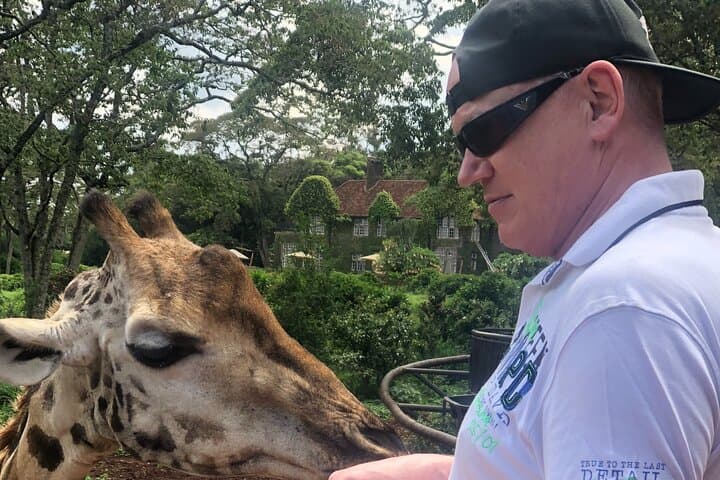
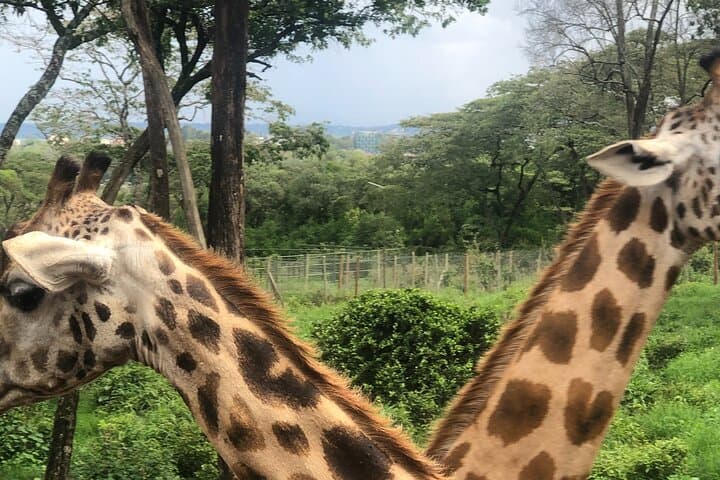
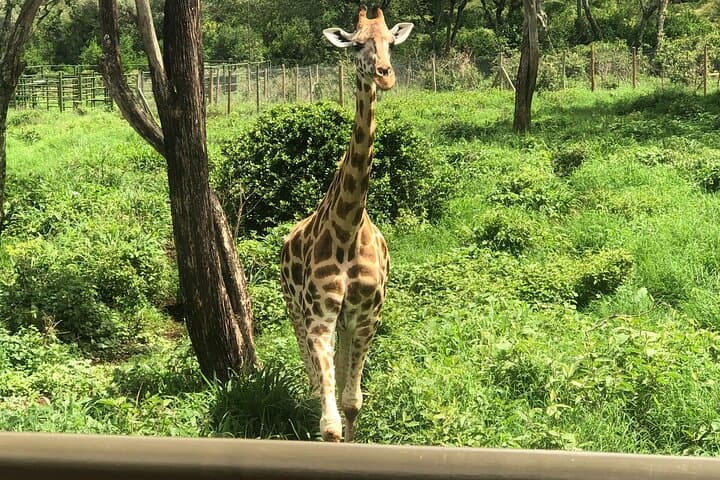
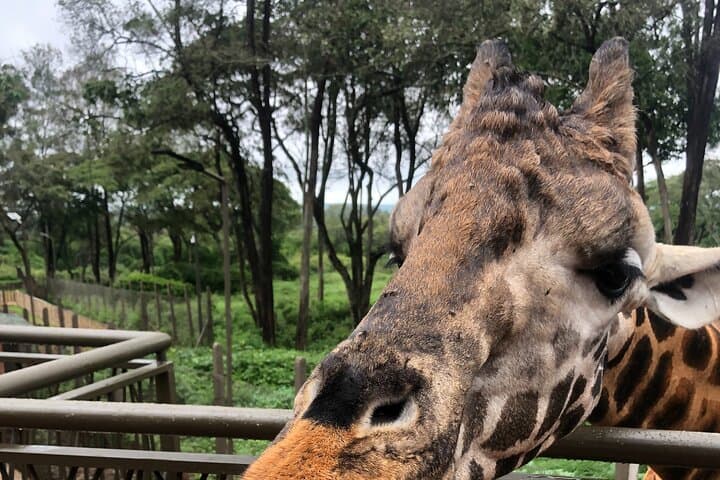
Dawn light spills over Nairobi's western skirts as a driver pulls out from the city and the road slips into greener suburbs. Thirty minutes later the Giraffe Centre appears—a low, fenced reserve where curious Rothschild’s giraffes lean like living cranes and accept leafy offerings from visitors. The morning smell is of dust, cut grass and distant coffee; the animals move with deliberate, patient curiosity that makes even a short visit feel expansive.
Dawn light spills over Nairobi's western skirts as a driver pulls out from the city and the road slips into greener suburbs. Thirty minutes later the Giraffe Centre appears—a low, fenced reserve where curious Rothschild’s giraffes lean like living cranes and accept leafy offerings from visitors. The morning smell is of dust, cut grass and distant coffee; the animals move with deliberate, patient curiosity that makes even a short visit feel expansive.
The Giraffe Centre began as a conservation project to save one of Kenya’s most threatened giraffe subspecies and now doubles as an environmental-education hub. Nearby, the Karen Blixen Museum occupies a restored colonial farmhouse on the old coffee estate that inspired Out of Africa—its rooms hold period furniture, photos and coffee-era implements that map the region’s agricultural past. Geologically, you’re on the Nairobi plateau at roughly 1,700–1,800 m elevation, where volcanic soils once fed smallholder farms and shaped the green rolling slopes you’ll pass.
Practically, the private 3‑hour excursion pairs close wildlife viewing with a compact cultural stop, making it ideal for travelers short on time. Expect short walks on level paths, accessible facilities, and a chance to buy local crafts at the museum shop. Bring sun protection, a light layer for cooler highland air, and a camera with a modest zoom; the giraffes come close, but good framing helps. Morning departures avoid mid-day heat and make the animals more active. The tour’s pace is gentle, informative, and suited to families and mixed-ability groups.