THE ADVENTURE COLLECTIVE® · Independent discovery and booking for outdoor travel

Walk Nairobi’s civic core with guides who combine certified interpretation and local knowledge. In four hours you’ll hit museums, markets and government landmarks while learning the city’s history, urban geology and where to find the best street snacks.
Walk Nairobi’s civic core with guides who combine certified interpretation and local knowledge. In four hours you’ll hit museums, markets and government landmarks while learning the city’s history, urban geology and where to find the best street snacks.
You step out onto City Hall Way and the city takes shape around you: buses hiss at the curb, hawkers call figures into the air and a colonial-era façade watches over the junction. This four-hour guided walk threads Nairobi’s civic spine — law courts, parliament, museums and markets — offering a close, human-scale view of the capital.
Verified experiences and guided adventures in the surrounding area.
Operated by Heels and Valise Tours · Nairobi, Nairobi County
You step out onto City Hall Way and the city takes shape around you: buses hiss at the curb, hawkers call figures into the air and a colonial-era façade watches over the junction. This four-hour guided walk threads Nairobi’s civic spine — law courts, parliament, museums and markets — offering a close, human-scale view of the capital.
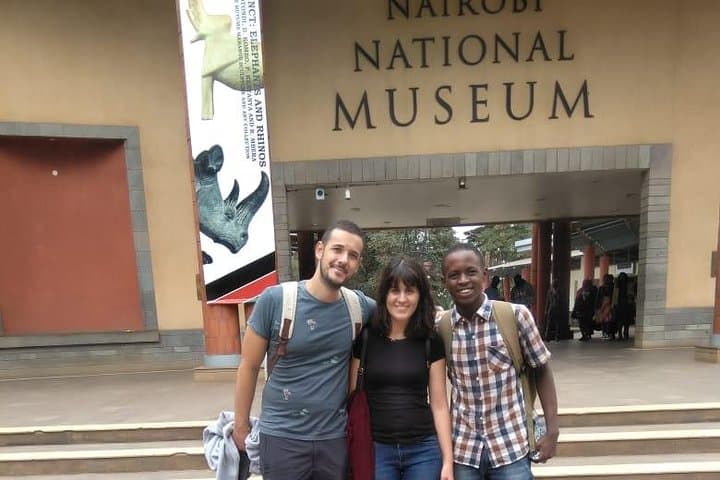
Founded as a railway depot at the turn of the 20th century, Nairobi grew fast under British administration and later as Kenya’s capital. The tour moves through layers of that history: the Nairobi Railway Station’s industrial bones, the National Museum’s exhibits on pre-colonial tribes and the Snake Park’s compact herpetology displays. Geologically, the city sits on a plateau of volcanic tuffs and red soils; you’ll notice the iron-rich dust on curbs and the pocket parks that collect stormwater after rains.
Local guides mix certified interpretation with streetwise detail — where traders source dried mangoes, which government buildings host public exhibitions, and when the market bargains are best. Expect a sensory itinerary: exhaust and spice, the metallic clack of matatus, and the bright color of woven kiondos.
Practical guidance: wear supportive walking shoes, carry a refillable water bottle, and keep valuables secure. The route is mostly flat with frequent stops and accessible options for strollers. Morning departures avoid the heaviest traffic and offer cooler temperatures for museum visits.
This tour is a compact primer on Nairobi’s urban life — part history lesson, part market crawl and part civic orientation — designed for travelers who want the city in stride rather than from the back of a bus.
easy.
4 hours.
Light walking ability; suitable for most fitness levels with frequent stops
The meeting point is outside City Walk Shoe Shop at the Hilton on City Hall Way (opposite Kencom bus station); the tour returns to this area.
Yes—strollers are accessible and infants can join but must sit on laps where seating is limited.
The tour description notes that attraction tickets may be handled separately and provided either at the start or at the attractions; confirm during booking.
Guides are local and certified; confirm language availability when booking to ensure a guide fluent in your language.
Nairobi began in 1899 as a British East Africa Railway depot and became Kenya’s capital in 1907; much of its civic architecture reflects colonial-era planning and later post-independence development.
Urban green spaces like Karura Forest and museum outreach programs are focal points for conservation; visitors can reduce impact by staying on paths and avoiding single-use plastics.
Heels and Valise Tours operates guided outdoor trips and adventures with an emphasis on safety, stewardship, and memorable experiences.


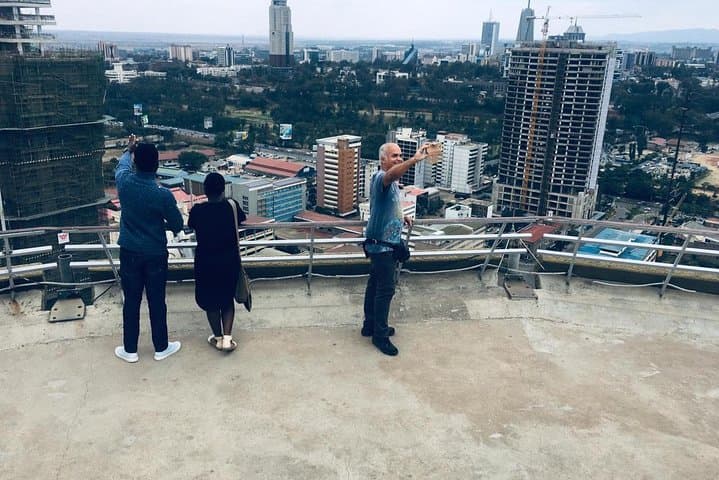
You step out onto City Hall Way and the city takes shape around you: buses hiss at the curb, hawkers call figures into the air and a colonial-era façade watches over the junction. This four-hour guided walk threads Nairobi’s civic spine — law courts, parliament, museums and markets — offering a close, human-scale view of the capital.
You step out onto City Hall Way and the city takes shape around you: buses hiss at the curb, hawkers call figures into the air and a colonial-era façade watches over the junction. This four-hour guided walk threads Nairobi’s civic spine — law courts, parliament, museums and markets — offering a close, human-scale view of the capital.
Founded as a railway depot at the turn of the 20th century, Nairobi grew fast under British administration and later as Kenya’s capital. The tour moves through layers of that history: the Nairobi Railway Station’s industrial bones, the National Museum’s exhibits on pre-colonial tribes and the Snake Park’s compact herpetology displays. Geologically, the city sits on a plateau of volcanic tuffs and red soils; you’ll notice the iron-rich dust on curbs and the pocket parks that collect stormwater after rains.
Local guides mix certified interpretation with streetwise detail — where traders source dried mangoes, which government buildings host public exhibitions, and when the market bargains are best. Expect a sensory itinerary: exhaust and spice, the metallic clack of matatus, and the bright color of woven kiondos.
Practical guidance: wear supportive walking shoes, carry a refillable water bottle, and keep valuables secure. The route is mostly flat with frequent stops and accessible options for strollers. Morning departures avoid the heaviest traffic and offer cooler temperatures for museum visits.
This tour is a compact primer on Nairobi’s urban life — part history lesson, part market crawl and part civic orientation — designed for travelers who want the city in stride rather than from the back of a bus.