THE ADVENTURE COLLECTIVE® · Independent discovery and booking for outdoor travel

Spend four hours moving through Nagasaki’s best cherry blossom spots with an English-speaking guide. Enjoy a bento under blooming sakura while learning hanami customs, local history, and the city’s coastal views.
Spend four hours moving through Nagasaki’s best cherry blossom spots with an English-speaking guide. Enjoy a bento under blooming sakura while learning hanami customs, local history, and the city’s coastal views.
Petals tumble like slow confetti across a hilltop overlooking Nagasaki’s harbor — lanterns warm the slopes as evening approaches and the scent of spring hangs in the air.
Verified experiences and guided adventures in the surrounding area.
Operated by H.I.S.Co., Ltd. · Nagasaki, Nagasaki Prefecture
Petals tumble like slow confetti across a hilltop overlooking Nagasaki’s harbor — lanterns warm the slopes as evening approaches and the scent of spring hangs in the air.
This guided hanami experience moves through one of the city’s top sakura sites (Tateyama Park, Kazagashira Park, or Nishiyama Dam Karyu Park), chosen that day for peak bloom and crowd conditions. The route traces Nagasaki’s folded landscape: steep ridgelines, shallow valleys and an observation deck that frames ships moving in and out of the port. Geologically the city sits where coastal terraces meet volcanic-era hills, which lends these parks their layered slopes and concentrated cherry stands.
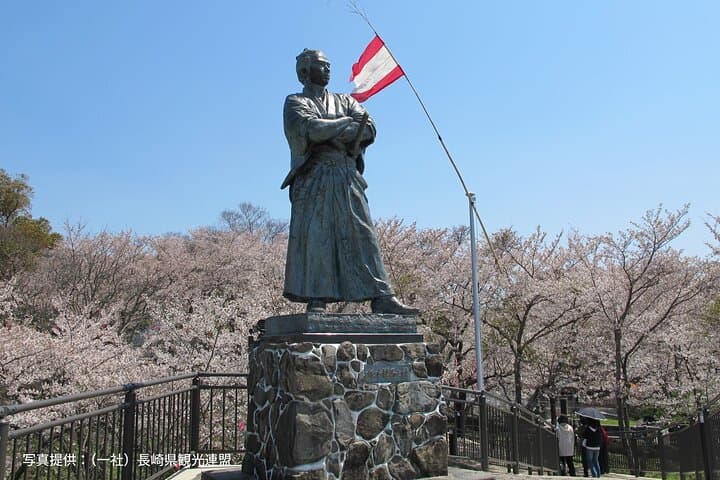
Hanami is more than a picnic here — it’s a social ritual with roots in Heian-era Japan and renewed meaning in Nagasaki, a port city shaped by centuries of foreign trade and local resilience. Guides explain seasonal customs, the significance of lantern illumination during festivals, and local touches like bento etiquette and neighborhood viewpoints tied to historical figures such as Sakamoto Ryoma.
Practical details are straightforward: the four-hour tour meets at Nagasaki Station and uses public transit like a local. Expect light-to-moderate walking on paved paths and grassy slopes; comfortable shoes, sun and rain protection, and a small pack keep the experience easy. Bring water and a lightweight jacket for coastal breezes. Inform the operator of food allergies ahead of time to adjust the supplied bento. For photographers, early morning or late afternoon light and the observation deck yield the quietest, most dramatic frames.
easy.
4 hours.
Suitable for most fitness levels; requires light to moderate walking and short stair climbs.
The guide selects one site—Tateyama Park, Kazagashira Park, or Nishiyama Dam Karyu Park—based on bloom timing, weather, and crowd levels the day of your tour.
Yes; the activity is rated easy and designed for families and small groups, but it includes some walking and short slopes.
The tour proceeds in light rain with umbrellas or raincoats; severe weather may lead to cancellation with refund options per the operator’s policy.
Yes; a Japanese bento and drink are provided and the tour fee covers local public transport used during the tour.
Hanami has imperial roots and evolved into a communal spring ritual; Nagasaki’s parks sit on hills shaped by volcanic activity and developed as viewpoints during the city’s growth as a trading port.
Keep to paths, pack out all waste, and avoid stepping on root zones; respectful behavior during illuminated festivals preserves trees and limits light pollution.
H.I.S.Co., Ltd. operates guided outdoor trips and adventures with an emphasis on safety, stewardship, and memorable experiences.
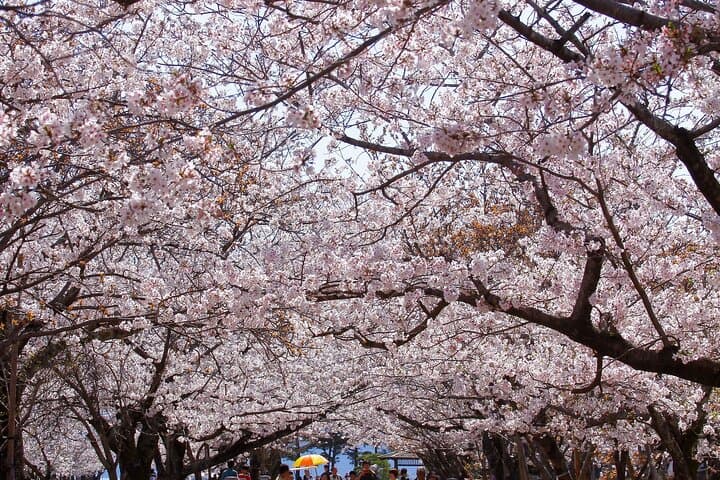
Petals tumble like slow confetti across a hilltop overlooking Nagasaki’s harbor — lanterns warm the slopes as evening approaches and the scent of spring hangs in the air.
Petals tumble like slow confetti across a hilltop overlooking Nagasaki’s harbor — lanterns warm the slopes as evening approaches and the scent of spring hangs in the air.
This guided hanami experience moves through one of the city’s top sakura sites (Tateyama Park, Kazagashira Park, or Nishiyama Dam Karyu Park), chosen that day for peak bloom and crowd conditions. The route traces Nagasaki’s folded landscape: steep ridgelines, shallow valleys and an observation deck that frames ships moving in and out of the port. Geologically the city sits where coastal terraces meet volcanic-era hills, which lends these parks their layered slopes and concentrated cherry stands.
Hanami is more than a picnic here — it’s a social ritual with roots in Heian-era Japan and renewed meaning in Nagasaki, a port city shaped by centuries of foreign trade and local resilience. Guides explain seasonal customs, the significance of lantern illumination during festivals, and local touches like bento etiquette and neighborhood viewpoints tied to historical figures such as Sakamoto Ryoma.
Practical details are straightforward: the four-hour tour meets at Nagasaki Station and uses public transit like a local. Expect light-to-moderate walking on paved paths and grassy slopes; comfortable shoes, sun and rain protection, and a small pack keep the experience easy. Bring water and a lightweight jacket for coastal breezes. Inform the operator of food allergies ahead of time to adjust the supplied bento. For photographers, early morning or late afternoon light and the observation deck yield the quietest, most dramatic frames.