THE ADVENTURE COLLECTIVE® · Independent discovery and booking for outdoor travel

A compact 2-day trek from Sankhu to Nagarkot delivers Himalayan sunrise panoramas and a visit to the ancient Changu Narayan temple. Perfect for travelers short on time who want a taste of mountain walking, village culture, and wide ridge views.
A compact 2-day trek from Sankhu to Nagarkot delivers Himalayan sunrise panoramas and a visit to the ancient Changu Narayan temple. Perfect for travelers short on time who want a taste of mountain walking, village culture, and wide ridge views.
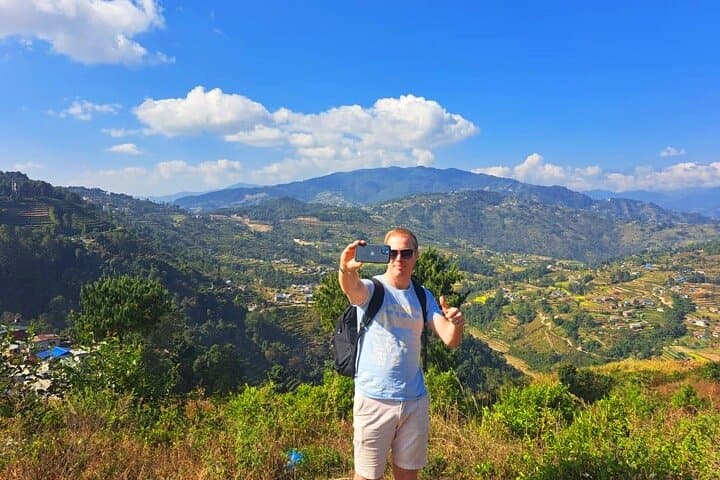
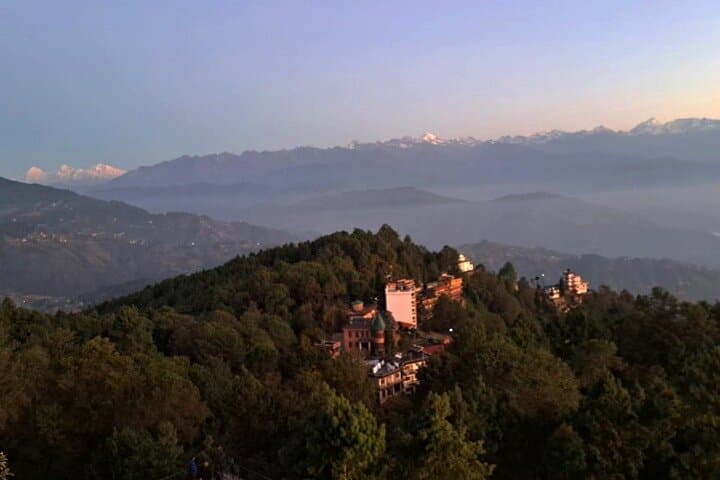
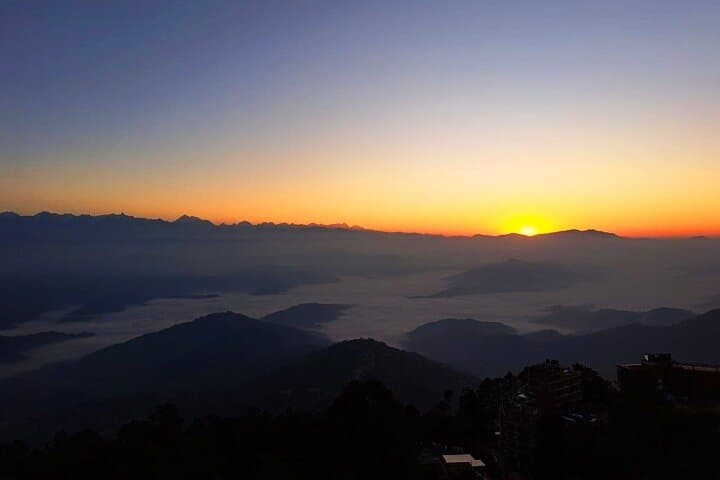
You arrive in Sankhu as late afternoon light flattens the valley terraces; villagers move along dusty lanes and the trail begins to climb, trees leaning like watchers as you walk. The ridge above Nagarkot opens suddenly—an unbroken arc of sky where the Himalaya lights its peaks at sunset, then again the next morning when the summit line burns gold and the valley below exhales mist.
Verified experiences and guided adventures in the surrounding area.
Operated by Himalayan Advisor Pvt. Ltd. · Nagarkot, Bagmati Province
You arrive in Sankhu as late afternoon light flattens the valley terraces; villagers move along dusty lanes and the trail begins to climb, trees leaning like watchers as you walk. The ridge above Nagarkot opens suddenly—an unbroken arc of sky where the Himalaya lights its peaks at sunset, then again the next morning when the summit line burns gold and the valley below exhales mist.
This short trek follows village tracks, terraced fields and pine-lined gullies before reaching Nagarkot (≈2,175–2,200 m). The trail reflects the Kathmandu Valley’s layered history: Lichhavi-era shrines and woodcarving traditions in Sankhu give way to the ancient Changu Narayan temple—one of the valley’s oldest Hindu sites tied to early medieval kings and artisans.
Geologically the route skirts uplifted valley slopes and weathered shale outcrops, while culturally it threads Tamang and Newar settlements where local life continues unchanged by tourism.
Practical guide: expect 6–8 km of walking to Nagarkot with roughly 700–800 m of ascent over about 3 hours; the next morning the downhill trek to Changu Narayan is gentler. Trails are a mix of compact dirt, stone steps and farm tracks—sturdy hiking shoes and trekking poles make steep sections easier. Start early for sunrise (around 06:00–06:30); carry water, high-energy snacks, and a light insulating layer for pre-dawn cold. Permits are typically handled by operators, and the one-night format suits travelers short on time but hungry for Himalayan light and valley culture.
moderate.
2 days (approx. 3 hrs uphill, 2–3 hrs downhill).
Suitable for anyone who can handle sustained uphill walking for several hours and short steeper sections.
Expect 3 hours of steady uphill walking over 6–8 km with about 700–800 m elevation gain—pacing and breaks make it manageable for most fit walkers.
Operators commonly handle local entrance fees and permits to Changu Narayan; confirm ahead and carry ID and small cash for fees.
On very clear days you can spot distant high peaks along the Himalayan arc; nearby visible ranges include Langtang and Ganesh Himal—clear weather increases chances to see Everest.
The route is generally safe but involves sustained climbs and stone steps—children and older travelers should assess mobility and consider a slower pace or vehicle options for sections.
Changu Narayan is associated with the Lichhavi period (early medieval Kathmandu Valley) and contains some of the valley’s oldest stone carvings and inscriptions, reflecting early Hindu kingship and craft traditions.
Stick to marked trails, avoid single-use plastics, and support local tea houses—community-based tourism helps preserve ridge agriculture and temple upkeep.
Himalayan Advisor Pvt. Ltd. operates guided outdoor trips and adventures with an emphasis on safety, stewardship, and memorable experiences.
You arrive in Sankhu as late afternoon light flattens the valley terraces; villagers move along dusty lanes and the trail begins to climb, trees leaning like watchers as you walk. The ridge above Nagarkot opens suddenly—an unbroken arc of sky where the Himalaya lights its peaks at sunset, then again the next morning when the summit line burns gold and the valley below exhales mist.
You arrive in Sankhu as late afternoon light flattens the valley terraces; villagers move along dusty lanes and the trail begins to climb, trees leaning like watchers as you walk. The ridge above Nagarkot opens suddenly—an unbroken arc of sky where the Himalaya lights its peaks at sunset, then again the next morning when the summit line burns gold and the valley below exhales mist.
This short trek follows village tracks, terraced fields and pine-lined gullies before reaching Nagarkot (≈2,175–2,200 m). The trail reflects the Kathmandu Valley’s layered history: Lichhavi-era shrines and woodcarving traditions in Sankhu give way to the ancient Changu Narayan temple—one of the valley’s oldest Hindu sites tied to early medieval kings and artisans.
Geologically the route skirts uplifted valley slopes and weathered shale outcrops, while culturally it threads Tamang and Newar settlements where local life continues unchanged by tourism.
Practical guide: expect 6–8 km of walking to Nagarkot with roughly 700–800 m of ascent over about 3 hours; the next morning the downhill trek to Changu Narayan is gentler. Trails are a mix of compact dirt, stone steps and farm tracks—sturdy hiking shoes and trekking poles make steep sections easier. Start early for sunrise (around 06:00–06:30); carry water, high-energy snacks, and a light insulating layer for pre-dawn cold. Permits are typically handled by operators, and the one-night format suits travelers short on time but hungry for Himalayan light and valley culture.