THE ADVENTURE COLLECTIVE® · Independent discovery and booking for outdoor travel

Watch the Himalaya unfold from Nagarkot’s ridge at sunrise, then walk down through highland villages to Changu Narayan Temple — a compact day that pairs panoramic mountain views with one of Nepal’s oldest temple complexes. Read on for what to expect and how to prepare.
Watch the Himalaya unfold from Nagarkot’s ridge at sunrise, then walk down through highland villages to Changu Narayan Temple — a compact day that pairs panoramic mountain views with one of Nepal’s oldest temple complexes. Read on for what to expect and how to prepare.
You break the dark before dawn on a narrow road out of Kathmandu, and the bus climbs into air that tastes like freshness and wood smoke. By the time you reach Nagarkot the eastern horizon is already lighting, and the ridgeline opens into a long, slow reveal of serrated Himalayan peaks — Everest among them on very clear mornings — while a cool wind pushes along the trail.
Verified experiences and guided adventures in the surrounding area.
Operated by Himalayan Mentor · Kathmandu, Bagmati Province
You break the dark before dawn on a narrow road out of Kathmandu, and the bus climbs into air that tastes like freshness and wood smoke. By the time you reach Nagarkot the eastern horizon is already lighting, and the ridgeline opens into a long, slow reveal of serrated Himalayan peaks — Everest among them on very clear mornings — while a cool wind pushes along the trail.
The route moves from open ridge and pine-sprinkled viewpoints into small Tamang and Newar villages, where terraced fields and stone houses show livelihoods older than the capital's expansion. The hike ends at Changu Narayan, a UNESCO-listed temple complex whose 7th-century stone carvings and pagoda roofs are among Nepal’s oldest surviving monuments, blending Newar woodwork and early Hindu iconography.
Geologically this edge-of- Kathmandu ridge is a fringe of uplifted Siwalik foothills; trails alternate between packed earth, stone steps, and farmer paths. Culturally the walk mixes quiet mountain viewing with active village life: children guiding cows, women carrying firewood, and occasional prayer flags snapping at trail junctions.
Practical guidance: start before sunrise for the best mountain clarity and to avoid midday haze; wear supportive shoes with good traction for downhill sections; carry 1–1.5 liters of water and sun protection; expect 4–5 hours of walking at a relaxed pace plus transport time. Mobile reception is intermittent; bring cash for temple donations and a light lunch at Changu Narayan. The day balances easy hiking with significant cultural payoff — a single trail that hands you both Himalayan panoramas and living history.
easy.
6–8 hours.
Suitable for travelers with basic fitness who can handle 4–5 hours of walking and some uneven downhill terrain.
The walking portion is typically 4–5 hours with mostly downhill sections; it’s rated easy and suitable for most fitness levels, though uneven terrain requires steady shoes.
Everest and other major peaks can be visible on very clear mornings, especially in autumn and winter; visibility depends on weather and air quality.
Yes — entrance tickets to Changu Narayan are included in the trip price, but small donations or purchases at local stalls require cash.
Private round-trip transportation is included; pickup point is arranged at booking and the drive to Nagarkot takes about 45–60 minutes depending on traffic.
Changu Narayan is one of Nepal’s oldest Hindu temple sites, with inscriptions and stone carvings dating back to the 7th century and reflecting early Newar craftsmanship and religious practice.
Stick to established paths and avoid feeding wildlife; local villages depend on clean water and forest resources, so minimize waste and use local guides to support community stewardship.
Himalayan Mentor operates guided outdoor trips and adventures with an emphasis on safety, stewardship, and memorable experiences.
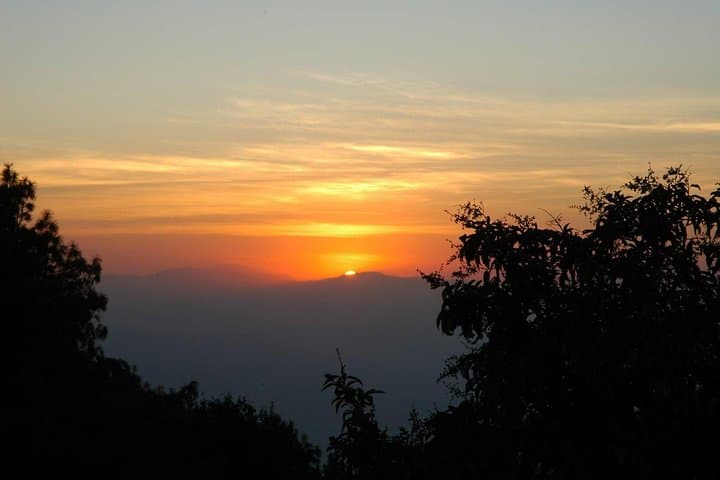
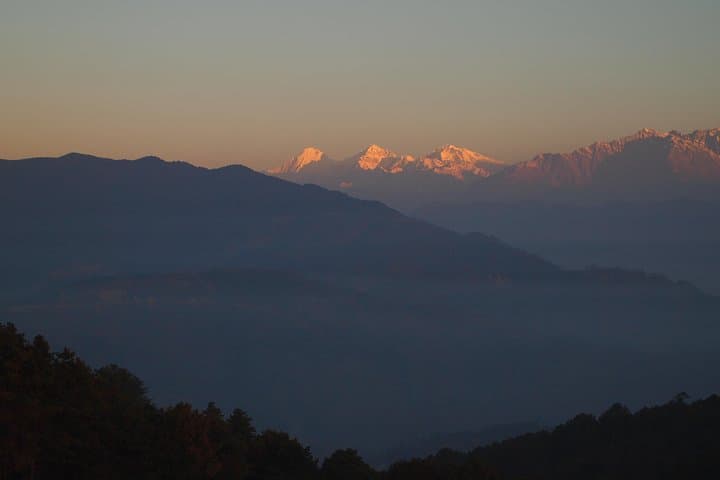
You break the dark before dawn on a narrow road out of Kathmandu, and the bus climbs into air that tastes like freshness and wood smoke. By the time you reach Nagarkot the eastern horizon is already lighting, and the ridgeline opens into a long, slow reveal of serrated Himalayan peaks — Everest among them on very clear mornings — while a cool wind pushes along the trail.
You break the dark before dawn on a narrow road out of Kathmandu, and the bus climbs into air that tastes like freshness and wood smoke. By the time you reach Nagarkot the eastern horizon is already lighting, and the ridgeline opens into a long, slow reveal of serrated Himalayan peaks — Everest among them on very clear mornings — while a cool wind pushes along the trail.
The route moves from open ridge and pine-sprinkled viewpoints into small Tamang and Newar villages, where terraced fields and stone houses show livelihoods older than the capital's expansion. The hike ends at Changu Narayan, a UNESCO-listed temple complex whose 7th-century stone carvings and pagoda roofs are among Nepal’s oldest surviving monuments, blending Newar woodwork and early Hindu iconography.
Geologically this edge-of- Kathmandu ridge is a fringe of uplifted Siwalik foothills; trails alternate between packed earth, stone steps, and farmer paths. Culturally the walk mixes quiet mountain viewing with active village life: children guiding cows, women carrying firewood, and occasional prayer flags snapping at trail junctions.
Practical guidance: start before sunrise for the best mountain clarity and to avoid midday haze; wear supportive shoes with good traction for downhill sections; carry 1–1.5 liters of water and sun protection; expect 4–5 hours of walking at a relaxed pace plus transport time. Mobile reception is intermittent; bring cash for temple donations and a light lunch at Changu Narayan. The day balances easy hiking with significant cultural payoff — a single trail that hands you both Himalayan panoramas and living history.