THE ADVENTURE COLLECTIVE® · Independent discovery and booking for outdoor travel

Watch sunrise from Nagarkot’s ridge, then explore Changunarayan’s ancient carvings and Bhaktapur’s medieval squares on a single-day tour. Expect easy hiking, dramatic Himalayan views, and living Newar culture.
Watch sunrise from Nagarkot’s ridge, then explore Changunarayan’s ancient carvings and Bhaktapur’s medieval squares on a single-day tour. Expect easy hiking, dramatic Himalayan views, and living Newar culture.
At dawn on the ridge above Nagarkot the air is thin and sharp, the valley below still dark while the Himalayan skyline brightens in layers. Headlamps fade as the first light paints Everest, Langtang and Ganesh Himal in a brittle gold; the trail opens onto a wide viewpoint at about 2,175 m where photographers and early-risers gather for the show.
Verified experiences and guided adventures in the surrounding area.
Operated by Annapurna Encounter · Nagarkot, Bagmati Province
At dawn on the ridge above Nagarkot the air is thin and sharp, the valley below still dark while the Himalayan skyline brightens in layers. Headlamps fade as the first light paints Everest, Langtang and Ganesh Himal in a brittle gold; the trail opens onto a wide viewpoint at about 2,175 m where photographers and early-risers gather for the show.
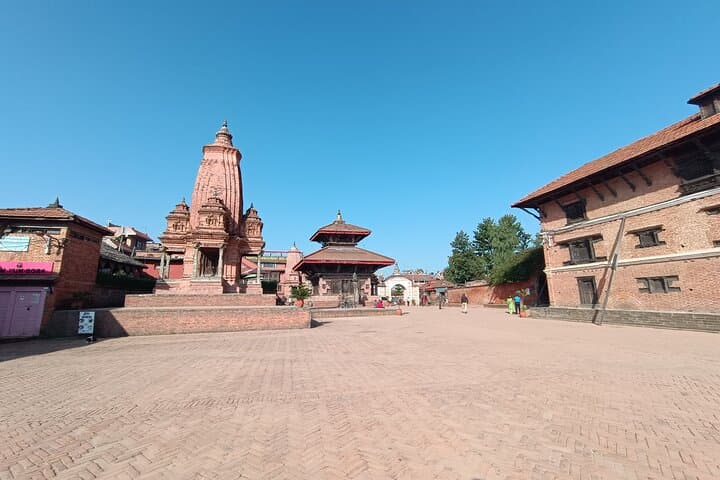
The outing pairs a short, easy mountain hike through pine and terraced fields with visits to two of the Kathmandu Valley’s cultural pillars. Changunarayan Temple—one of Nepal’s oldest pagoda-style shrines—offers intricate 4th–century wood and stone carvings and a quiet courtyard atmosphere. Later, Bhaktapur Durbar Square presents a living museum of Newar architecture: the five-story Nyatapola Temple, carved 55-window facades and active pottery squares where locals shape clay on ankle-driven wheels.
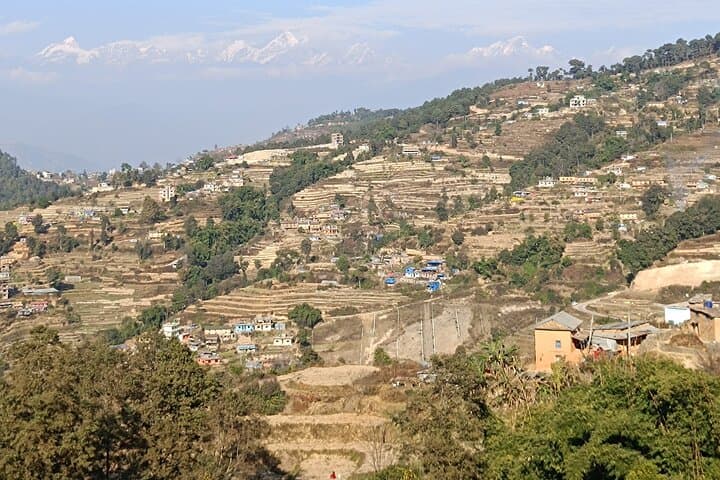
Geologically the route follows the Kathmandu Valley rim—folded ridges uplifted by the Himalayan orogeny—with viewpoints that emphasize the contrast between cultivated slopes and distant glacial peaks. Culturally, expect encounters with Newari village life: water buffalo, terraced vegetables and small shops selling Juju Dhau (king curd).
Practical guidance: plan for a 6–8 hour day including hotel transfers from Kathmandu, roughly 1–2 hours of walking on uneven dirt and stone, plus stair sections at temple complexes. Dress in layers, bring sun protection, cash for small purchases and a light daypack. Follow your guide’s instructions around sacred sites and allow time for slow, steady pacing to enjoy both sunrise light and the region’s living heritage.
easy.
6–8 hours.
Suitable for most travelers with basic mobility; involves 1–2 hours of easy to moderate walking on uneven surfaces and stairs.
Expect roughly 1–2 hours of walking on dirt and stone paths to viewpoints; the tour’s total duration is 6–8 hours including transfers and site visits.
Yes—walking is generally easy but includes uneven surfaces and stairs; those with limited mobility should check specifics with the operator.
On a clear day you can see Everest among other peaks, but visibility depends on weather and air clarity—early morning typically offers the best views.
Confirm with the tour operator; many packages include guided visits but may exclude specific monument entry fees—carry small cash for admissions when required.
Changunarayan dates to the 4th century and is one of Nepal’s oldest pagoda-style temples; Bhaktapur was a medieval Newar capital renowned for wood carving and pottery traditions.
Stick to marked paths, avoid single-use plastics, and respect temple grounds to reduce erosion and cultural wear in sensitive sites.
Annapurna Encounter operates guided outdoor trips and adventures with an emphasis on safety, stewardship, and memorable experiences.
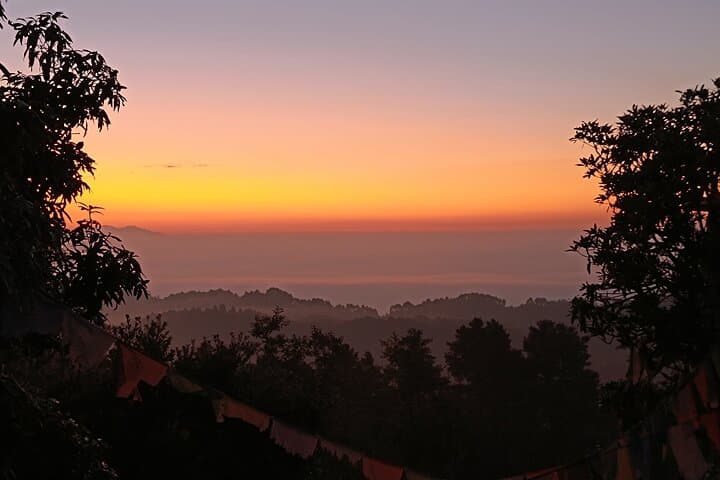
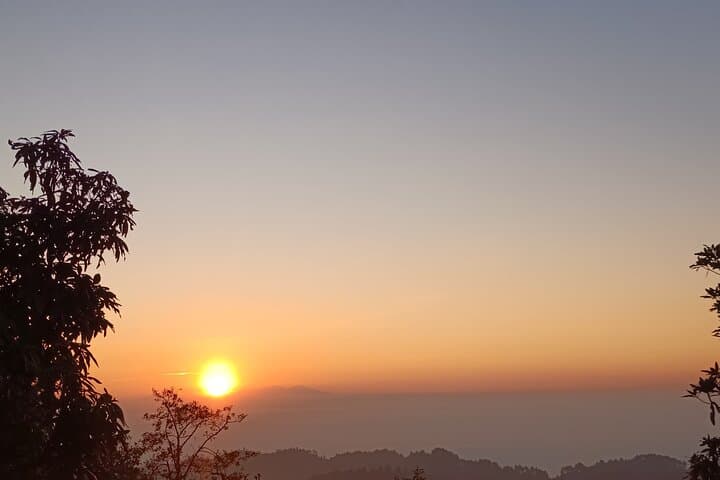
At dawn on the ridge above Nagarkot the air is thin and sharp, the valley below still dark while the Himalayan skyline brightens in layers. Headlamps fade as the first light paints Everest, Langtang and Ganesh Himal in a brittle gold; the trail opens onto a wide viewpoint at about 2,175 m where photographers and early-risers gather for the show.
At dawn on the ridge above Nagarkot the air is thin and sharp, the valley below still dark while the Himalayan skyline brightens in layers. Headlamps fade as the first light paints Everest, Langtang and Ganesh Himal in a brittle gold; the trail opens onto a wide viewpoint at about 2,175 m where photographers and early-risers gather for the show.
The outing pairs a short, easy mountain hike through pine and terraced fields with visits to two of the Kathmandu Valley’s cultural pillars. Changunarayan Temple—one of Nepal’s oldest pagoda-style shrines—offers intricate 4th–century wood and stone carvings and a quiet courtyard atmosphere. Later, Bhaktapur Durbar Square presents a living museum of Newar architecture: the five-story Nyatapola Temple, carved 55-window facades and active pottery squares where locals shape clay on ankle-driven wheels.
Geologically the route follows the Kathmandu Valley rim—folded ridges uplifted by the Himalayan orogeny—with viewpoints that emphasize the contrast between cultivated slopes and distant glacial peaks. Culturally, expect encounters with Newari village life: water buffalo, terraced vegetables and small shops selling Juju Dhau (king curd).
Practical guidance: plan for a 6–8 hour day including hotel transfers from Kathmandu, roughly 1–2 hours of walking on uneven dirt and stone, plus stair sections at temple complexes. Dress in layers, bring sun protection, cash for small purchases and a light daypack. Follow your guide’s instructions around sacred sites and allow time for slow, steady pacing to enjoy both sunrise light and the region’s living heritage.