THE ADVENTURE COLLECTIVE® · Independent discovery and booking for outdoor travel

A day-long leaf-peeping journey from Seoul to Naejangsan National Park, this tour pairs long-distance coach travel with several hours of hiking among bright maples, reflective pavilions and temple trails—with an optional Busan drop-off during peak foliage dates.
A day-long leaf-peeping journey from Seoul to Naejangsan National Park, this tour pairs long-distance coach travel with several hours of hiking among bright maples, reflective pavilions and temple trails—with an optional Busan drop-off during peak foliage dates.
Dawn on the highway feels purposeful: a shuttle of early-risers leaves Seoul before sunrise, folding the cityscape behind as the road pushes south toward Naejangsan. By midmorning the bus slides into a valley rimmed with serrated ridgelines; maples and ginkgoes begin to assert themselves in orange and gold, and a pavilion sits like a calm comma on a reflective pond.
Verified experiences and guided adventures in the surrounding area.
Operated by Lecirt · Jeongeup, North Jeolla (Jeollabuk-do)
Dawn on the highway feels purposeful: a shuttle of early-risers leaves Seoul before sunrise, folding the cityscape behind as the road pushes south toward Naejangsan. By midmorning the bus slides into a valley rimmed with serrated ridgelines; maples and ginkgoes begin to assert themselves in orange and gold, and a pavilion sits like a calm comma on a reflective pond.
Naejangsan National Park occupies the border of North and South Jeolla provinces and has long been prized in Korea for its accessible mountain trails, Buddhist temples and a concentrated peak—Naejangsan reaches roughly 760–770 meters—where seasonal color concentrates on steep slopes and river valleys. Geologically the park is formed from ancient Precambrian bedrock folded into the peninsula’s low mountains, producing narrow valleys and sudden viewpoints. Culturally, the area is dotted with historic temple sites (Baegyangsa among the better known), and ponds with pavilions such as Uhwajeong offer calm contrasts to the busy leaf-peeping trails.
Practically: the typical full-day excursion from Seoul is ~12–14 hours door-to-door, with roughly 3.5–4 hours each way by coach and several hours exploring on foot. Trails range from paved promenades to steeper stone steps; expect uneven ground and short, sharp elevation gains on summit viewpoints. Peak foliage usually arrives in late October to early November—check timing and the operator’s Busan drop-off window if continuing southeast.
Bring layered clothing, sturdy footwear, water and a charged camera. Plan for early starts, midweek travel to avoid crowds, and modest walking fitness to enjoy the best viewpoints without rushing.
moderate.
12–14 hours.
Suitable for travelers with moderate fitness—able to walk several kilometers and handle short steep sections and steps.
Expect roughly 3.5–4 hours each way by coach depending on traffic; the full tour is typically 12–14 hours including return or Busan drop-off.
Infants are allowed but must sit on an adult's lap; children should be comfortable with long travel and several hours of walking on uneven trails.
Peak color most commonly arrives in late October to early November—exact timing varies by year and weather, so check local forecasts and tour dates.
Yes—most bookings offer a return to Seoul; the Busan drop-off is an optional service available only during specific dates (check your chosen departure).
Naejangsan has been a favored retreat since the Joseon era, its temples and pavilions serving as sites for seasonal pilgrimage and poetic reflection.
The park manages visitor pressure seasonally—stick to marked trails, avoid trampling vegetation and carry out trash to protect delicate understory and soil during peak leaf fall.
Lecirt operates guided outdoor trips and adventures with an emphasis on safety, stewardship, and memorable experiences.
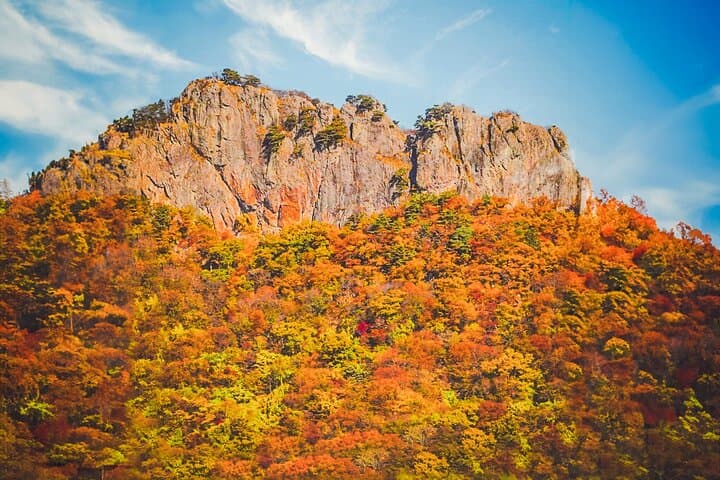
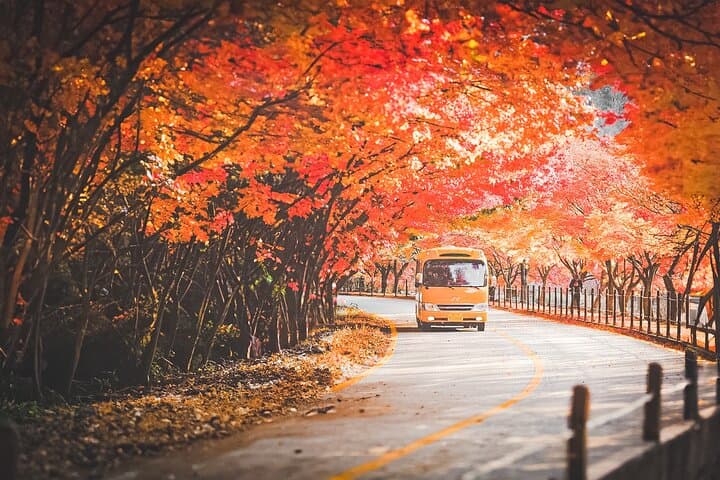
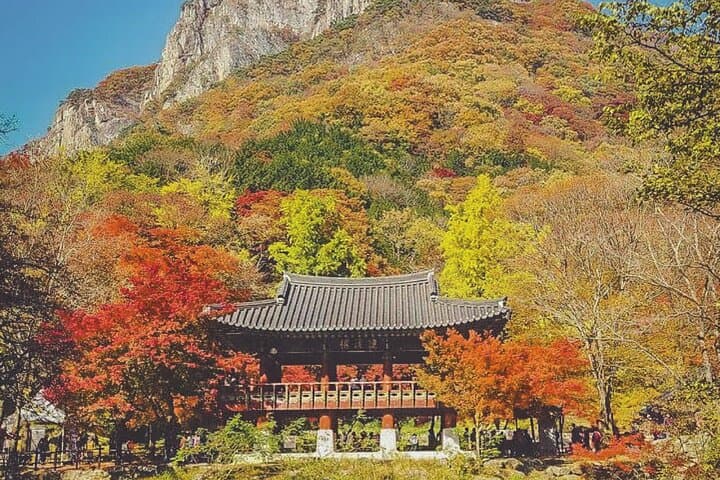
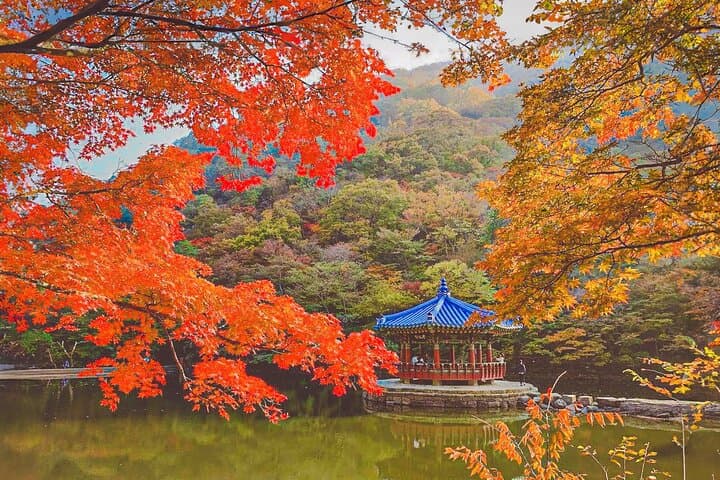
Dawn on the highway feels purposeful: a shuttle of early-risers leaves Seoul before sunrise, folding the cityscape behind as the road pushes south toward Naejangsan. By midmorning the bus slides into a valley rimmed with serrated ridgelines; maples and ginkgoes begin to assert themselves in orange and gold, and a pavilion sits like a calm comma on a reflective pond.
Dawn on the highway feels purposeful: a shuttle of early-risers leaves Seoul before sunrise, folding the cityscape behind as the road pushes south toward Naejangsan. By midmorning the bus slides into a valley rimmed with serrated ridgelines; maples and ginkgoes begin to assert themselves in orange and gold, and a pavilion sits like a calm comma on a reflective pond.
Naejangsan National Park occupies the border of North and South Jeolla provinces and has long been prized in Korea for its accessible mountain trails, Buddhist temples and a concentrated peak—Naejangsan reaches roughly 760–770 meters—where seasonal color concentrates on steep slopes and river valleys. Geologically the park is formed from ancient Precambrian bedrock folded into the peninsula’s low mountains, producing narrow valleys and sudden viewpoints. Culturally, the area is dotted with historic temple sites (Baegyangsa among the better known), and ponds with pavilions such as Uhwajeong offer calm contrasts to the busy leaf-peeping trails.
Practically: the typical full-day excursion from Seoul is ~12–14 hours door-to-door, with roughly 3.5–4 hours each way by coach and several hours exploring on foot. Trails range from paved promenades to steeper stone steps; expect uneven ground and short, sharp elevation gains on summit viewpoints. Peak foliage usually arrives in late October to early November—check timing and the operator’s Busan drop-off window if continuing southeast.
Bring layered clothing, sturdy footwear, water and a charged camera. Plan for early starts, midweek travel to avoid crowds, and modest walking fitness to enjoy the best viewpoints without rushing.