THE ADVENTURE COLLECTIVE® · Independent discovery and booking for outdoor travel

An accessible overnight Himalayan outing from Mussoorie, Naag Tibba offers beginner-friendly slopes, forested trails and a summit panorama that includes Bandarpoonch and the Gangotri range. Plan for an early start and camp comforts on this classic 2-day introduction to trekking in the Garhwal Himalaya.
An accessible overnight Himalayan outing from Mussoorie, Naag Tibba offers beginner-friendly slopes, forested trails and a summit panorama that includes Bandarpoonch and the Gangotri range. Plan for an early start and camp comforts on this classic 2-day introduction to trekking in the Garhwal Himalaya.
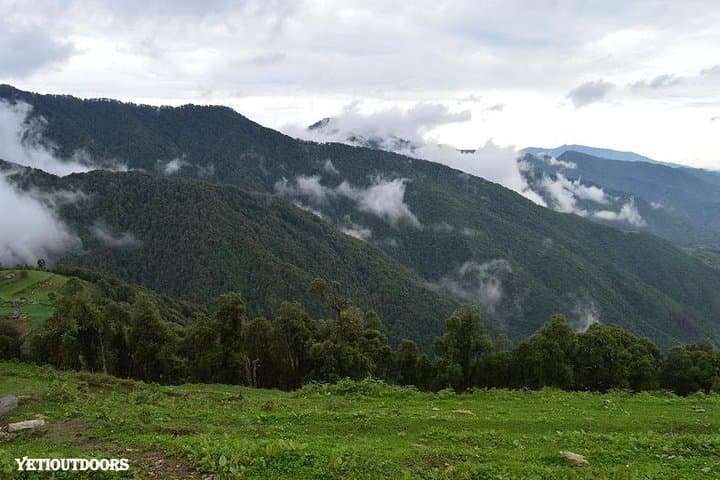
Dawn breaks over rhododendron and oak as you leave the Himalayan village of Pantwari; the trail climbs in a steady, conversational grade that lets you listen to the forest wake rather than fight for breath.
Verified experiences and guided adventures in the surrounding area.
Operated by Yeti Outdoors · Pantwari, Uttarakhand
Dawn breaks over rhododendron and oak as you leave the Himalayan village of Pantwari; the trail climbs in a steady, conversational grade that lets you listen to the forest wake rather than fight for breath.
On clear mornings the summit—Naag Tibba, the serpent’s peak at about 3,020 m—unfurls a broad Himalayan panorama: Bandarpoonch to the northwest, the Gangotri group and Kedarnath peaks on the far horizon, and the Doon Valley folding back toward the plains. Geologically this ridge is part of the lower Garhwal Himalaya, a mix of schist and quartzite that gives the path its firm, rocky steps and sudden, exposed viewpoints.
Locally the route traces old shepherd tracks and village linkages; Pantwari remains a small Himalayan settlement where porters and mule teams still move supplies. Cultural traces—tea stalls, simple mountain shrines, and village hospitality—appear between forested sections and open meadows.
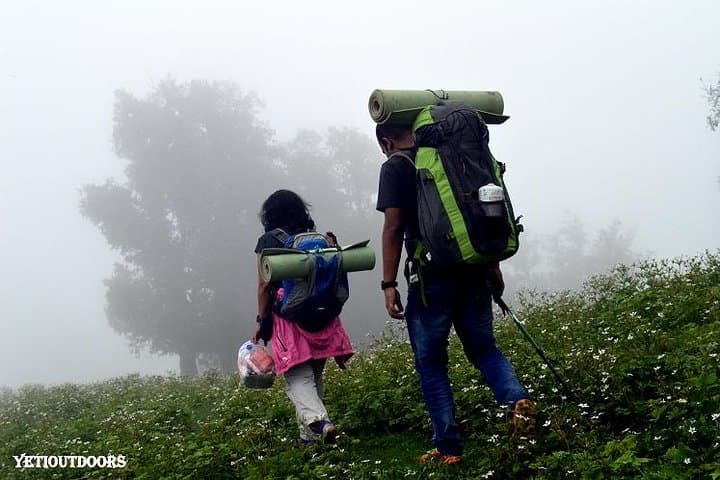
Practical guidance: the trek is an accessible overnight experience meant as a weekend from Mussoorie or Dehradun. Expect ~3 hours to base camp on day one and a 4–6 hour summit push on day two with ~300–500 m of daily elevation change. Camps use communal tents and group cooking; guides and permits are typically provided. Footwear with good traction, layered insulation for cold summit mornings, and a steady-paced early start make the outing straightforward.
Respect local water sources, pack out waste, and plan for rapidly changing weather—clouds can gather and clear in the same hour, and the summit rewards those who arrive early with crisp views and thin, honest air.
moderate.
2 days (overnight).
Moderate fitness—comfortable walking 4–6 hours with short steep sections; suitable for regular walkers and first-time trekkers.
It’s often described as an ideal beginner trek: steady climbs, no technical sections, and an overnight camp—good for those new to altitude with moderate fitness.
Local permits are commonly handled by tour operators or guides; independent trekkers should check with local authorities in Pantwari or Mussoorie before departure.
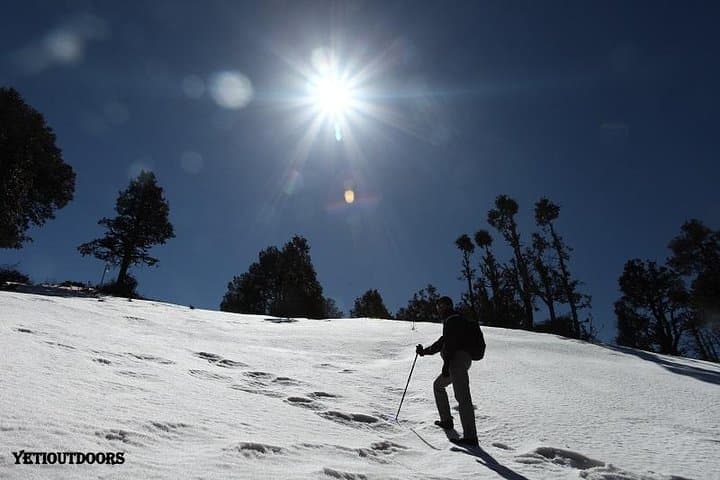
Clear views and stable weather are typical from late autumn (October–November) and spring (March–May); monsoon months bring slippery trails and winter has snow on the summit.
Group operators usually supply tents, sleeping mats and cooking gear; confirm specifics and whether you need a sleeping bag or personal items before booking.
The trail follows traditional shepherd and mule routes in the Garhwal Himalaya; the peak has long been a local navigation point and seasonal grazing area.
High-use weekends can strain fragile meadows—use existing campsites, avoid trampling vegetation and carry out all trash to protect the alpine environment.
Yeti Outdoors operates guided outdoor trips and adventures with an emphasis on safety, stewardship, and memorable experiences.
Dawn breaks over rhododendron and oak as you leave the Himalayan village of Pantwari; the trail climbs in a steady, conversational grade that lets you listen to the forest wake rather than fight for breath.
Dawn breaks over rhododendron and oak as you leave the Himalayan village of Pantwari; the trail climbs in a steady, conversational grade that lets you listen to the forest wake rather than fight for breath.
On clear mornings the summit—Naag Tibba, the serpent’s peak at about 3,020 m—unfurls a broad Himalayan panorama: Bandarpoonch to the northwest, the Gangotri group and Kedarnath peaks on the far horizon, and the Doon Valley folding back toward the plains. Geologically this ridge is part of the lower Garhwal Himalaya, a mix of schist and quartzite that gives the path its firm, rocky steps and sudden, exposed viewpoints.
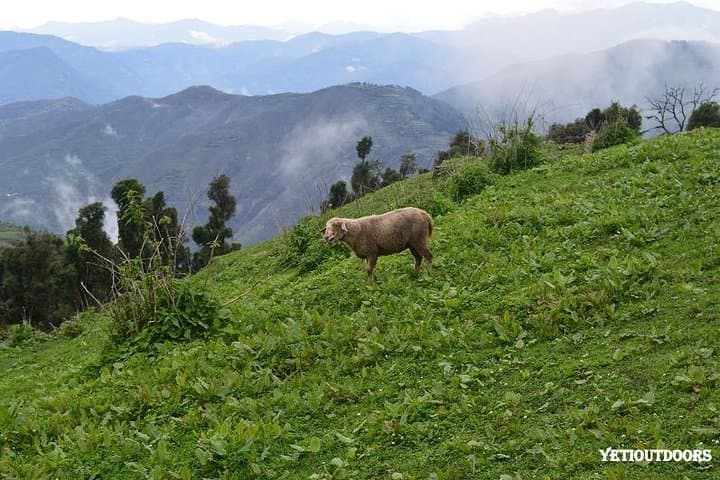
Locally the route traces old shepherd tracks and village linkages; Pantwari remains a small Himalayan settlement where porters and mule teams still move supplies. Cultural traces—tea stalls, simple mountain shrines, and village hospitality—appear between forested sections and open meadows.
Practical guidance: the trek is an accessible overnight experience meant as a weekend from Mussoorie or Dehradun. Expect ~3 hours to base camp on day one and a 4–6 hour summit push on day two with ~300–500 m of daily elevation change. Camps use communal tents and group cooking; guides and permits are typically provided. Footwear with good traction, layered insulation for cold summit mornings, and a steady-paced early start make the outing straightforward.
Respect local water sources, pack out waste, and plan for rapidly changing weather—clouds can gather and clear in the same hour, and the summit rewards those who arrive early with crisp views and thin, honest air.