THE ADVENTURE COLLECTIVE® · Independent discovery and booking for outdoor travel

Rise above Seoul from Namsan’s N Seoul Tower for sweeping 360° views that shift from daytime clarity to glittering nightscapes. This guide covers what you’ll see, how to get tickets, and practical tips to make the most of the visit.
Rise above Seoul from Namsan’s N Seoul Tower for sweeping 360° views that shift from daytime clarity to glittering nightscapes. This guide covers what you’ll see, how to get tickets, and practical tips to make the most of the visit.
Perched on Namsan’s highest spine, N Seoul Tower lifts visitors into an open-air panorama where the city stretches like a living map. Morning haze parts to reveal Han River loops and distant islands; at sunset the skyline sharpens, then dissolves into a grid of lights. The tower’s decks and terraces frame Seoul’s layers—modern glass, low hanok roofs, and the parked green of the mountain below—so the experience feels both urban and elemental.
Verified experiences and guided adventures in the surrounding area.
Operated by Caiyi Travel · Seoul, Seoul
Perched on Namsan’s highest spine, N Seoul Tower lifts visitors into an open-air panorama where the city stretches like a living map. Morning haze parts to reveal Han River loops and distant islands; at sunset the skyline sharpens, then dissolves into a grid of lights. The tower’s decks and terraces frame Seoul’s layers—modern glass, low hanok roofs, and the parked green of the mountain below—so the experience feels both urban and elemental.
Built as a communications structure in the late 20th century, the tower later opened observation levels and cafés that made it a public landmark. The granite ribs of Namsan are older than the city’s outer rings—remnants of undulating hills carved by streams—and the summit has long been a meeting place, a vantage for both defense and ceremony. Contemporary culture overlays that geography: love-lock rails, rotating restaurants, and exhibits that trace Seoul’s postwar growth.
Practicalities are straightforward. Redeem a mobile voucher at the 5F ticket kiosk, then take the elevator to the observatory for 360° views; queues build at dusk. Expect flat paved surfaces on the tower campus but cobbled, uphill approaches in parts of Namsan Park if walking up. Cameras and light layers are useful—wind can sharpen evenings—and cafés offer a quick shelter from sudden rain. Public transit connects to the park base, but factor in 10–30 minutes to reach the ticket counter from the nearest station.
Plan timing around visibility: for crisp long-distance views arrive in clear weather, for city lights book the last entry window. Respect park regulations: stay on paths and pack out litter to protect this urban green oasis.
easy.
4–9 hours.
Minimal walking fitness for short uphill approaches; mostly elevator access once at the tower
Yes—redeem your e‑voucher at the tower’s 5th-floor ticket kiosks or counter to receive a paper ticket for admission.
No—the Namsan Cable Car is not included; access to the tower from the park base can be on foot, by shuttle, or via the cable car purchased separately.
The tower has elevator access from the lobby to observatory levels, but approaches through Namsan Park can be steep—consult on-site staff for the most accessible route and assistance.
On exceptionally clear days, distant northern ridgelines across the border are said to be visible, but atmospheric conditions usually limit long-distance visibility.
Originally constructed as a communications tower in the late 1960s and later adapted as a public observatory, N Seoul Tower became an urban landmark that reflects Seoul’s postwar modernization and recreational use of Namsan Park.
Namsan Park is managed as an urban green space—visitors are asked to stay on trails, avoid disturbing plantings, and carry out trash to protect the area’s vegetation and birdlife.
Caiyi Travel operates guided outdoor trips and adventures with an emphasis on safety, stewardship, and memorable experiences.
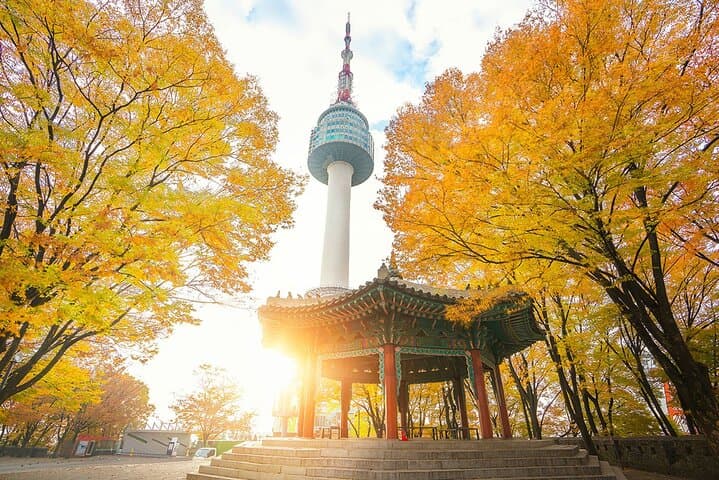
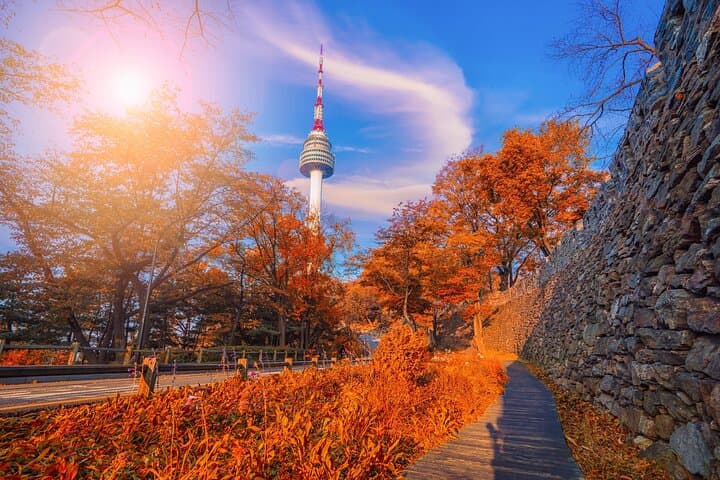
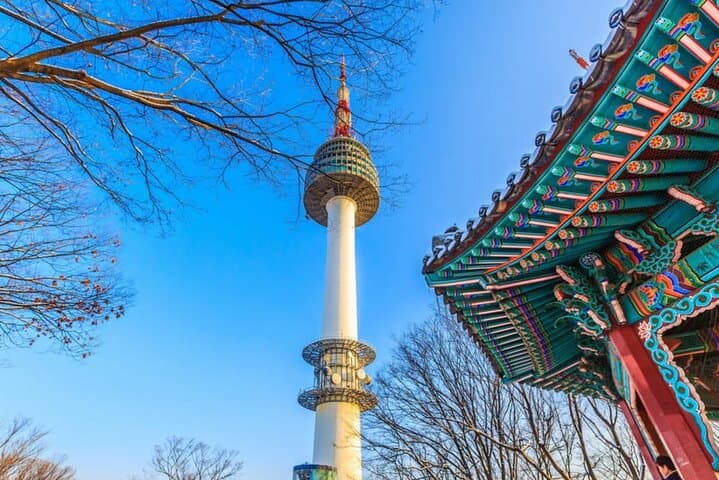

Perched on Namsan’s highest spine, N Seoul Tower lifts visitors into an open-air panorama where the city stretches like a living map. Morning haze parts to reveal Han River loops and distant islands; at sunset the skyline sharpens, then dissolves into a grid of lights. The tower’s decks and terraces frame Seoul’s layers—modern glass, low hanok roofs, and the parked green of the mountain below—so the experience feels both urban and elemental.
Perched on Namsan’s highest spine, N Seoul Tower lifts visitors into an open-air panorama where the city stretches like a living map. Morning haze parts to reveal Han River loops and distant islands; at sunset the skyline sharpens, then dissolves into a grid of lights. The tower’s decks and terraces frame Seoul’s layers—modern glass, low hanok roofs, and the parked green of the mountain below—so the experience feels both urban and elemental.
Built as a communications structure in the late 20th century, the tower later opened observation levels and cafés that made it a public landmark. The granite ribs of Namsan are older than the city’s outer rings—remnants of undulating hills carved by streams—and the summit has long been a meeting place, a vantage for both defense and ceremony. Contemporary culture overlays that geography: love-lock rails, rotating restaurants, and exhibits that trace Seoul’s postwar growth.
Practicalities are straightforward. Redeem a mobile voucher at the 5F ticket kiosk, then take the elevator to the observatory for 360° views; queues build at dusk. Expect flat paved surfaces on the tower campus but cobbled, uphill approaches in parts of Namsan Park if walking up. Cameras and light layers are useful—wind can sharpen evenings—and cafés offer a quick shelter from sudden rain. Public transit connects to the park base, but factor in 10–30 minutes to reach the ticket counter from the nearest station.
Plan timing around visibility: for crisp long-distance views arrive in clear weather, for city lights book the last entry window. Respect park regulations: stay on paths and pack out litter to protect this urban green oasis.