THE ADVENTURE COLLECTIVE® · Independent discovery and booking for outdoor travel

Ride a climate-controlled trolley through the Market Common to explore the former Myrtle Beach Air Force Base. Stops include Warbird Park, a small military museum, and a reception with a historic presentation at Tupelo Honey.
Ride a climate-controlled trolley through the Market Common to explore the former Myrtle Beach Air Force Base. Stops include Warbird Park, a small military museum, and a reception with a historic presentation at Tupelo Honey.
A late-afternoon trolley eases out from in front of Tupelo Honey at The Market Common, windows fogging slightly as the climate-controlled car pulls you through streets that once hummed with bomber engines. The driver’s narration threads local voices and dates into the landscape — runway outlines, hangar foundations, a POW camp footprint — and you begin to read the town differently.
Verified experiences and guided adventures in the surrounding area.
Operated by Myrtle Beach History Tours · Myrtle Beach, South Carolina
A late-afternoon trolley eases out from in front of Tupelo Honey at The Market Common, windows fogging slightly as the climate-controlled car pulls you through streets that once hummed with bomber engines. The driver’s narration threads local voices and dates into the landscape — runway outlines, hangar foundations, a POW camp footprint — and you begin to read the town differently.
This two-hour experience centers on the former Myrtle Beach Air Force Base, a WWII Army Air Corps field that became a Cold War installation and later transitioned into the city’s airport and Market Common district. Static warbirds at Warbird Park, a small military collection at the Gen. Robert H. Reed Recreation Center, and memorabilia displayed in the Norton General Aviation Terminal give a compact but tangible view of mid-century military life in coastal South Carolina.
Culturally the tour connects veterans’ stories to modern Myrtle Beach commerce: restaurants and shopping occupying former base lots, plaques honoring servicemen, and community events that keep memory active. Geologically the area is low, sandy coastal plain — flat, with palmettos and maritime shrubs framing remnants of asphalt and concrete.
Practicalities: arrive by 1:45 PM at Tupelo Honey; tours run about 120 minutes and split guests into two groups that swap a catered reception with a historic presentation. The trolley is enclosed and accessible for most fitness levels; children three and older are welcome. Book at least a week ahead when possible, carry sun protection for short outdoor stops, and treat static displays respectfully — photography is usually allowed but don’t touch artifacts.
easy.
2 hours.
Suitable for most adults and families with children 3+. Minimal walking at stops; mostly seated on the trolley.
Meet in front of Tupelo Honey at The Market Common (beside the airport between Hwy. 17 Bypass and Hwy. 17 Business). Arrive by 1:45 PM.
The tour is approximately two hours and includes a narrated trolley ride with three stops plus a catered reception and historical presentation at Tupelo Honey for half the group.
Yes — the trolley is enclosed and climate-controlled and suitable for most fitness levels; guests must be at least 3 years old.
Full refunds are available if you cancel at least 24 hours before the scheduled departure; tours may be canceled for weather or low enrollment.
Myrtle Beach Air Force Base began as an Army Air Corps field in WWII, later served through the Cold War, and was decommissioned and repurposed into the airport and Market Common development.
Preserve artifacts by following on-site signage and avoid climbing on displays; support local preservation groups who maintain the static aircraft and interpretive materials.
Myrtle Beach History Tours operates guided outdoor trips and adventures with an emphasis on safety, stewardship, and memorable experiences.
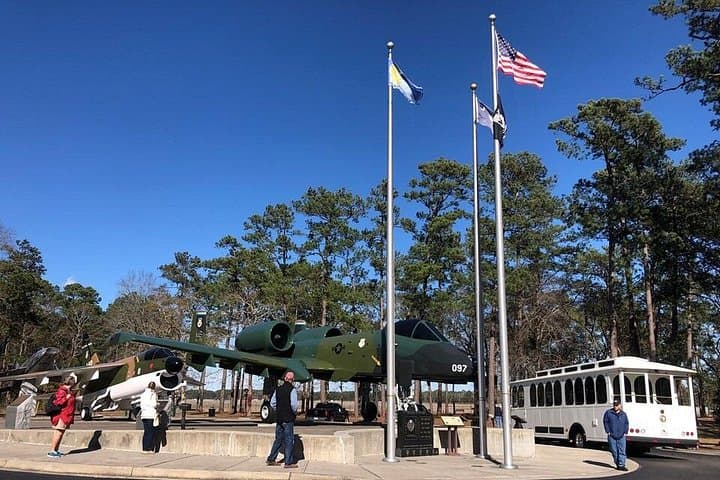
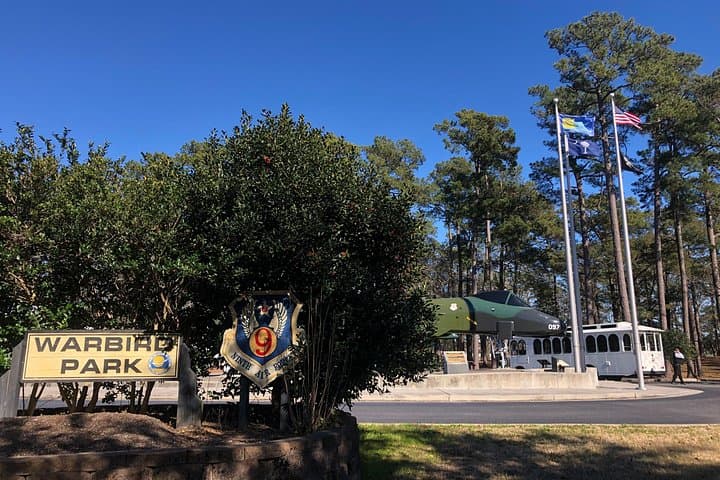
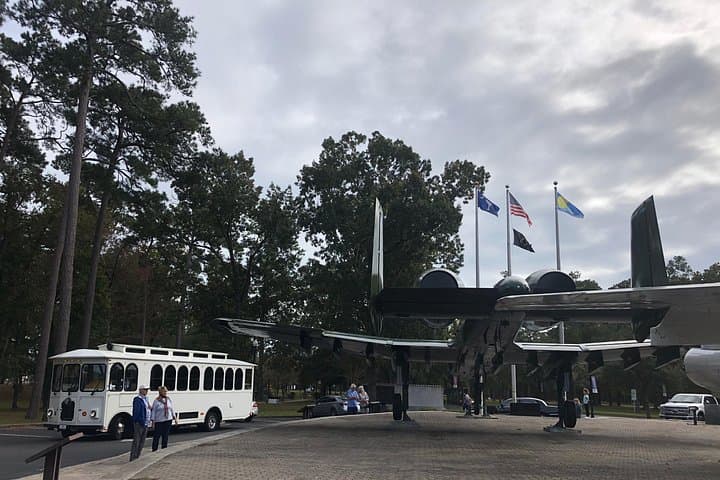
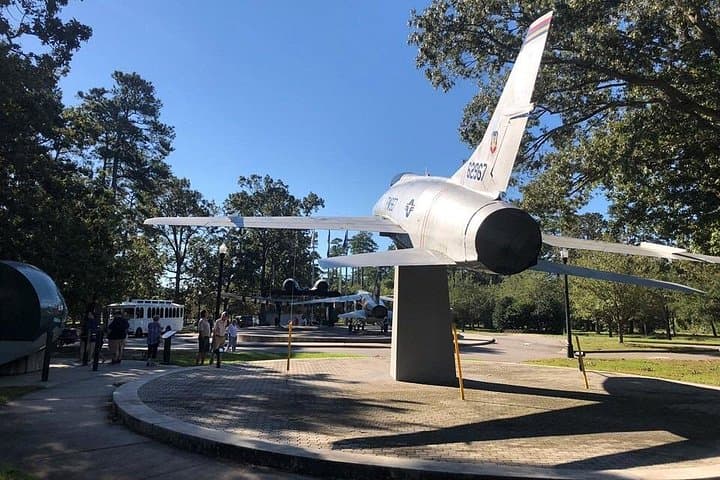
A late-afternoon trolley eases out from in front of Tupelo Honey at The Market Common, windows fogging slightly as the climate-controlled car pulls you through streets that once hummed with bomber engines. The driver’s narration threads local voices and dates into the landscape — runway outlines, hangar foundations, a POW camp footprint — and you begin to read the town differently.
A late-afternoon trolley eases out from in front of Tupelo Honey at The Market Common, windows fogging slightly as the climate-controlled car pulls you through streets that once hummed with bomber engines. The driver’s narration threads local voices and dates into the landscape — runway outlines, hangar foundations, a POW camp footprint — and you begin to read the town differently.
This two-hour experience centers on the former Myrtle Beach Air Force Base, a WWII Army Air Corps field that became a Cold War installation and later transitioned into the city’s airport and Market Common district. Static warbirds at Warbird Park, a small military collection at the Gen. Robert H. Reed Recreation Center, and memorabilia displayed in the Norton General Aviation Terminal give a compact but tangible view of mid-century military life in coastal South Carolina.
Culturally the tour connects veterans’ stories to modern Myrtle Beach commerce: restaurants and shopping occupying former base lots, plaques honoring servicemen, and community events that keep memory active. Geologically the area is low, sandy coastal plain — flat, with palmettos and maritime shrubs framing remnants of asphalt and concrete.
Practicalities: arrive by 1:45 PM at Tupelo Honey; tours run about 120 minutes and split guests into two groups that swap a catered reception with a historic presentation. The trolley is enclosed and accessible for most fitness levels; children three and older are welcome. Book at least a week ahead when possible, carry sun protection for short outdoor stops, and treat static displays respectfully — photography is usually allowed but don’t touch artifacts.