THE ADVENTURE COLLECTIVE® · Independent discovery and booking for outdoor travel

Walk Chora’s narrow lanes, stand beneath the island’s iconic windmills and relax at Kalafatis on this four-hour half-day tour. Ideal for first-time visitors who want a compact, guided introduction to Mykonos’s culture, beaches and historic sites.
Walk Chora’s narrow lanes, stand beneath the island’s iconic windmills and relax at Kalafatis on this four-hour half-day tour. Ideal for first-time visitors who want a compact, guided introduction to Mykonos’s culture, beaches and historic sites.
Morning light cuts across whitewashed alleys as the tour begins in Chora, Mykonos Town. Participants thread narrow cobblestone streets where shuttered cafés and chapel domes lean into one another; the windmills preside on the ridge, slowly turning as if testing the Aegean breeze. A local guide sketches maps of place and practice—where fishermen once landed, where aristocrats built villas—and points out Petros the Pelican, the island’s informal mascot.
Verified experiences and guided adventures in the surrounding area.
Operated by MTM Experiences · Mykonos, South Aegean
Morning light cuts across whitewashed alleys as the tour begins in Chora, Mykonos Town. Participants thread narrow cobblestone streets where shuttered cafés and chapel domes lean into one another; the windmills preside on the ridge, slowly turning as if testing the Aegean breeze. A local guide sketches maps of place and practice—where fishermen once landed, where aristocrats built villas—and points out Petros the Pelican, the island’s informal mascot.
Mykonos sits near the sacred isle of Delos; its geology is low, rocky limestone smoothed by sea and wind, which made the hills ideal for windmill construction in the 16th–18th centuries. Culture here blends Cycladic Orthodox traditions—Panagia Tourliani monastery is central to local festivals—with tourism-driven beach culture. Expect contrasts: quiet monastery courtyards, then a dash to Kalafatis for a coffee break beside wind-whipped waters.
Practical guidance: this half-day runs about four hours with walking on uneven stone and short vehicle transfers between points. Dress smart-casual as requested but wear sturdy footwear—cobblestones get slick in shade—and carry water; summer sun is intense. Hotel transfers may incur an extra local fee at check-in; confirm pickup timing 30–60 minutes ahead. Photography windows are best early, before crowds swell; if you’re aiming for quieter moments, ask your guide about swapping stops. Respect monastery rules (modest dress) and beach signage protecting nesting birds. With measured pace and the right kit, this tour is an efficient primer on Mykonos’s history, coastal geology, and its lively coastal scenes.
easy.
4 hours.
Suitable for most fitness levels; requires standing and short walks on uneven surfaces.
The tour lasts about four hours with a mix of guided walking in Mykonos Town and short vehicle transfers to beaches and Ano Mera; pacing is relaxed to moderate.
There’s no paid admission required for the monastery visit, but modest dress is expected and some areas may be closed during services.
Pickups are available but may incur a local surcharge (typically €10–15 per person per way); confirm details with the operator at booking or check-in.
Yes—Kalafatis and Agios Ioannis have swim-friendly waters, but facilities depend on season; bring swimwear if you plan a quick dip.
Mykonos grew around maritime trade and served as a practical support island for nearby Delos; its windmills reflect a centuries-old grain-milling economy.
High visitor numbers strain beaches and freshwater resources; avoid single-use plastics, use reef-safe sunscreen, and follow local signage to protect nesting birds and marine life.
MTM Experiences operates guided outdoor trips and adventures with an emphasis on safety, stewardship, and memorable experiences.
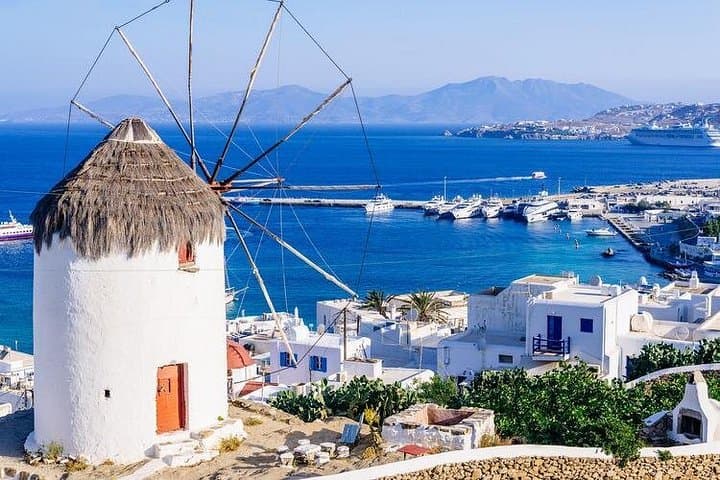
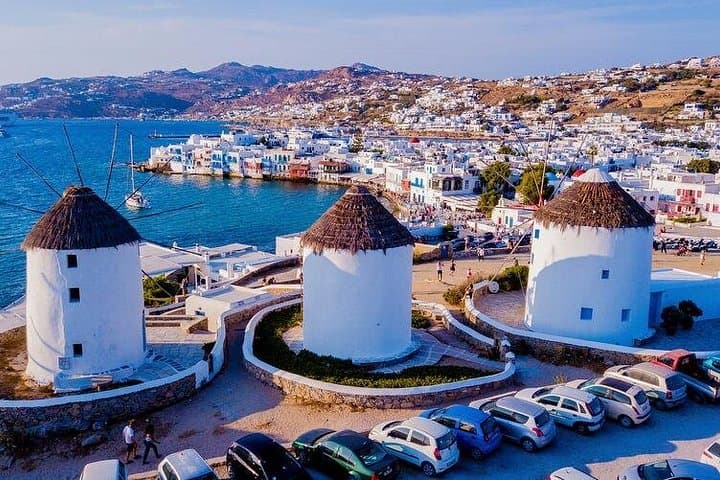
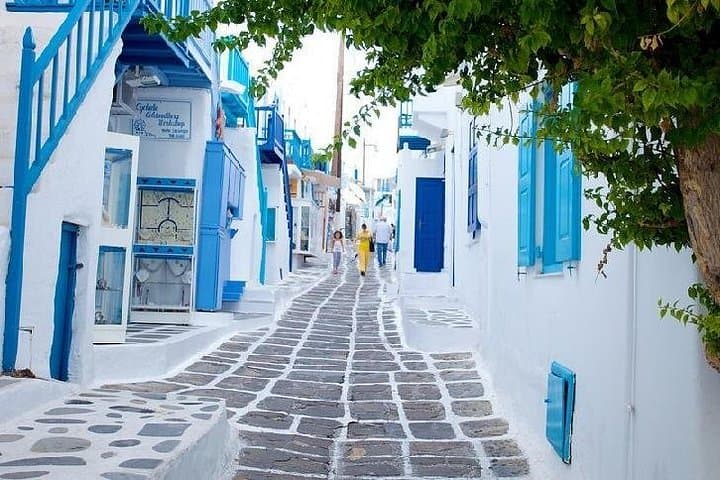
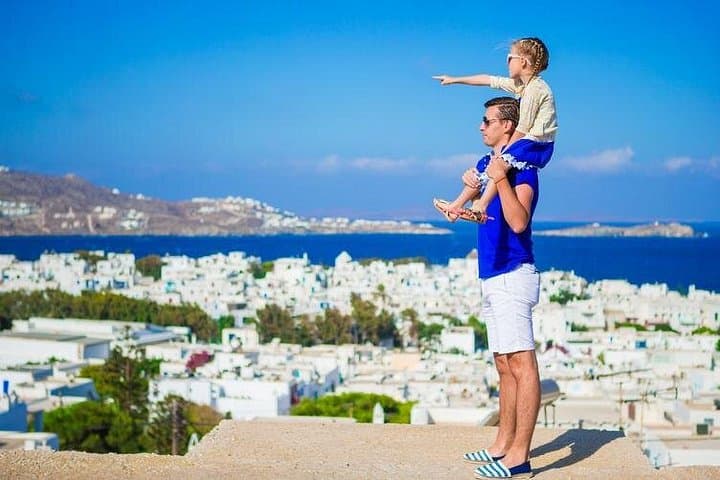
Morning light cuts across whitewashed alleys as the tour begins in Chora, Mykonos Town. Participants thread narrow cobblestone streets where shuttered cafés and chapel domes lean into one another; the windmills preside on the ridge, slowly turning as if testing the Aegean breeze. A local guide sketches maps of place and practice—where fishermen once landed, where aristocrats built villas—and points out Petros the Pelican, the island’s informal mascot.
Morning light cuts across whitewashed alleys as the tour begins in Chora, Mykonos Town. Participants thread narrow cobblestone streets where shuttered cafés and chapel domes lean into one another; the windmills preside on the ridge, slowly turning as if testing the Aegean breeze. A local guide sketches maps of place and practice—where fishermen once landed, where aristocrats built villas—and points out Petros the Pelican, the island’s informal mascot.
Mykonos sits near the sacred isle of Delos; its geology is low, rocky limestone smoothed by sea and wind, which made the hills ideal for windmill construction in the 16th–18th centuries. Culture here blends Cycladic Orthodox traditions—Panagia Tourliani monastery is central to local festivals—with tourism-driven beach culture. Expect contrasts: quiet monastery courtyards, then a dash to Kalafatis for a coffee break beside wind-whipped waters.
Practical guidance: this half-day runs about four hours with walking on uneven stone and short vehicle transfers between points. Dress smart-casual as requested but wear sturdy footwear—cobblestones get slick in shade—and carry water; summer sun is intense. Hotel transfers may incur an extra local fee at check-in; confirm pickup timing 30–60 minutes ahead. Photography windows are best early, before crowds swell; if you’re aiming for quieter moments, ask your guide about swapping stops. Respect monastery rules (modest dress) and beach signage protecting nesting birds. With measured pace and the right kit, this tour is an efficient primer on Mykonos’s history, coastal geology, and its lively coastal scenes.