THE ADVENTURE COLLECTIVE® · Independent discovery and booking for outdoor travel

A compact half-day tour that stitches Mykonos Town’s alleys, the quiet monastery at Ano Mera and a beach stop at Kalafatis into one easy, scenic loop. Expect cobbles, panoramic coastal roads and time to swim or relax by crystalline water.
A compact half-day tour that stitches Mykonos Town’s alleys, the quiet monastery at Ano Mera and a beach stop at Kalafatis into one easy, scenic loop. Expect cobbles, panoramic coastal roads and time to swim or relax by crystalline water.
You step off the bus at Fabrika and the air tastes of salt and fried dough; narrow alleys open like pages, whitewashed houses shading the lane where the windmills watch the harbor. The guided walk through Mykonos Chora moves like a short story—cobbled turns, blue doors, glimpses of Aegean beyond the rooftops—before the group climbs back into the bus for a panoramic circuit of the island.
Verified experiences and guided adventures in the surrounding area.
Operated by Greca Travel · Mykonos, Cyclades
You step off the bus at Fabrika and the air tastes of salt and fried dough; narrow alleys open like pages, whitewashed houses shading the lane where the windmills watch the harbor. The guided walk through Mykonos Chora moves like a short story—cobbled turns, blue doors, glimpses of Aegean beyond the rooftops—before the group climbs back into the bus for a panoramic circuit of the island.
History and geology are understated here: Mykonos sits on fractured limestone and schist, its rugged bedrock sculpted by ancient sea and wind into low terraces where white Cycladic houses perch. Ano Mera offers a quieter counterpoint—its 16th-century Panagia Tourliani monastery speaks to the island’s monastic past and rural olive-grove economy. Kalafatis, on the southeast coast, is where the sea reasserts itself: a long, wind-exposed beach with clear, shallow water that tempts a quick dip.
Culturally, expect lively town squares, local bakeries selling loukoumades, and residents balancing tourism and traditional island life. Guides often point out why lanes are narrow—defensive design and practical shade—and highlight windmill history tied to grain milling.
Practical guidance: wear sturdy sandals or walking shoes for cobbles and short stair sections, bring sun protection and a refillable water bottle, and time your visit for morning or late afternoon to avoid the midday heat. There’s a relaxed beach stop—pack swimwear if you want to jump in. The tour is low-effort but sensory-rich: plan for photos, light walking, and a few hours that cover town, countryside, and sea in one compact loop.
easy.
4 hours.
Suitable for most fitness levels; requires short periods of walking on uneven cobbles and standing during the guided portions.
Expect about 45–60 minutes of guided walking through Chora, mostly on level cobbles with short flights of steps.
Yes—the tour includes bus transportation for the panoramic island section and the transfer to Kalafatis beach.
The tour is rated easy but includes cobbled streets and some stairs; contact the operator ahead to confirm accessibility and arrange accommodations if needed.
Yes—there’s approximately one hour of free time at Kalafatis for swimming, walking the shore, or getting a coffee.
Mykonos developed as a maritime and agricultural island; its windmills were once central to local grain milling and the 16th-century Panagia Tourliani monastery in Ano Mera reflects the island’s monastic ties.
Mykonos faces pressure from seasonal tourism—stick to marked paths, avoid single-use plastics at the beach, and respect local signage to minimize impact.
Greca Travel operates guided outdoor trips and adventures with an emphasis on safety, stewardship, and memorable experiences.
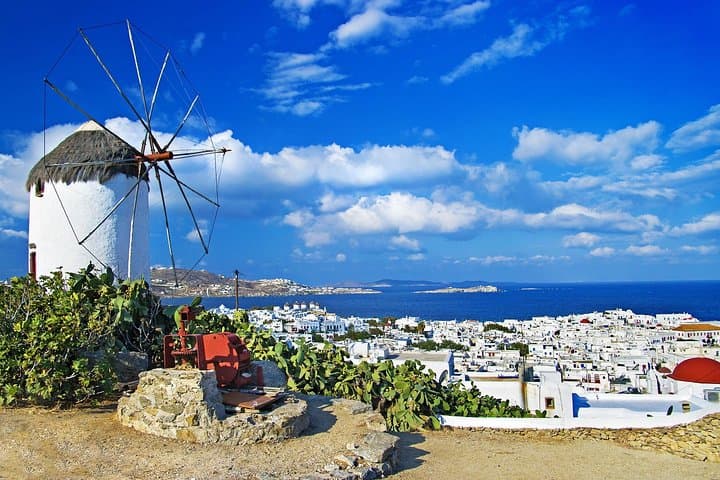
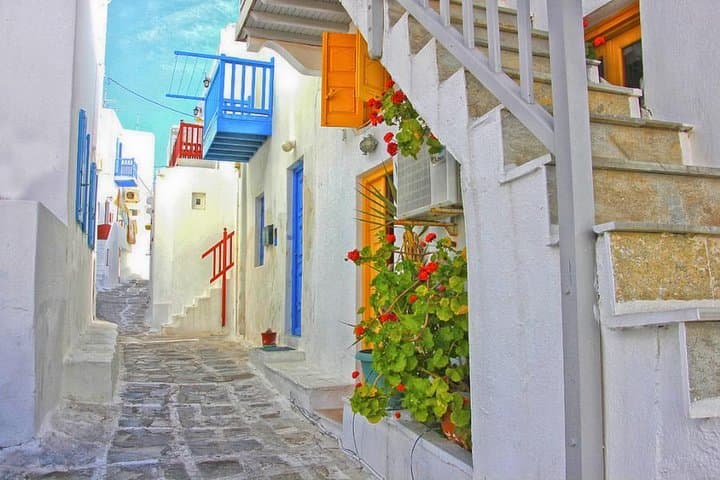
You step off the bus at Fabrika and the air tastes of salt and fried dough; narrow alleys open like pages, whitewashed houses shading the lane where the windmills watch the harbor. The guided walk through Mykonos Chora moves like a short story—cobbled turns, blue doors, glimpses of Aegean beyond the rooftops—before the group climbs back into the bus for a panoramic circuit of the island.
You step off the bus at Fabrika and the air tastes of salt and fried dough; narrow alleys open like pages, whitewashed houses shading the lane where the windmills watch the harbor. The guided walk through Mykonos Chora moves like a short story—cobbled turns, blue doors, glimpses of Aegean beyond the rooftops—before the group climbs back into the bus for a panoramic circuit of the island.
History and geology are understated here: Mykonos sits on fractured limestone and schist, its rugged bedrock sculpted by ancient sea and wind into low terraces where white Cycladic houses perch. Ano Mera offers a quieter counterpoint—its 16th-century Panagia Tourliani monastery speaks to the island’s monastic past and rural olive-grove economy. Kalafatis, on the southeast coast, is where the sea reasserts itself: a long, wind-exposed beach with clear, shallow water that tempts a quick dip.
Culturally, expect lively town squares, local bakeries selling loukoumades, and residents balancing tourism and traditional island life. Guides often point out why lanes are narrow—defensive design and practical shade—and highlight windmill history tied to grain milling.
Practical guidance: wear sturdy sandals or walking shoes for cobbles and short stair sections, bring sun protection and a refillable water bottle, and time your visit for morning or late afternoon to avoid the midday heat. There’s a relaxed beach stop—pack swimwear if you want to jump in. The tour is low-effort but sensory-rich: plan for photos, light walking, and a few hours that cover town, countryside, and sea in one compact loop.