THE ADVENTURE COLLECTIVE® · Independent discovery and booking for outdoor travel

Drive from Hoi An through rice paddies to My Son’s ruined Cham towers, then climb Marble Mountains’ caves and pagodas on a private six- to seven-hour transfer. Historical insight, artisan workshops and coastal views are packed into a single day.
Drive from Hoi An through rice paddies to My Son’s ruined Cham towers, then climb Marble Mountains’ caves and pagodas on a private six- to seven-hour transfer. Historical insight, artisan workshops and coastal views are packed into a single day.
Dawn light pulls the rice fields into sharp relief as your driver steers out of Hoi An toward a jungle-cut valley where weathered brick towers puncture the canopy.
Verified experiences and guided adventures in the surrounding area.
Operated by Da Nang Hoi An Private Shore Excursion & Local Tours · Hoi An, Quang Nam
Dawn light pulls the rice fields into sharp relief as your driver steers out of Hoi An toward a jungle-cut valley where weathered brick towers puncture the canopy.
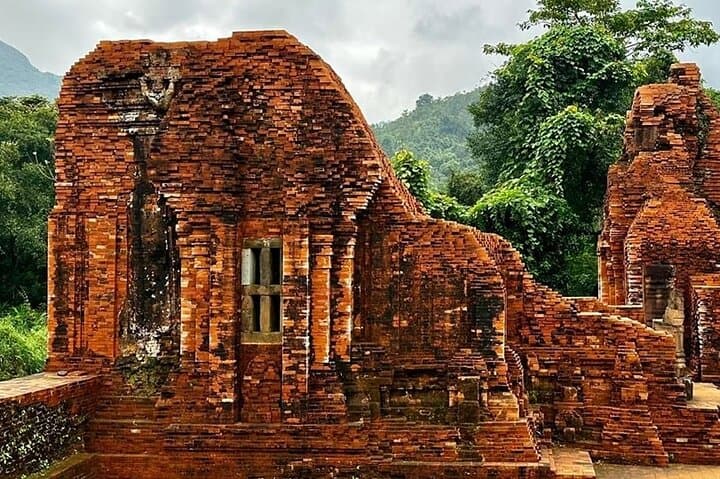
At My Son the air carries the faint dust of centuries—brickwork laid without mortar, lintels carved with Shiva and lingam motifs, and stones warmed by the same sun that watched the Cham kingdom rise between the 4th and 13th centuries. The complex sits in a tectonic basin where river terraces meet low hills; the material and scale of the towers speak to skilled masons working with fired brick rather than stone.
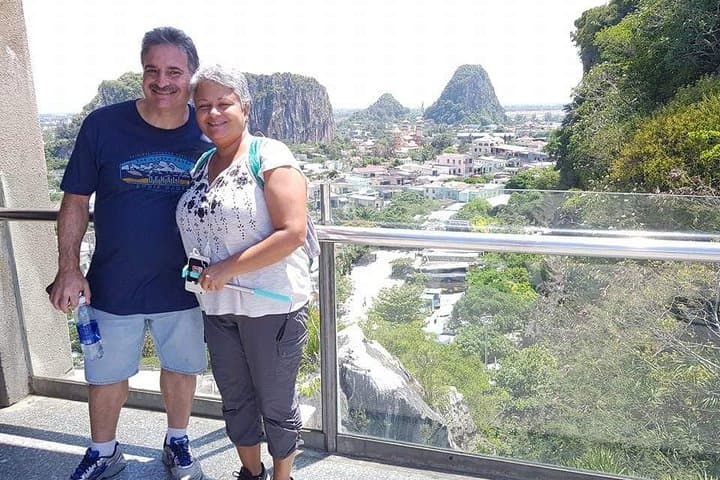
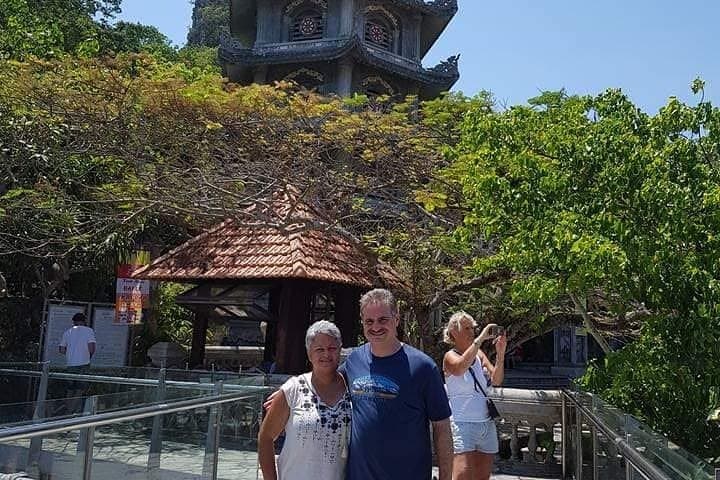
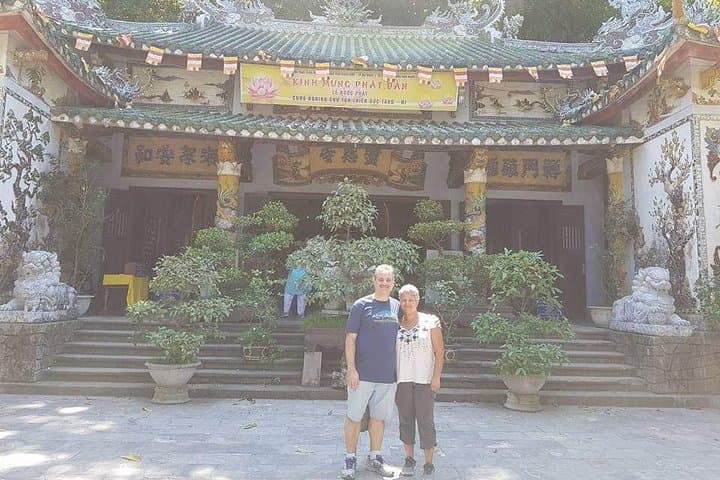
A short drive away, the Marble Mountains switch the mood: five limestone and marble hills named for the elements, scalloped with natural caves and threaded with narrow staircases. Here a Buddhist pagoda occupies a cool grotto, while the nearby Non Nuoc stone-carving village shows how local artisans coax animal forms and gods from raw marble.
Practical guidance: expect 6–7 hours total. My Son’s paths are uneven and cover roughly 1–2 km of walking around ruined temples; the Marble Mountains climb involves several flights of stairs and small elevation gains (roughly 100–150 m). Bring close-toed shoes, sun protection, and cash for entrance and small purchases. Modest clothing is required for worship areas; an elevator at Marble Mountain reduces steps but caves and viewpoints require some agility.
Early starts beat heat and crowds, and the private transfer makes logistics simple—drop-off and pick-up are door-to-door, leaving you to focus on history, geology and the quiet force of the landscape.
moderate.
6–7 hours.
Suitable for travelers with a moderate fitness level who can handle uneven terrain, short hikes, and stair climbs.
No; entrance tickets are purchased on site—bring cash or card where accepted and budget separately for both My Son and Marble Mountains.
Infants and small children can ride in strollers to parking areas, but both sites have stairs and uneven paths; families should be prepared to carry children short distances.
Expect 1–2 km of mostly flat but uneven walking at My Son and multiple flights of stairs (roughly 100–150 m elevation total) at Marble Mountains.
Yes—the private transfer is designed as a full-day excursion (about 6–7 hours), with door-to-door pickup and time allocated for both sites and the stone-carving village.
My Son served as a religious and political center for the Champa kingdom from the 4th to the 13th century; its tower-temples reflect Indianized Hindu architecture adapted to local materials.
My Son is a UNESCO site with active conservation to stabilize fragile brickwork; visitors should stay on marked paths, avoid touching carvings and limit flash photography in sensitive areas.
Da Nang Hoi An Private Shore Excursion & Local Tours operates guided outdoor trips and adventures with an emphasis on safety, stewardship, and memorable experiences.
Dawn light pulls the rice fields into sharp relief as your driver steers out of Hoi An toward a jungle-cut valley where weathered brick towers puncture the canopy.
Dawn light pulls the rice fields into sharp relief as your driver steers out of Hoi An toward a jungle-cut valley where weathered brick towers puncture the canopy.
At My Son the air carries the faint dust of centuries—brickwork laid without mortar, lintels carved with Shiva and lingam motifs, and stones warmed by the same sun that watched the Cham kingdom rise between the 4th and 13th centuries. The complex sits in a tectonic basin where river terraces meet low hills; the material and scale of the towers speak to skilled masons working with fired brick rather than stone.
A short drive away, the Marble Mountains switch the mood: five limestone and marble hills named for the elements, scalloped with natural caves and threaded with narrow staircases. Here a Buddhist pagoda occupies a cool grotto, while the nearby Non Nuoc stone-carving village shows how local artisans coax animal forms and gods from raw marble.
Practical guidance: expect 6–7 hours total. My Son’s paths are uneven and cover roughly 1–2 km of walking around ruined temples; the Marble Mountains climb involves several flights of stairs and small elevation gains (roughly 100–150 m). Bring close-toed shoes, sun protection, and cash for entrance and small purchases. Modest clothing is required for worship areas; an elevator at Marble Mountain reduces steps but caves and viewpoints require some agility.
Early starts beat heat and crowds, and the private transfer makes logistics simple—drop-off and pick-up are door-to-door, leaving you to focus on history, geology and the quiet force of the landscape.