THE ADVENTURE COLLECTIVE® · Independent discovery and booking for outdoor travel

A compact shore excursion from Chan May or Tien Sa that brings you into the heart of the Champa world—two hours among brick towers, carved lintels and a jungle-lined valley. Practical tips on timing, footwear and respect for a fragile UNESCO site.
A compact shore excursion from Chan May or Tien Sa that brings you into the heart of the Champa world—two hours among brick towers, carved lintels and a jungle-lined valley. Practical tips on timing, footwear and respect for a fragile UNESCO site.
You step off the ship and, in less than an hour of coastal road and lowland rice paddies, the hills tighten into a narrow jungle-fringed valley. Brick towers rise from the green like weathered sentries; their red-brown faces hold shadowed reliefs and rice-husk mortar that have survived centuries of monsoon and conflict.
Verified experiences and guided adventures in the surrounding area.
Operated by My Son Tours · Duy Xuyen, Quang Nam
You step off the ship and, in less than an hour of coastal road and lowland rice paddies, the hills tighten into a narrow jungle-fringed valley. Brick towers rise from the green like weathered sentries; their red-brown faces hold shadowed reliefs and rice-husk mortar that have survived centuries of monsoon and conflict.
My Son was the ceremonial heart of the Champa kingdom from roughly the 4th to 13th centuries, a collection of temples built in fired brick and sandstone and dedicated mainly to Shiva, Vishnu and other Hindu deities. Once numbering around 70 structures, the complex now retains about 20 temples clustered across a few square kilometers—ruined by time and war but carefully conserved under UNESCO protection. Geologically the valley is shallow, hemmed by low volcanic hills and dense secondary forest that give the site its sheltered, almost private feeling.
On a guided two-hour walk you’ll move between courtyards and towers, learn the iconography carved into lintels, and hear about Champa court life and later French and wartime damage. Practicalities: the visit is modest on exertion but involves uneven stone, loose gravel and open sun. Bring closed-toe shoes, sun protection, insect repellent, and a reusable water bottle. Timing matters—early morning light is best for photos and cooler temps; mid-day can be hot and busy.
Respect the sanctity of remaining shrines, follow your licensed guide, and allow time afterward to compare the museum displays or nearby Tra Kieu ruins. The trip balances easy access with rich history—an accessible shore excursion that delivers a concentrated dose of Vietnam’s layered past.
easy.
6–8 hours (including transfers).
Suitable for most fitness levels; requires short periods of standing and walking on uneven ground.
The guided visit is about two hours on-site; total tour time including transfers and lunch is roughly 6–8 hours depending on port location.
Parts of the complex and the visitor areas are accessible, but many temple platforms and paths are uneven; check with the operator about specific mobility needs.
This shore excursion includes entrance tickets and a local lunch as listed in the tour inclusions, but confirm details at booking.
Early morning offers cooler temperatures and better light for photography; late afternoon is also attractive but may be warmer and closer to return transfer times.
My Son was the religious center of the Champa Kingdom between roughly the 4th and 13th centuries and features brick and sandstone temple architecture dedicated to Hindu deities.
The site suffered wartime damage and has undergone major restoration under UNESCO; visitors are asked to stay on paths, avoid touching fragile carvings and limit impact on the sensitive archaeological fabric.
My Son Tours operates guided outdoor trips and adventures with an emphasis on safety, stewardship, and memorable experiences.
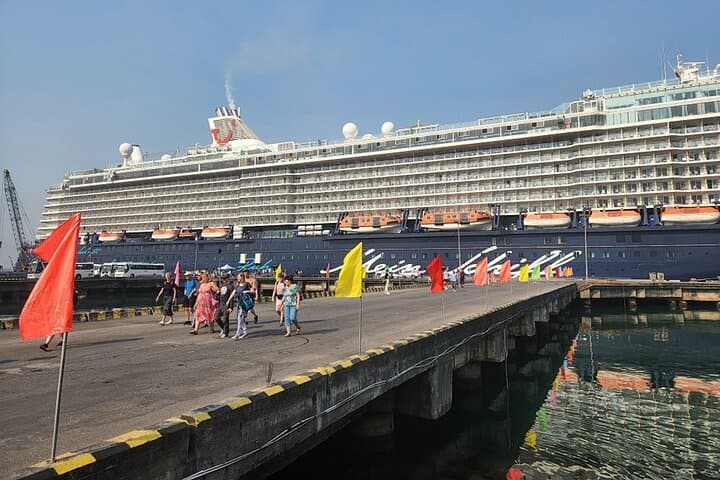
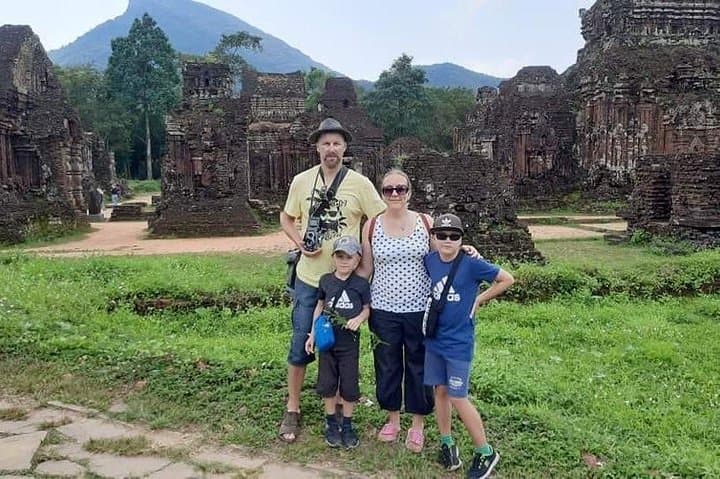
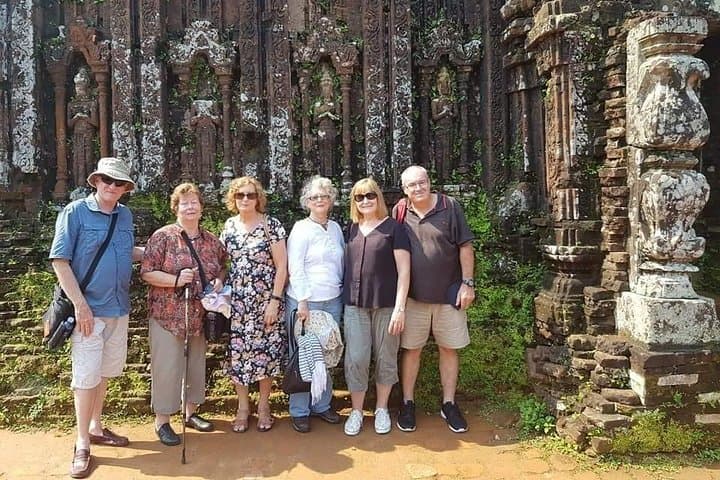
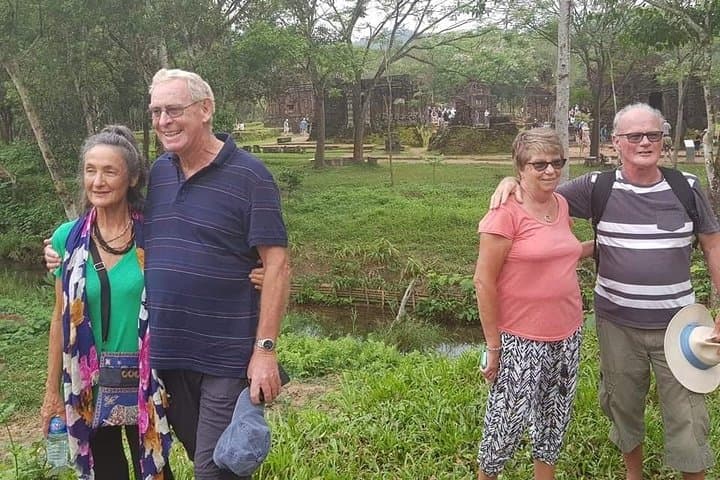
You step off the ship and, in less than an hour of coastal road and lowland rice paddies, the hills tighten into a narrow jungle-fringed valley. Brick towers rise from the green like weathered sentries; their red-brown faces hold shadowed reliefs and rice-husk mortar that have survived centuries of monsoon and conflict.
You step off the ship and, in less than an hour of coastal road and lowland rice paddies, the hills tighten into a narrow jungle-fringed valley. Brick towers rise from the green like weathered sentries; their red-brown faces hold shadowed reliefs and rice-husk mortar that have survived centuries of monsoon and conflict.
My Son was the ceremonial heart of the Champa kingdom from roughly the 4th to 13th centuries, a collection of temples built in fired brick and sandstone and dedicated mainly to Shiva, Vishnu and other Hindu deities. Once numbering around 70 structures, the complex now retains about 20 temples clustered across a few square kilometers—ruined by time and war but carefully conserved under UNESCO protection. Geologically the valley is shallow, hemmed by low volcanic hills and dense secondary forest that give the site its sheltered, almost private feeling.
On a guided two-hour walk you’ll move between courtyards and towers, learn the iconography carved into lintels, and hear about Champa court life and later French and wartime damage. Practicalities: the visit is modest on exertion but involves uneven stone, loose gravel and open sun. Bring closed-toe shoes, sun protection, insect repellent, and a reusable water bottle. Timing matters—early morning light is best for photos and cooler temps; mid-day can be hot and busy.
Respect the sanctity of remaining shrines, follow your licensed guide, and allow time afterward to compare the museum displays or nearby Tra Kieu ruins. The trip balances easy access with rich history—an accessible shore excursion that delivers a concentrated dose of Vietnam’s layered past.