THE ADVENTURE COLLECTIVE® · Independent discovery and booking for outdoor travel

Visit My Son Sanctuary on a convenient half-day tour from Hoi An or Da Nang. This private tour covers the key temple groups with an English-speaking guide, entrance fees and transfers included—ideal for travelers wanting cultural depth with minimal logistics.
Visit My Son Sanctuary on a convenient half-day tour from Hoi An or Da Nang. This private tour covers the key temple groups with an English-speaking guide, entrance fees and transfers included—ideal for travelers wanting cultural depth with minimal logistics.
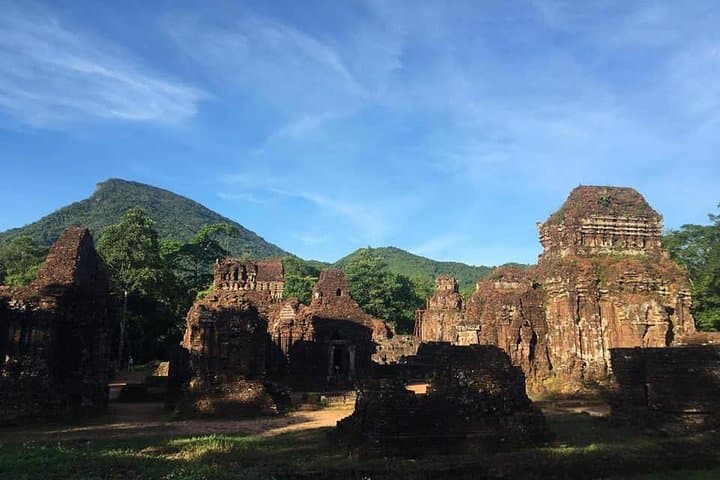
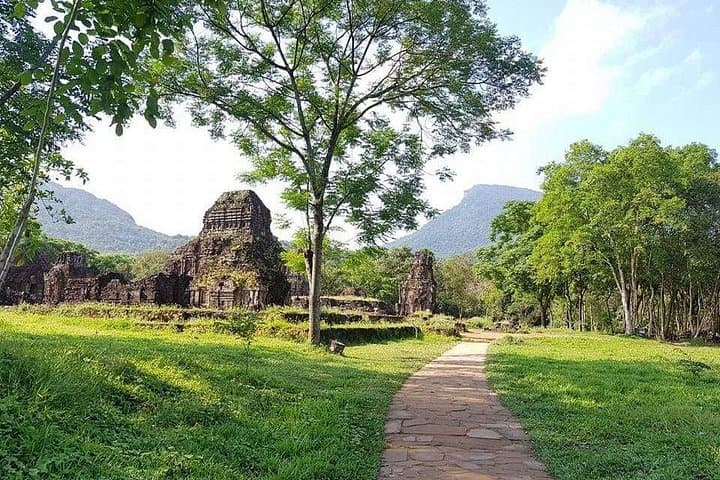
You step out of the minivan and the valley seems to inhale — humid air, the scent of wet earth, and a ring of low, jungle-clad ridges that frame brick towers rising like old teeth.
Verified experiences and guided adventures in the surrounding area.
Operated by Da Nang Hoi An Private Tours & Shore Excursion · Hoi An, Quang Nam Province
You step out of the minivan and the valley seems to inhale — humid air, the scent of wet earth, and a ring of low, jungle-clad ridges that frame brick towers rising like old teeth.
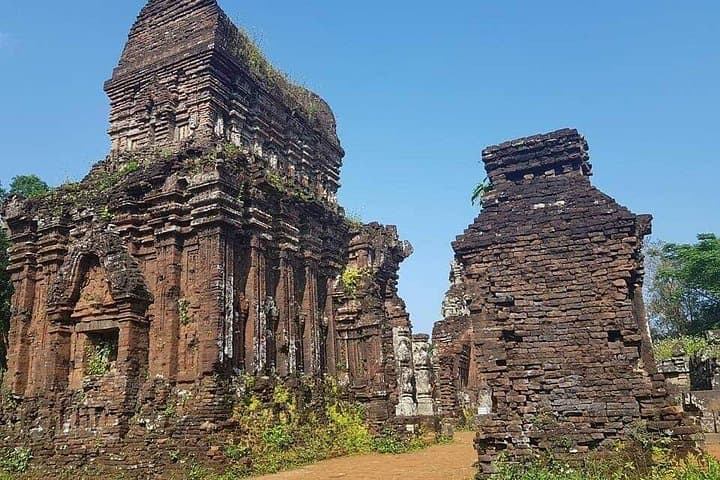
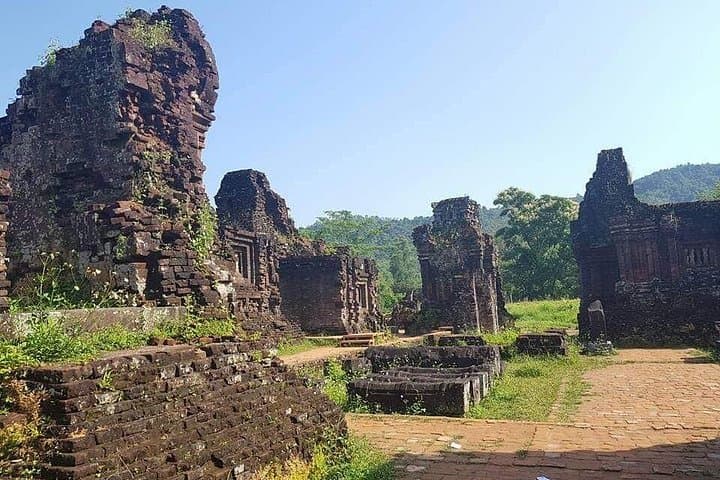
My Son sits in a narrow valley carved from sedimentary foothills where Cham masons stacked fired brick and sandstone into tower-temples from the 4th to 13th centuries. Once the religious heart of the Champa kingdom, the site once held some 70 constructions; roughly 20 groups remain after centuries of conflict and weather. Bas-reliefs and lintels tell stories of Shiva, Vishnu and royal ritual, and guides commonly explain how temples were fitted together without mortar.
Geologically simple but visually compelling, the valley funnels afternoon light that offsets the deep red of the brick, while the surrounding secondary forest hums with insect and bird life. Local Cham culture survives in festivals, textiles and ritual motifs—your guide will place the ruins in the sweep of regional trade and warfare and explain ongoing conservation efforts led with UNESCO support.
Practically: choose the morning slot for cooler air and fewer buses, or afternoon for warmer, golden light. Allow 2–3 hours onsite; expect short walks from the buggy between groups, uneven packed-earth trails, and limited shade. Bring sun protection, reusable water, and steady footwear. The tour includes entrance fees, bottled water, and a professional English-speaking guide; transfers from Hoi An or Da Nang are private and roughly 40–60 minutes depending on traffic. Respect signage, avoid climbing ruins, and leave no trace—these ruins are fragile and the valley responds quickly to human pressure.
easy.
4 hours (includes transfers).
Suitable for travelers with basic mobility; involves short walks on uneven ground and low steps
Yes — the tour price includes My Son entrance tickets as listed in the inclusions.
Transfer time is typically 40–60 minutes from Hoi An and 60–90 minutes from central Da Nang depending on traffic.
The tour notes wheelchair-accessible transportation and limited paths, but access within the archaeological zones may be uneven; contact the operator to confirm specific needs.
Photography is allowed in most areas, but follow guide instructions and signage; flash or climbing on ruins is prohibited to protect fragile carvings.
My Son served as the religious center of the Champa Kingdom between the 4th and 13th centuries and contains Hindu tower-temples dedicated to deities like Shiva and Vishnu.
The site suffered wartime damage and ongoing conservation involves international restoration and limits on visitor impact; stay on trails and avoid touching masonry.
Da Nang Hoi An Private Tours & Shore Excursion operates guided outdoor trips and adventures with an emphasis on safety, stewardship, and memorable experiences.
You step out of the minivan and the valley seems to inhale — humid air, the scent of wet earth, and a ring of low, jungle-clad ridges that frame brick towers rising like old teeth.
You step out of the minivan and the valley seems to inhale — humid air, the scent of wet earth, and a ring of low, jungle-clad ridges that frame brick towers rising like old teeth.
My Son sits in a narrow valley carved from sedimentary foothills where Cham masons stacked fired brick and sandstone into tower-temples from the 4th to 13th centuries. Once the religious heart of the Champa kingdom, the site once held some 70 constructions; roughly 20 groups remain after centuries of conflict and weather. Bas-reliefs and lintels tell stories of Shiva, Vishnu and royal ritual, and guides commonly explain how temples were fitted together without mortar.
Geologically simple but visually compelling, the valley funnels afternoon light that offsets the deep red of the brick, while the surrounding secondary forest hums with insect and bird life. Local Cham culture survives in festivals, textiles and ritual motifs—your guide will place the ruins in the sweep of regional trade and warfare and explain ongoing conservation efforts led with UNESCO support.
Practically: choose the morning slot for cooler air and fewer buses, or afternoon for warmer, golden light. Allow 2–3 hours onsite; expect short walks from the buggy between groups, uneven packed-earth trails, and limited shade. Bring sun protection, reusable water, and steady footwear. The tour includes entrance fees, bottled water, and a professional English-speaking guide; transfers from Hoi An or Da Nang are private and roughly 40–60 minutes depending on traffic. Respect signage, avoid climbing ruins, and leave no trace—these ruins are fragile and the valley responds quickly to human pressure.