THE ADVENTURE COLLECTIVE® · Independent discovery and booking for outdoor travel

Visit My Son Sanctuary from Hoi An for an immersive morning among Champa temples, a hands-on rice-paper workshop, and a relaxing Thu Bon River boat ride. This half-day guided tour combines archaeology, local craft, and a riverside finish.
Visit My Son Sanctuary from Hoi An for an immersive morning among Champa temples, a hands-on rice-paper workshop, and a relaxing Thu Bon River boat ride. This half-day guided tour combines archaeology, local craft, and a riverside finish.
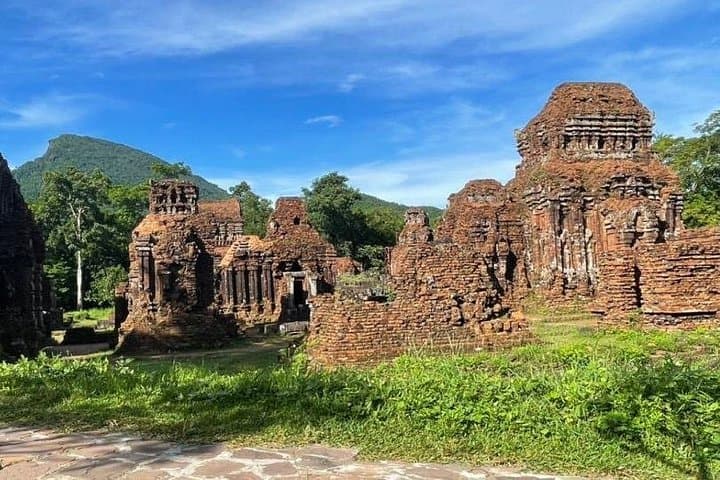
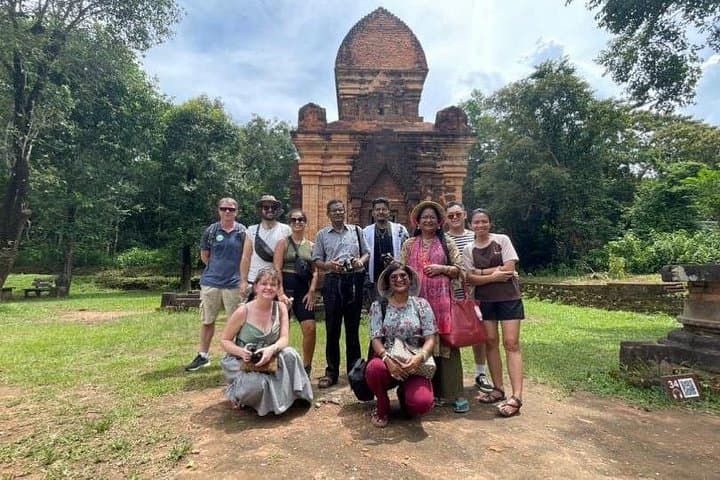
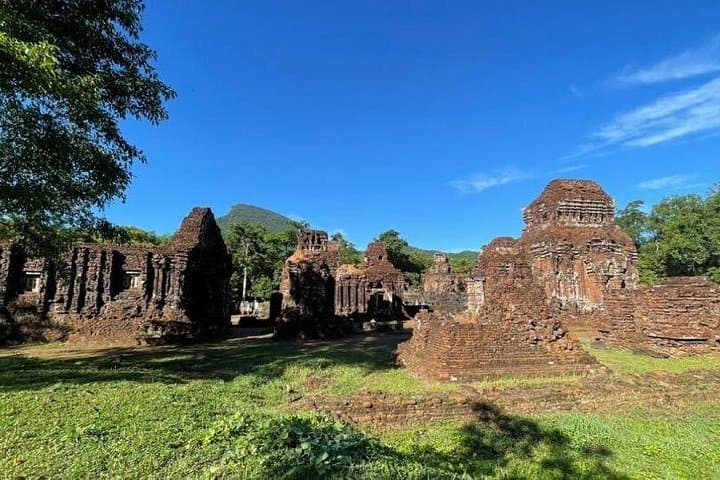
You step from the minivan into a humid valley where brick towers rise through ferns and low forest, their weathered faces hinting at centuries of ritual and repair.
Verified experiences and guided adventures in the surrounding area.
Operated by Bay Mau Tour · Duy Xuyen, Quang Nam
You step from the minivan into a humid valley where brick towers rise through ferns and low forest, their weathered faces hinting at centuries of ritual and repair.
The My Son complex was the spiritual center of the Champa kingdom from roughly the 4th to the 13th century; what remains are red-brick sanctuaries set in a river valley carved by alluvial deposits and sheltered by low limestone hills. Local guides will point out construction techniques—interlocking fired brick and lime mortar—and explain how the site’s Hindu iconography and Cham performances tie into present-day community identity.
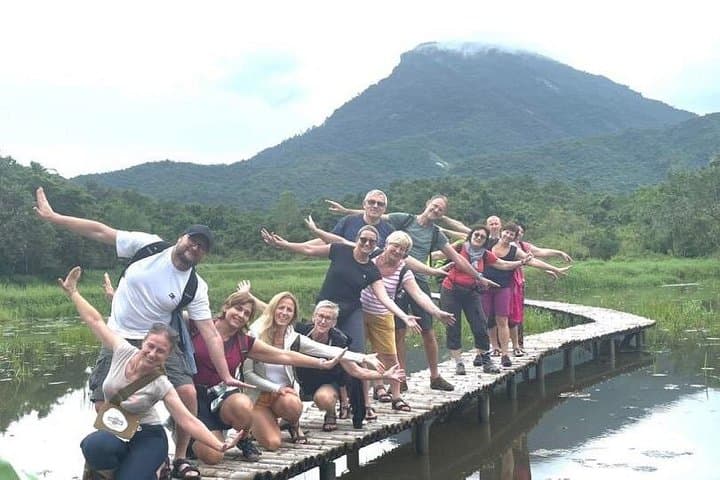
The tour shifts from archaeology to everyday craft: a hands-on rice-paper workshop in a nearby house shows how cassava or rice starch becomes the thin sheets used across Vietnam. The final act is a slow boat ride down the Thu Bon River, where rice paddies and mangrove-edged banks slide past and kingfishers dart above the surface.
Practical guidance: expect roughly two hours of walking on uneven paths and short stair sections; bring closed-toe shoes and insect repellent. Start early—the light is better for photography and heat is lower—and carry at least 1–1.5 L of water. The itinerary typically includes hotel pickup in Hoi An, an English-speaking guide, entrance fees, and a mid-day local lunch. Respect restricted areas at the sanctuary, and keep noise low during performances. The combination of archaeology, hands-on craft, and a riverside finish makes this a compact cultural day-trip suited to most travelers seeking context beyond Hoi An’s old town.
easy.
6 hours.
Suitable for travelers comfortable walking short distances on uneven ground for up to two hours; minimal stamina required for the rest of the day
Yes—this tour typically includes hotel pickup and drop-off from Hoi An; confirm your pickup time when you book.
Entrance fees and a local lunch are included as part of the itinerary, along with the rice-paper workshop and boat trip.
My Son has uneven terrain and steps; it is not fully wheelchair accessible and is not recommended for travelers with significant mobility limitations.
Photography is generally allowed in most outdoor areas, but follow the guide’s directions—some structures may be roped off for conservation or ceremonies.
My Son was the religious center of the Champa kingdom between the 4th and 13th centuries, featuring brick temples dedicated to Hindu deities and later adaptations by local communities.
My Son is a protected UNESCO site with ongoing restoration; visitors should stick to marked paths and avoid touching fragile brickwork to reduce wear and help preservation efforts.
Bay Mau Tour operates guided outdoor trips and adventures with an emphasis on safety, stewardship, and memorable experiences.
You step from the minivan into a humid valley where brick towers rise through ferns and low forest, their weathered faces hinting at centuries of ritual and repair.
You step from the minivan into a humid valley where brick towers rise through ferns and low forest, their weathered faces hinting at centuries of ritual and repair.
The My Son complex was the spiritual center of the Champa kingdom from roughly the 4th to the 13th century; what remains are red-brick sanctuaries set in a river valley carved by alluvial deposits and sheltered by low limestone hills. Local guides will point out construction techniques—interlocking fired brick and lime mortar—and explain how the site’s Hindu iconography and Cham performances tie into present-day community identity.
The tour shifts from archaeology to everyday craft: a hands-on rice-paper workshop in a nearby house shows how cassava or rice starch becomes the thin sheets used across Vietnam. The final act is a slow boat ride down the Thu Bon River, where rice paddies and mangrove-edged banks slide past and kingfishers dart above the surface.
Practical guidance: expect roughly two hours of walking on uneven paths and short stair sections; bring closed-toe shoes and insect repellent. Start early—the light is better for photography and heat is lower—and carry at least 1–1.5 L of water. The itinerary typically includes hotel pickup in Hoi An, an English-speaking guide, entrance fees, and a mid-day local lunch. Respect restricted areas at the sanctuary, and keep noise low during performances. The combination of archaeology, hands-on craft, and a riverside finish makes this a compact cultural day-trip suited to most travelers seeking context beyond Hoi An’s old town.