THE ADVENTURE COLLECTIVE® · Independent discovery and booking for outdoor travel

Visit My Son on a focused morning tour from Hoi An or Da Nang to see Cham temple ruins, watch an Apsara dance, and learn how the Champa kingdom built major brick sanctuaries without mortar. Early departures make the site easier to explore.
Visit My Son on a focused morning tour from Hoi An or Da Nang to see Cham temple ruins, watch an Apsara dance, and learn how the Champa kingdom built major brick sanctuaries without mortar. Early departures make the site easier to explore.
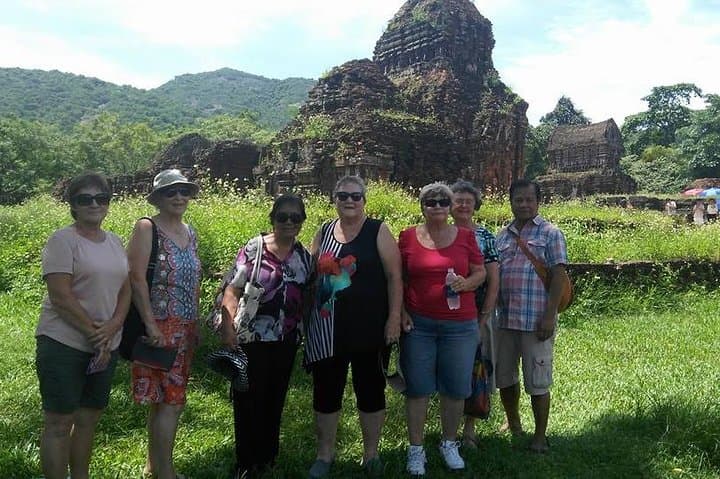
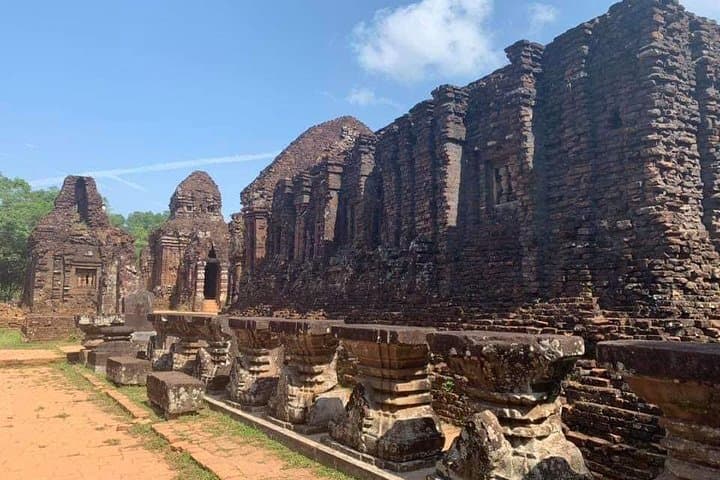
Morning light cuts across a narrow valley as the minivan eases into the My Son complex and electric carts glide visitors to the drop-off point. Bricks warm underfoot, carved lintels and tower fragments rise among palms, and the hush of jungle sometimes parts for the thin, haunting note of a ceremonial whistle performed by an authentic Cham descendant. An Apsara dancer moves with deliberate gestures; the performance places the temples back into daily ritual even as tourists file past.
Verified experiences and guided adventures in the surrounding area.
Operated by Da Nang Hoi An Private Shore Excursion & Local Tours · Duy Xuyên, Quang Nam
Morning light cuts across a narrow valley as the minivan eases into the My Son complex and electric carts glide visitors to the drop-off point. Bricks warm underfoot, carved lintels and tower fragments rise among palms, and the hush of jungle sometimes parts for the thin, haunting note of a ceremonial whistle performed by an authentic Cham descendant. An Apsara dancer moves with deliberate gestures; the performance places the temples back into daily ritual even as tourists file past.
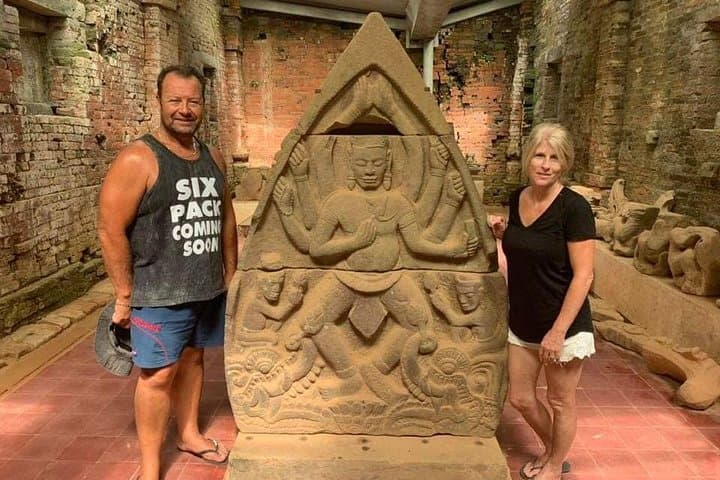
My Son was the spiritual heart of the Champa kingdom from roughly the 4th to the 13th centuries. Its buildings—made of baked brick and local stone—demonstrate advanced masonry without mortar and show strong Hindu-Brahmanic iconography adapted to local beliefs. The site sits in a valley ringed by low karst hills and tropical forest; seasonal rains green the slopes and feed small streams that once supported rice terraces nearby.
Practically: allow 90–120 minutes on-site to see the major groups and catch the cultural performance. Paths are uneven with short steps and loose brick; a short walk from the electric-cart drop-off is required. Photography is welcomed but follow signposted restrictions and stay off fragile foundations. Bring sun protection and water—heat can build quickly—and plan for early morning to avoid crowds and stronger afternoon sun. Guides add essential context: ask about construction techniques, deity iconography, and recent restoration work to get the most from a morning here.
easy.
4–5 hours (includes transport).
Suitable for most fitness levels; requires short, easy walks on uneven ground
The tour runs about 4–5 hours door-to-door, including hotel pickup in Hoi An or Da Nang, transport, entrance fees, a guided walk through My Son, and an Apsara dance performance.
The visitor areas have paved sections and electric-cart access to the drop-off, but many temple platforms require steps and uneven ground—assistance may be needed for limited mobility.
Photography is allowed in most areas but tripods and professional equipment may be restricted—follow posted rules and guide instructions to protect structures.
Dress modestly—cover shoulders and avoid revealing clothing out of respect for the site's spiritual significance; comfortable layers work best for changing weather.
My Son served as a religious center of the Champa kingdom from the 4th to the 13th century and contains one of Southeast Asia’s most significant collections of brick tower temples.
Ongoing restoration stabilizes brickwork; visitors are asked to follow pathways and not touch carvings to minimize wear and support UNESCO-led preservation efforts.
Da Nang Hoi An Private Shore Excursion & Local Tours operates guided outdoor trips and adventures with an emphasis on safety, stewardship, and memorable experiences.

Morning light cuts across a narrow valley as the minivan eases into the My Son complex and electric carts glide visitors to the drop-off point. Bricks warm underfoot, carved lintels and tower fragments rise among palms, and the hush of jungle sometimes parts for the thin, haunting note of a ceremonial whistle performed by an authentic Cham descendant. An Apsara dancer moves with deliberate gestures; the performance places the temples back into daily ritual even as tourists file past.
Morning light cuts across a narrow valley as the minivan eases into the My Son complex and electric carts glide visitors to the drop-off point. Bricks warm underfoot, carved lintels and tower fragments rise among palms, and the hush of jungle sometimes parts for the thin, haunting note of a ceremonial whistle performed by an authentic Cham descendant. An Apsara dancer moves with deliberate gestures; the performance places the temples back into daily ritual even as tourists file past.
My Son was the spiritual heart of the Champa kingdom from roughly the 4th to the 13th centuries. Its buildings—made of baked brick and local stone—demonstrate advanced masonry without mortar and show strong Hindu-Brahmanic iconography adapted to local beliefs. The site sits in a valley ringed by low karst hills and tropical forest; seasonal rains green the slopes and feed small streams that once supported rice terraces nearby.
Practically: allow 90–120 minutes on-site to see the major groups and catch the cultural performance. Paths are uneven with short steps and loose brick; a short walk from the electric-cart drop-off is required. Photography is welcomed but follow signposted restrictions and stay off fragile foundations. Bring sun protection and water—heat can build quickly—and plan for early morning to avoid crowds and stronger afternoon sun. Guides add essential context: ask about construction techniques, deity iconography, and recent restoration work to get the most from a morning here.