THE ADVENTURE COLLECTIVE® · Independent discovery and booking for outdoor travel

A full-day private shore excursion that links the jungle-cloaked Cham temples of My Son with the riverfront merchants’ quarter of Hoi An—both UNESCO World Heritage sites. This tour pairs hands-on history with practical coastal logistics for cruise passengers and independent travelers.
A full-day private shore excursion that links the jungle-cloaked Cham temples of My Son with the riverfront merchants’ quarter of Hoi An—both UNESCO World Heritage sites. This tour pairs hands-on history with practical coastal logistics for cruise passengers and independent travelers.
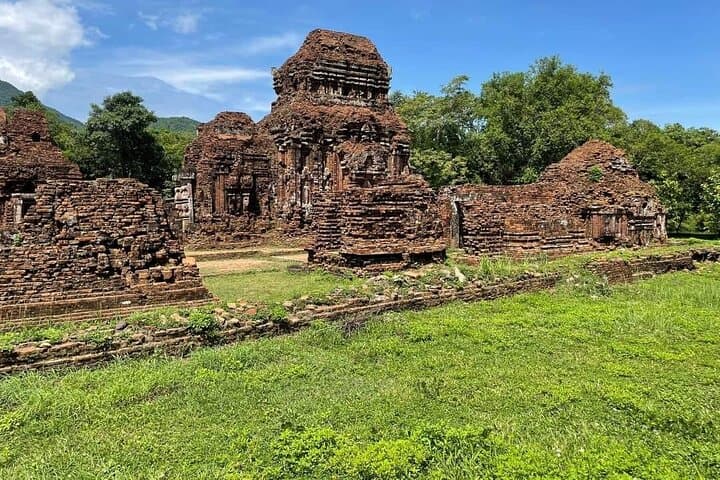
You step off the gangway into humid air and, within minutes, trade the pulse of a busy port for low, forested mountains and rice-flat valleys. The road to My Son threads through villages where water buffalo graze and farm tracks meet the jungle edge; at the sanctuary the jungle seems to press close around brick towers that still catch the sun.
Verified experiences and guided adventures in the surrounding area.
Operated by Golden Bridge Tour Da Nang · Hoi An, Quang Nam
You step off the gangway into humid air and, within minutes, trade the pulse of a busy port for low, forested mountains and rice-flat valleys. The road to My Son threads through villages where water buffalo graze and farm tracks meet the jungle edge; at the sanctuary the jungle seems to press close around brick towers that still catch the sun.
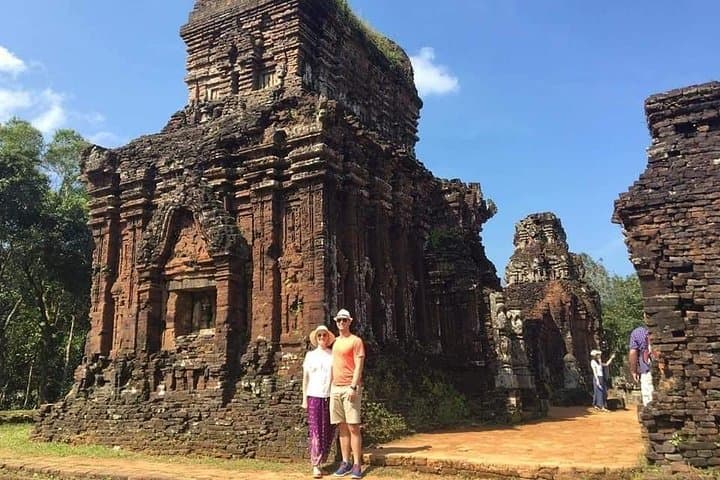
My Son was the religious heart of the Champa kingdom from roughly the 4th to the 13th century; its red brick architecture—set in a small valley of volcanic ridges and alluvial plains—shows local stonework and sandstone reliefs eroded by monsoon seasons and wartime damage. Hoi An, downstream on the Thu Bon River, later became a major trading port where Japanese merchants built a covered bridge and Chinese assembly halls show the town’s merchant cosmopolitanism.
Expect about an hour–90 minute drive each way from Da Nang to My Son, then roughly an hour to Hoi An; walking surfaces at My Son are dirt paths and uneven stone, while Hoi An’s ancient town is mostly cobblestone and narrow laneways. The day balances archaeology with a guided city walk—visits can include Tan Ky House, the Japanese Covered Bridge, local markets and a riverside lunch.
Practical tips: start early to avoid midday heat, bring sun protection and steady footwear for uneven ruins, and carry small bills for market purchases. Entrance fees and lunch are included in most shore excursions, and pick-up/drop-off schedules are coordinated with cruise timetables—confirm your ship’s departure window to ensure a timely return.
moderate.
8 hours.
Moderate fitness: several short walks on uneven ground and stairs in historic houses; not strenuous but requires steady balance.
Yes—tours can pick up directly at Chan May or Tiên Sa/Da Nang ports; provide your ship’s arrival and departure times when booking.
According to the standard itinerary, entrance fees at My Son and Hoi An plus a local restaurant lunch and bottled water are included.
Some parts of Hoi An are flat and accessible, but My Son involves uneven paths and limited accessibility; contact the operator for specifics and available assistance.
Expect multiple short walks—about 1–2 km at My Son across uneven ground and about 1–3 km of walking around Hoi An’s streets and market areas.
My Son served as the religious center for the Champa kingdom; Hoi An grew as a multi-national trading port between the 15th and 18th centuries.
Conservation efforts focus on stabilizing fragile brickwork at My Son and managing visitor flow in Hoi An—stay on marked paths, avoid touching reliefs, and minimize single-use plastics.
Golden Bridge Tour Da Nang operates guided outdoor trips and adventures with an emphasis on safety, stewardship, and memorable experiences.
You step off the gangway into humid air and, within minutes, trade the pulse of a busy port for low, forested mountains and rice-flat valleys. The road to My Son threads through villages where water buffalo graze and farm tracks meet the jungle edge; at the sanctuary the jungle seems to press close around brick towers that still catch the sun.
You step off the gangway into humid air and, within minutes, trade the pulse of a busy port for low, forested mountains and rice-flat valleys. The road to My Son threads through villages where water buffalo graze and farm tracks meet the jungle edge; at the sanctuary the jungle seems to press close around brick towers that still catch the sun.
My Son was the religious heart of the Champa kingdom from roughly the 4th to the 13th century; its red brick architecture—set in a small valley of volcanic ridges and alluvial plains—shows local stonework and sandstone reliefs eroded by monsoon seasons and wartime damage. Hoi An, downstream on the Thu Bon River, later became a major trading port where Japanese merchants built a covered bridge and Chinese assembly halls show the town’s merchant cosmopolitanism.
Expect about an hour–90 minute drive each way from Da Nang to My Son, then roughly an hour to Hoi An; walking surfaces at My Son are dirt paths and uneven stone, while Hoi An’s ancient town is mostly cobblestone and narrow laneways. The day balances archaeology with a guided city walk—visits can include Tan Ky House, the Japanese Covered Bridge, local markets and a riverside lunch.
Practical tips: start early to avoid midday heat, bring sun protection and steady footwear for uneven ruins, and carry small bills for market purchases. Entrance fees and lunch are included in most shore excursions, and pick-up/drop-off schedules are coordinated with cruise timetables—confirm your ship’s departure window to ensure a timely return.