THE ADVENTURE COLLECTIVE® · Independent discovery and booking for outdoor travel

Visit My Son at first light to see the Champa temples change color and avoid the daily crowds. This early-morning private tour includes pickup, entrance, and a guide who points out the best photo angles and cultural context.
Visit My Son at first light to see the Champa temples change color and avoid the daily crowds. This early-morning private tour includes pickup, entrance, and a guide who points out the best photo angles and cultural context.
Before the bus doors open, the valley exhales cool air and the first light slips along low brick towers—My Son’s red stones drink the dawn and the paddy fields answer with a soft shimmer.
Verified experiences and guided adventures in the surrounding area.
Operated by Golden Bridge Tour Da Nang · Duy Xuyen, Quang Nam
Before the bus doors open, the valley exhales cool air and the first light slips along low brick towers—My Son’s red stones drink the dawn and the paddy fields answer with a soft shimmer.
The complex is the spiritual heart of the Champa Kingdom, a cluster of brick sanctuaries built and rebuilt between the 4th and 13th centuries. Weathered later by tropical rains and wartime damage, the towers now sit in a river valley carved from volcanic soils and alluvial plains, where the Cham once read the sky and ritually aligned temples to the cardinal points.
A morning visit emphasizes atmosphere: shafts of light find carved lintels, humidity lifts off the grass, and the sound of villages drifting on the breeze makes the site feel alive. Guides explain Cham iconography, local wet-rice culture, and the painstaking conservation work that brought many blocks back from rubble.
Practically, expect easy walking on compacted earth, short stone steps and uneven brick surfaces across roughly 1–2 km of route; elevation change is negligible. The tour includes hotel pickup from Hoi An or Da Nang, bottled water, entrance ticket, and an English-speaking guide.
For photographers and visitors: go early to avoid heat and crowds, wear sturdy closed-toe shoes, bring sun protection and insect repellent, and move deliberately—several fragile carvings sit close to the path. Respect restricted areas and follow your guide; staying on trails helps preserve these fragile ruins for the next sunrise.
easy.
4–5 hours.
Suitable for most fitness levels—basic mobility for short walks and steps is required.
Yes—this private early-morning tour includes the site entrance ticket as part of the booking.
Pickup is offered from hotels in Hoi An or Da Nang; the drive is roughly 45–70 minutes depending on start location and traffic.
Paths are mostly flat but uneven; the provider notes stroller access and infant seats are available, but some areas have steps and uneven brick.
Full refunds are available if cancelled at least 24 hours before departure; tours may cancel in bad weather or if minimums aren’t met.
My Son was the religious and political center of the Champa Kingdom from the 4th to 13th centuries, with towers dedicated to Hindu deities and Cham royalty.
The site suffered wartime damage and decades of decay; UNESCO listing and ongoing restoration emphasize careful visitor management—stick to paths and respect protected areas.
Golden Bridge Tour Da Nang operates guided outdoor trips and adventures with an emphasis on safety, stewardship, and memorable experiences.

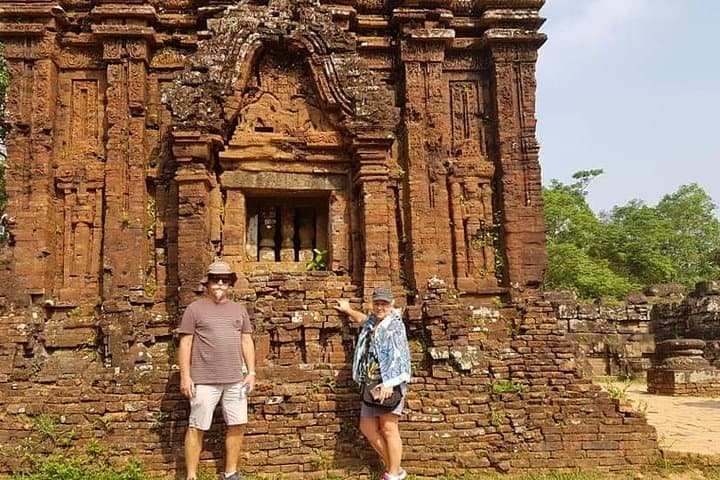

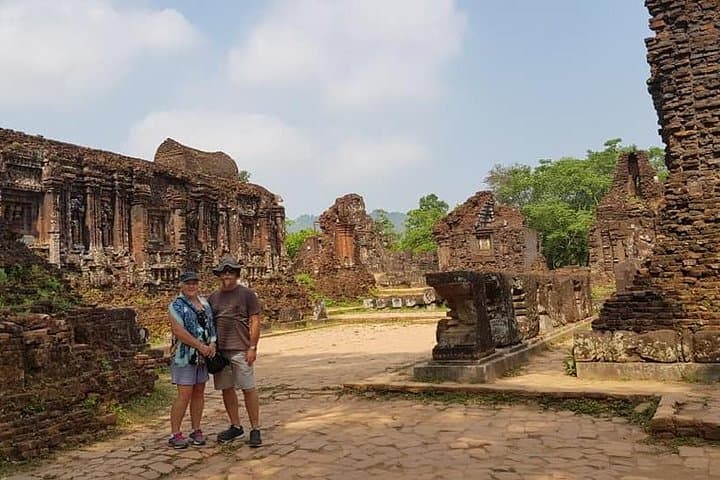
Before the bus doors open, the valley exhales cool air and the first light slips along low brick towers—My Son’s red stones drink the dawn and the paddy fields answer with a soft shimmer.
Before the bus doors open, the valley exhales cool air and the first light slips along low brick towers—My Son’s red stones drink the dawn and the paddy fields answer with a soft shimmer.
The complex is the spiritual heart of the Champa Kingdom, a cluster of brick sanctuaries built and rebuilt between the 4th and 13th centuries. Weathered later by tropical rains and wartime damage, the towers now sit in a river valley carved from volcanic soils and alluvial plains, where the Cham once read the sky and ritually aligned temples to the cardinal points.
A morning visit emphasizes atmosphere: shafts of light find carved lintels, humidity lifts off the grass, and the sound of villages drifting on the breeze makes the site feel alive. Guides explain Cham iconography, local wet-rice culture, and the painstaking conservation work that brought many blocks back from rubble.
Practically, expect easy walking on compacted earth, short stone steps and uneven brick surfaces across roughly 1–2 km of route; elevation change is negligible. The tour includes hotel pickup from Hoi An or Da Nang, bottled water, entrance ticket, and an English-speaking guide.
For photographers and visitors: go early to avoid heat and crowds, wear sturdy closed-toe shoes, bring sun protection and insect repellent, and move deliberately—several fragile carvings sit close to the path. Respect restricted areas and follow your guide; staying on trails helps preserve these fragile ruins for the next sunrise.