THE ADVENTURE COLLECTIVE® · Independent discovery and booking for outdoor travel

Drive from Nukus to Muynak to see the Aral Sea’s beached trawlers and learn the local history of ecological change. This one-day tour pairs stark industrial ruins with Karakalpak hospitality and on-site interpretation.
Drive from Nukus to Muynak to see the Aral Sea’s beached trawlers and learn the local history of ecological change. This one-day tour pairs stark industrial ruins with Karakalpak hospitality and on-site interpretation.
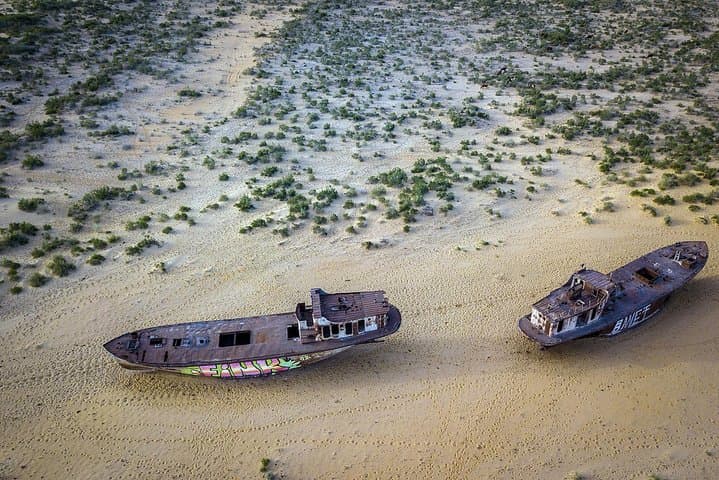
The wind in the dried seabed has a voice here — abrasive, urgent — as you step out of an air-conditioned van and onto rusting keels that once floated on the Aral Sea.
Verified experiences and guided adventures in the surrounding area.
Operated by Sayyah Uzbekistan · Nukus, Karakalpakstan
The wind in the dried seabed has a voice here — abrasive, urgent — as you step out of an air-conditioned van and onto rusting keels that once floated on the Aral Sea.
This one-day tour takes you from Nukus across flat, salt-scoured plains to Muynak, the town whose waterfront became a graveyard of Soviet-era trawlers when the sea receded. The landscape reads like recent geology: exposed sediment layers, salt flats pocked with wind-sculpted ridges, and the bent skeletons of ships that mark the human reshaping of coastlines.
Muynak’s history is tied to 20th-century irrigation projects that rerouted rivers feeding the Aral Sea, turning a thriving fishing port into an emblem of environmental change. Local culture is resilient — Karakalpak families continue traditional crafts and will often welcome visitors for a simple lunch of local bread, mutton, and tea. The nearby museum offers context: maps, photographs, and oral histories that frame the catastrophe and ongoing recovery efforts.
Practically, expect dusty roads, strong sun, and significant travel time: the round trip from Nukus occupies most of a day (roughly 5–6 hours including stops). Wear closed shoes to walk among the hulls, bring sun protection and plenty of water, and keep your camera ready for striking contrasts of metal and sky. Guides explain both the science and the local perspective, turning a visit into an unflinching lesson in landscape change and human consequence.
easy.
5–6 hours.
Suitable for travelers in average physical condition; short walks on uneven ground but no sustained hiking.
The one-way drive is roughly 2–3 hours depending on road conditions; expect a 5–6 hour round trip with stops included.
Yes — the tour is labeled physically easy; however, those with mobility issues should note uneven ground and metal debris at the ship cemetery.
Lunch typically includes a meal with a Karakalpak family in Muynak; confirm dietary needs when booking.
Yes, the local museum is a short stop on most itineraries and provides historical context about the Aral Sea’s decline.
Muynak was once a bustling Soviet fishing port; extensive irrigation projects diverted rivers feeding the Aral Sea, causing rapid desiccation from the 1960s onward.
The Aral region is a focal point for restoration and research projects; visitors should avoid leaving waste, respect private property, and support local services to help the community economy.
Sayyah Uzbekistan operates guided outdoor trips and adventures with an emphasis on safety, stewardship, and memorable experiences.
The wind in the dried seabed has a voice here — abrasive, urgent — as you step out of an air-conditioned van and onto rusting keels that once floated on the Aral Sea.
The wind in the dried seabed has a voice here — abrasive, urgent — as you step out of an air-conditioned van and onto rusting keels that once floated on the Aral Sea.
This one-day tour takes you from Nukus across flat, salt-scoured plains to Muynak, the town whose waterfront became a graveyard of Soviet-era trawlers when the sea receded. The landscape reads like recent geology: exposed sediment layers, salt flats pocked with wind-sculpted ridges, and the bent skeletons of ships that mark the human reshaping of coastlines.
Muynak’s history is tied to 20th-century irrigation projects that rerouted rivers feeding the Aral Sea, turning a thriving fishing port into an emblem of environmental change. Local culture is resilient — Karakalpak families continue traditional crafts and will often welcome visitors for a simple lunch of local bread, mutton, and tea. The nearby museum offers context: maps, photographs, and oral histories that frame the catastrophe and ongoing recovery efforts.
Practically, expect dusty roads, strong sun, and significant travel time: the round trip from Nukus occupies most of a day (roughly 5–6 hours including stops). Wear closed shoes to walk among the hulls, bring sun protection and plenty of water, and keep your camera ready for striking contrasts of metal and sky. Guides explain both the science and the local perspective, turning a visit into an unflinching lesson in landscape change and human consequence.