THE ADVENTURE COLLECTIVE® · Independent discovery and booking for outdoor travel

Pre-book your Mutianyu entrance and cable car to save time at the gate. Choose to ride up and toboggan down or hike the restored Ming-era ramparts — expect steep stone steps, wide ridge views, and practical passport-entry procedures.
Pre-book your Mutianyu entrance and cable car to save time at the gate. Choose to ride up and toboggan down or hike the restored Ming-era ramparts — expect steep stone steps, wide ridge views, and practical passport-entry procedures.
The stone stairs angle up from the shuttle drop-off and the forest breathes around you — pines lean over switchbacks, and the wind along the ramparts seems to push you forward. At Mutianyu, the Wall sits on a ridge of rounded hills where granite outcrops break the tree line and views open to farmland and distant suburbs of Beijing. Whether you arrive by cable car or climb from the valley, the experience is kinetic: the wall pulls at your rhythm and the towers mark progress like waypoints in a long conversation with the landscape.
Verified experiences and guided adventures in the surrounding area.
Operated by Lily's tour service · Beijing, Beijing
The stone stairs angle up from the shuttle drop-off and the forest breathes around you — pines lean over switchbacks, and the wind along the ramparts seems to push you forward. At Mutianyu, the Wall sits on a ridge of rounded hills where granite outcrops break the tree line and views open to farmland and distant suburbs of Beijing. Whether you arrive by cable car or climb from the valley, the experience is kinetic: the wall pulls at your rhythm and the towers mark progress like waypoints in a long conversation with the landscape.
Built as a northern defense for the capital, Mutianyu preserves Ming-dynasty stonework and a string of restored watchtowers. The ridge is primarily granite and metamorphic bedrock, weathered into shallow gullies and terraces that feed the streams below. Local villages in Huairou District reflect rural Beijing culture—small markets and teahouses where families have long supplied porters and guides.
Practically, Mutianyu is flexible: take the shuttle from Parking Lot 1, present your passport as entry, then choose cable car up and toboggan down, or hike both ways along restored steps and steeper, original sections. Expect uneven stone steps, occasional loose rock, and exposed sections with steep drop-offs. Peak seasons bring crowds around mid-morning; early arrival gives clearer light and cooler air.
Bring layered clothing for wind, enough water for a multi-hour visit, and allow 3–8 hours depending on your route. The Wall rewards steady pacing—move deliberately, enjoy the watchtowers, and leave room to listen to the wind as it dares you onward.
challenging.
3–8 hours.
Good cardiovascular fitness and stair-climbing endurance; comfortable with exposure and uneven stone steps.
Yes — the passport full name and number used to book must be presented at Parking Lot 1 and again at the entrance.
Round-trip cable car tickets are offered for certain options; some ticket types include only one-way — check your booking selection.
Hiking from the valley to the Wall takes roughly 30–45 minutes depending on fitness and pace; plan additional time for walking along the ramparts.
The toboggan is a controlled ride popular with families, but parents should check height/age restrictions and supervise children during loading/unloading.
Mutianyu was fortified in the Ming dynasty as a northern defense line for the capital; many towers and battlements here were restored in the 1980s and 1990s.
Stick to marked paths to protect native vegetation and fragile stonework; local management limits development around key protected sections.
Lily's tour service operates guided outdoor trips and adventures with an emphasis on safety, stewardship, and memorable experiences.


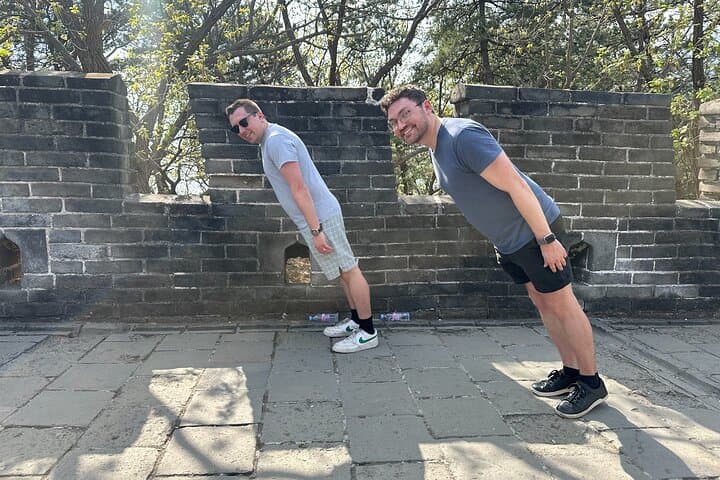
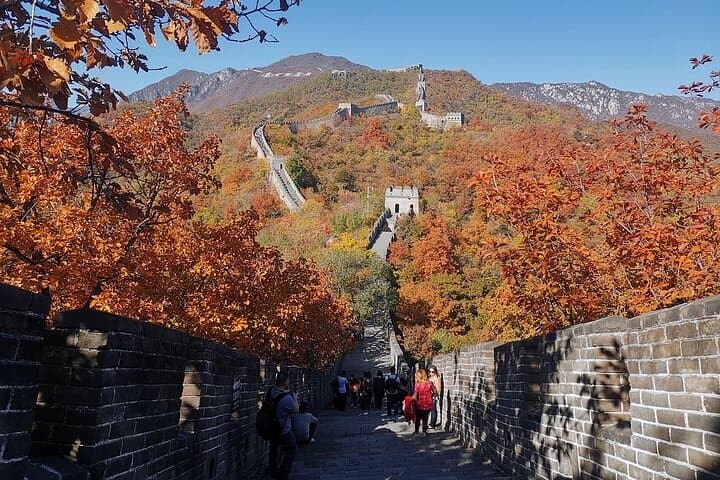
The stone stairs angle up from the shuttle drop-off and the forest breathes around you — pines lean over switchbacks, and the wind along the ramparts seems to push you forward. At Mutianyu, the Wall sits on a ridge of rounded hills where granite outcrops break the tree line and views open to farmland and distant suburbs of Beijing. Whether you arrive by cable car or climb from the valley, the experience is kinetic: the wall pulls at your rhythm and the towers mark progress like waypoints in a long conversation with the landscape.
The stone stairs angle up from the shuttle drop-off and the forest breathes around you — pines lean over switchbacks, and the wind along the ramparts seems to push you forward. At Mutianyu, the Wall sits on a ridge of rounded hills where granite outcrops break the tree line and views open to farmland and distant suburbs of Beijing. Whether you arrive by cable car or climb from the valley, the experience is kinetic: the wall pulls at your rhythm and the towers mark progress like waypoints in a long conversation with the landscape.
Built as a northern defense for the capital, Mutianyu preserves Ming-dynasty stonework and a string of restored watchtowers. The ridge is primarily granite and metamorphic bedrock, weathered into shallow gullies and terraces that feed the streams below. Local villages in Huairou District reflect rural Beijing culture—small markets and teahouses where families have long supplied porters and guides.
Practically, Mutianyu is flexible: take the shuttle from Parking Lot 1, present your passport as entry, then choose cable car up and toboggan down, or hike both ways along restored steps and steeper, original sections. Expect uneven stone steps, occasional loose rock, and exposed sections with steep drop-offs. Peak seasons bring crowds around mid-morning; early arrival gives clearer light and cooler air.
Bring layered clothing for wind, enough water for a multi-hour visit, and allow 3–8 hours depending on your route. The Wall rewards steady pacing—move deliberately, enjoy the watchtowers, and leave room to listen to the wind as it dares you onward.