THE ADVENTURE COLLECTIVE® · Independent discovery and booking for outdoor travel

Walk the restored Ming-era ramparts of Mutianyu and reach the Beijing Knot for panoramic mountain views. This guided private tour combines history, geology, and local culture with practical options like cable car access and a toboggan descent.
Walk the restored Ming-era ramparts of Mutianyu and reach the Beijing Knot for panoramic mountain views. This guided private tour combines history, geology, and local culture with practical options like cable car access and a toboggan descent.
Morning light hits the stone, and the wall rises like an old guard cutting across green ribs of mountain. On a private or small-group tour to Mutianyu, you follow stepped ramps and watchtowers that frame the valley—each tower a room with a view, each stair a reminder of centuries of human effort.
Verified experiences and guided adventures in the surrounding area.
Operated by Greatwall Trekclub · Beijing, Beijing
Morning light hits the stone, and the wall rises like an old guard cutting across green ribs of mountain. On a private or small-group tour to Mutianyu, you follow stepped ramps and watchtowers that frame the valley—each tower a room with a view, each stair a reminder of centuries of human effort.
Mutianyu sits on a granite spine in Huairou District, rebuilt and expanded during the Ming dynasty to protect the approaches to Beijing. The geology is hard, weathered granite; staircases are uneven, and sections curve to follow ridgelines, producing a series of abrupt vantage points and sheltered alcoves. Local culture still threads through the trip: village markets on the drive out, orchard slopes, and regional snacks served at midday.
Expect a tactile experience—rough stone underhand, wind pushing across the battlements, and the wall stretching toward the horizon. The “Beijing Knot,” where three wall branches converge near the peak at roughly 603 meters, rewards extra steps with wide-angle panoramas.
Practical guidance: tours typically run a full day from Beijing (about 1.5 hours by car each way), include bottled water, snacks, lunch and a guide, and allow for cable car or toboggan descent options if you prefer less stair climbing. Wear sturdy shoes with good grip, bring sun protection, and carry layers—temperatures can shift quickly on exposed ridgelines. Follow signage, stay on restored sections, and leave no trace: the site's preservation depends on visitor care.
moderate.
8 hours.
Moderate fitness—able to handle extended walking and repeated stair climbs; suitable for most ages from 4+ with accompaniment.
Expect about 1.5 hours each way depending on traffic; many tours schedule an early hotel pickup to avoid peak congestion.
Yes—Mutianyu offers cable car or chairlift rides and a wheeled toboggan for descent, which can shorten walking time and are popular with families.
Restored sections are generally safe for children and older adults, but steep stairs can be challenging—consider cable options or a slower pace if needed.
No special permit is required for Mutianyu itself, but entrance tickets and guided tours are sold in advance and recommended during peak seasons to secure preferred time slots.
Mutianyu was fortified and rebuilt mainly during the Ming dynasty to protect Beijing’s northern approaches; many extant towers date to those reconstructions.
High visitor numbers accelerate wear—stay on restored paths, avoid climbing unmarked sections, and pack out any trash to help preserve the stonework.
Greatwall Trekclub operates guided outdoor trips and adventures with an emphasis on safety, stewardship, and memorable experiences.
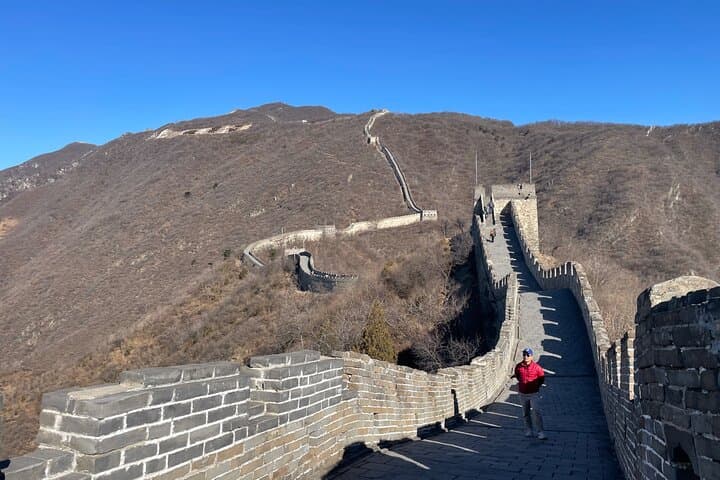
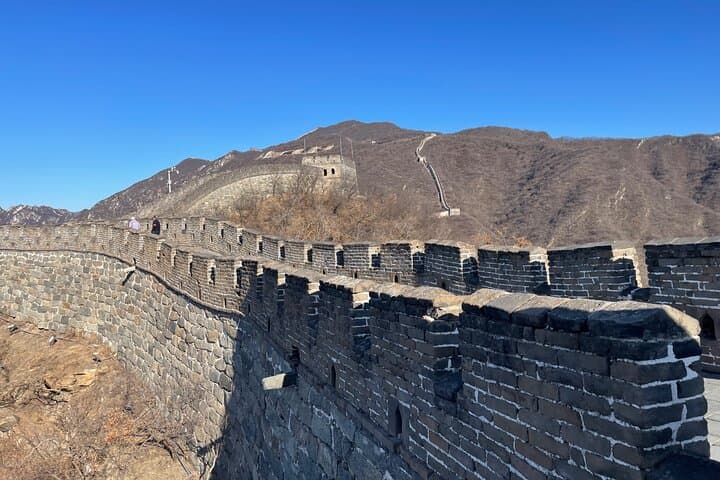


Morning light hits the stone, and the wall rises like an old guard cutting across green ribs of mountain. On a private or small-group tour to Mutianyu, you follow stepped ramps and watchtowers that frame the valley—each tower a room with a view, each stair a reminder of centuries of human effort.
Morning light hits the stone, and the wall rises like an old guard cutting across green ribs of mountain. On a private or small-group tour to Mutianyu, you follow stepped ramps and watchtowers that frame the valley—each tower a room with a view, each stair a reminder of centuries of human effort.
Mutianyu sits on a granite spine in Huairou District, rebuilt and expanded during the Ming dynasty to protect the approaches to Beijing. The geology is hard, weathered granite; staircases are uneven, and sections curve to follow ridgelines, producing a series of abrupt vantage points and sheltered alcoves. Local culture still threads through the trip: village markets on the drive out, orchard slopes, and regional snacks served at midday.
Expect a tactile experience—rough stone underhand, wind pushing across the battlements, and the wall stretching toward the horizon. The “Beijing Knot,” where three wall branches converge near the peak at roughly 603 meters, rewards extra steps with wide-angle panoramas.
Practical guidance: tours typically run a full day from Beijing (about 1.5 hours by car each way), include bottled water, snacks, lunch and a guide, and allow for cable car or toboggan descent options if you prefer less stair climbing. Wear sturdy shoes with good grip, bring sun protection, and carry layers—temperatures can shift quickly on exposed ridgelines. Follow signage, stay on restored sections, and leave no trace: the site's preservation depends on visitor care.