THE ADVENTURE COLLECTIVE® · Independent discovery and booking for outdoor travel

Climb (or cable-car) above the treeline and follow the stones of Mutianyu — a well-restored Ming dynasty section of the Great Wall. This private day tour from Beijing pairs historical context with practical transport: cable car up, toboggan down, and time to explore.
Climb (or cable-car) above the treeline and follow the stones of Mutianyu — a well-restored Ming dynasty section of the Great Wall. This private day tour from Beijing pairs historical context with practical transport: cable car up, toboggan down, and time to explore.
You step off the van onto a stone plaza beneath a steep green ridge; the wall snakes up like an old spine, watchtowers pitching shadows across the steps. The cable car hums, lifting you above pines and terraced slopes so the wall unfolds beneath you — a ribbon of stone that dares you to follow it.
Verified experiences and guided adventures in the surrounding area.
You step off the van onto a stone plaza beneath a steep green ridge; the wall snakes up like an old spine, watchtowers pitching shadows across the steps. The cable car hums, lifting you above pines and terraced slopes so the wall unfolds beneath you — a ribbon of stone that dares you to follow it.
Mutianyu sits in Huairou District, a section of the Great Wall rebuilt extensively in the Ming dynasty and originally fortified as early as the Northern Qi (6th century). The restored stretch near the visitor center runs roughly 2–2.5 km with about 22 watchtowers, alternating steep climbs and gentler ridgelines carved from local granite. Cultural history is visible in crenellations and restored battlements; geology shows heavily weathered, jointed rock that shaped the route the wall takes.
A private tour gives context: a guide explains defensive strategies, restoration choices, and how local villages once supported garrisons. The cable car saves time and effort to the higher ramps; the alpine-style toboggan offers a quick, controlled descent that’s as practical as it is fun.
Practical guidance: expect uneven stone steps and short steep pitches — plan 8–9 hours for a round-trip from central Beijing with stops at Olympic Park photo points. Wear stiff-soled shoes, bring water, sun protection, and small bills for local snacks or lockers. Aim for morning light to avoid crowds and the midday heat; if you prefer quieter sections, continue past the main restored area toward the less-restored east or west stretches. Respect restoration work by staying on the paved path and watch for loose stones on the older sections.
moderate.
8–9 hours.
Moderate fitness: able to handle repeated stair climbs, short steep sections, and several hours of walking.
The commonly visited restored stretch is roughly 2–2.5 km with about 22 watchtowers; time on the wall depends on walking pace and photo stops.
Yes — this private tour includes the cable car up and the toboggan ride down to save time and conserve energy.
Many watchtowers on the restored section are accessible, but some areas may be fenced for conservation — follow posted signs and your guide’s instructions.
Yes if they can manage stairs; the cable car reduces strenuous ascent, but prepare for uneven steps and carry any necessary mobility aids.
Mutianyu’s fortifications date back to the Northern Qi era and were extensively rebuilt and fortified during the Ming dynasty as part of Beijing’s northern defenses.
Visitor pressure and erosion are ongoing concerns; stick to marked paths, avoid climbing on fragile masonry, and use local services to support conservation efforts.
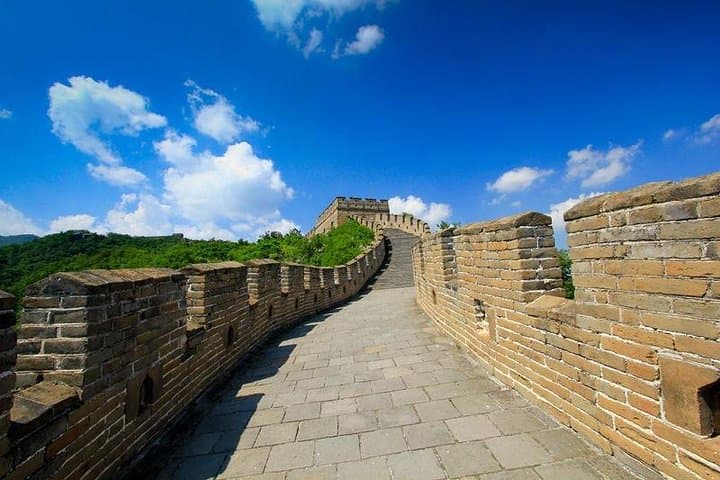
You step off the van onto a stone plaza beneath a steep green ridge; the wall snakes up like an old spine, watchtowers pitching shadows across the steps. The cable car hums, lifting you above pines and terraced slopes so the wall unfolds beneath you — a ribbon of stone that dares you to follow it.
You step off the van onto a stone plaza beneath a steep green ridge; the wall snakes up like an old spine, watchtowers pitching shadows across the steps. The cable car hums, lifting you above pines and terraced slopes so the wall unfolds beneath you — a ribbon of stone that dares you to follow it.
Mutianyu sits in Huairou District, a section of the Great Wall rebuilt extensively in the Ming dynasty and originally fortified as early as the Northern Qi (6th century). The restored stretch near the visitor center runs roughly 2–2.5 km with about 22 watchtowers, alternating steep climbs and gentler ridgelines carved from local granite. Cultural history is visible in crenellations and restored battlements; geology shows heavily weathered, jointed rock that shaped the route the wall takes.
A private tour gives context: a guide explains defensive strategies, restoration choices, and how local villages once supported garrisons. The cable car saves time and effort to the higher ramps; the alpine-style toboggan offers a quick, controlled descent that’s as practical as it is fun.
Practical guidance: expect uneven stone steps and short steep pitches — plan 8–9 hours for a round-trip from central Beijing with stops at Olympic Park photo points. Wear stiff-soled shoes, bring water, sun protection, and small bills for local snacks or lockers. Aim for morning light to avoid crowds and the midday heat; if you prefer quieter sections, continue past the main restored area toward the less-restored east or west stretches. Respect restoration work by staying on the paved path and watch for loose stones on the older sections.