THE ADVENTURE COLLECTIVE® · Independent discovery and booking for outdoor travel

Skip the crowds and let a multilingual guide bring Mutianyu’s Ming-era stones to life. This private day tour from Beijing combines door-to-door pickup, historical insight, and flexible pacing for a focused Great Wall experience.
Skip the crowds and let a multilingual guide bring Mutianyu’s Ming-era stones to life. This private day tour from Beijing combines door-to-door pickup, historical insight, and flexible pacing for a focused Great Wall experience.
Morning air bites with clear mountain light as the van eases out of Beijing and the wall first rises above the ridgeline — crenellations cutting the skyline like a serrated spine. At Mutianyu, stone steps alternate between gentle ramps and steep flights; the landscape here pushes and rewards, offering wide vantage points and intimate stonework details your guide will point out.
Verified experiences and guided adventures in the surrounding area.
Operated by ailvxing · Beijing, Beijing
Morning air bites with clear mountain light as the van eases out of Beijing and the wall first rises above the ridgeline — crenellations cutting the skyline like a serrated spine. At Mutianyu, stone steps alternate between gentle ramps and steep flights; the landscape here pushes and rewards, offering wide vantage points and intimate stonework details your guide will point out.
Mutianyu’s visible structure dates to the Ming dynasty (16th century), rebuilt to guard the approaches north of historic Beijing. Geologically, the wall rides a line of granite and schist ridges, which is why sections feel solid and heavy underfoot. Culturally the site sits in Huairou District, shaped by rural village life and the seasonal rhythms of mountain farmers; small teahouses near the gate preserve a practical hospitality that travelers still meet today.
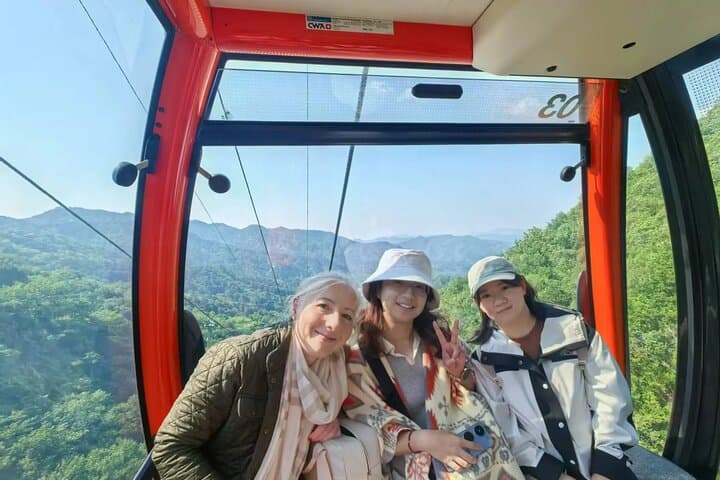
Practically: expect up to eight hours round-trip from Beijing with door-to-door pickup, guided walks on restored towers, and options for chairlift or cable car to skip steep climbs. Wear sturdy footwear for uneven stone steps, and plan water and sun protection — the wall offers exposure more than shade. Photography windows are frequent; guides tailor stops to group pace and language preference, and tours usually avoid shopping detours so time on the wall feels uninterrupted.
Arrive early to find quiet ramparts, move deliberately on steep sections, and leave no trace on the stone. Whether you take the lift down or the classic toboggan ride, Mutianyu reads like a living chapter of China’s frontier engineering — robust, weathered, and designed to be walked.
moderate.
8 hours.
Suitable for travelers with basic walking fitness; comfortable with repeated stair climbing and short bursts of steep ascent.
Yes — the tour includes door-to-door pickup within Beijing’s Fifth Ring Road; confirm your pickup time when booking.
Guides are multilingual with common options like English, German, French, and Japanese; specify your preference at booking.
Mutianyu offers a chairlift and cable car to reduce stair climbing; guides will explain options so you can choose based on mobility and energy levels.
This tour advertises no shopping stops; admission and transport are included according to the booking details—extras like food and tips are at your discretion.
Mutianyu was substantially rebuilt during the Ming dynasty in the 16th century to fortify routes north of Beijing and features dense, well-preserved watchtowers.
High visitor numbers accelerate wear on stonework; stick to restored walkways, avoid touching fragile mortar, and carry out trash to help preserve the site.
ailvxing operates guided outdoor trips and adventures with an emphasis on safety, stewardship, and memorable experiences.
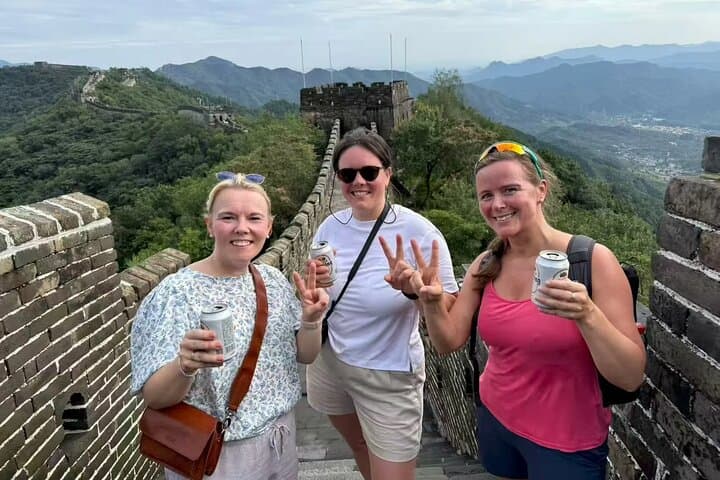


Morning air bites with clear mountain light as the van eases out of Beijing and the wall first rises above the ridgeline — crenellations cutting the skyline like a serrated spine. At Mutianyu, stone steps alternate between gentle ramps and steep flights; the landscape here pushes and rewards, offering wide vantage points and intimate stonework details your guide will point out.
Morning air bites with clear mountain light as the van eases out of Beijing and the wall first rises above the ridgeline — crenellations cutting the skyline like a serrated spine. At Mutianyu, stone steps alternate between gentle ramps and steep flights; the landscape here pushes and rewards, offering wide vantage points and intimate stonework details your guide will point out.
Mutianyu’s visible structure dates to the Ming dynasty (16th century), rebuilt to guard the approaches north of historic Beijing. Geologically, the wall rides a line of granite and schist ridges, which is why sections feel solid and heavy underfoot. Culturally the site sits in Huairou District, shaped by rural village life and the seasonal rhythms of mountain farmers; small teahouses near the gate preserve a practical hospitality that travelers still meet today.
Practically: expect up to eight hours round-trip from Beijing with door-to-door pickup, guided walks on restored towers, and options for chairlift or cable car to skip steep climbs. Wear sturdy footwear for uneven stone steps, and plan water and sun protection — the wall offers exposure more than shade. Photography windows are frequent; guides tailor stops to group pace and language preference, and tours usually avoid shopping detours so time on the wall feels uninterrupted.
Arrive early to find quiet ramparts, move deliberately on steep sections, and leave no trace on the stone. Whether you take the lift down or the classic toboggan ride, Mutianyu reads like a living chapter of China’s frontier engineering — robust, weathered, and designed to be walked.