THE ADVENTURE COLLECTIVE® · Independent discovery and booking for outdoor travel

Skip the crowds and explore Mutianyu your way—by day for panoramic ridgelines and a toboggan descent, or at sunset when the Wall glows under amber lights. This private 8-hour tour includes admissions, cable car, and transfers for a seamless experience.
Skip the crowds and explore Mutianyu your way—by day for panoramic ridgelines and a toboggan descent, or at sunset when the Wall glows under amber lights. This private 8-hour tour includes admissions, cable car, and transfers for a seamless experience.
The road out of Beijing tightens into hairpin curves and then opens onto a ridge where the Great Wall threads along serrated peaks. At Mutianyu the stones rise and fall with the mountains; watchtowers punctuate the skyline and the air carries the crisp, pine-scented suggestion of altitude.
Verified experiences and guided adventures in the surrounding area.
Operated by Beijing Travel & Car Hire by Zhou · Huairou, Beijing
The road out of Beijing tightens into hairpin curves and then opens onto a ridge where the Great Wall threads along serrated peaks. At Mutianyu the stones rise and fall with the mountains; watchtowers punctuate the skyline and the air carries the crisp, pine-scented suggestion of altitude.
Mutianyu is a restored Ming-dynasty section built to defend the capital, set on granite ridgelines carved during the uplift of the North China Craton. Villages in Huairou district keep pastoral rhythms—farmers, tea-stands, and the steady click of cameras from visiting travelers. The Wall here was reinforced with local stone and brick, giving it a heavier, enduring feel compared with other sections.
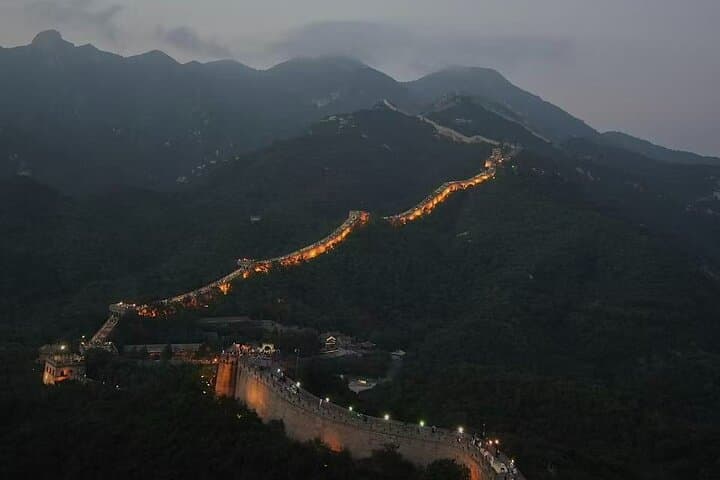
A private 8-hour visit lets travelers bypass crowds: shuttle to the cable car, ride up and spend 3–4 hours walking between defensible towers, or choose a sunset option when amber lights bring the masonry alive and the soundscape quiets. Daytime options include a toboggan descent for a playful finish; evening trips rely on the round-trip cable car.
Practical guidance: expect uneven stone steps and long stair sections—good ankle support and steady pacing matter. Bring water and a wind layer; weather shifts quickly on exposed ridgelines. Passport is required for ticket entry. Photography is easiest during golden hour but crowds thin most on weekday afternoons and winter months.
Whether mapped as a long walk between towers or a curated photo run during sunset, Mutianyu rewards patience: history underfoot, mountains urging you forward, and a clear sense of why this wall was built where it stands.
moderate.
8 hours.
Suitable for travelers in regular walking condition; able to manage long stair sections and some sustained climbs.
Expect about 1 to 1.5 hours each way depending on traffic; private pickup and drop-off are included in most full-day options.
Yes—there are cable car and shuttle options and the route can be paced; however, stair sections may be strenuous for those with limited mobility.
The toboggan descent is typically available for daytime visits only; evening packages usually include round-trip cable car instead.
Full packages commonly include admission, the shuttle bus to the cable car station, and round-trip cable car; confirm your booking details as there is sometimes a ‘no ticket’ option.
Mutianyu was expanded and fortified during the Ming dynasty to protect the approach to Beijing; much of the visible masonry dates to that period.
Visitor impact is managed through controlled access points and shuttle routes; stick to official paths to protect vegetation and prevent erosion.
Beijing Travel & Car Hire by Zhou operates guided outdoor trips and adventures with an emphasis on safety, stewardship, and memorable experiences.
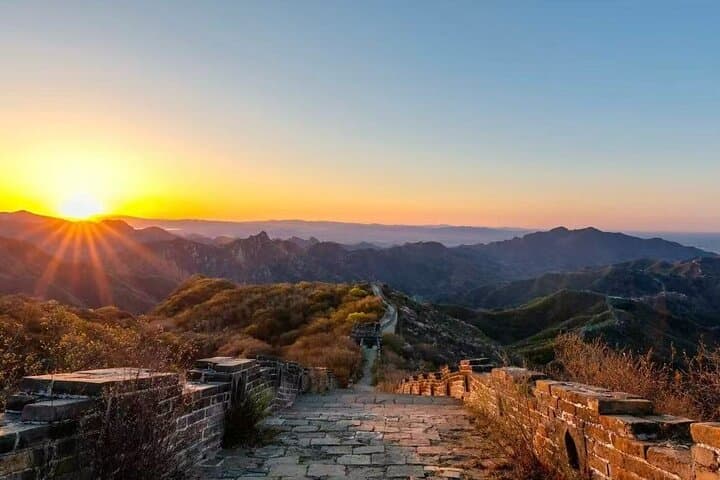
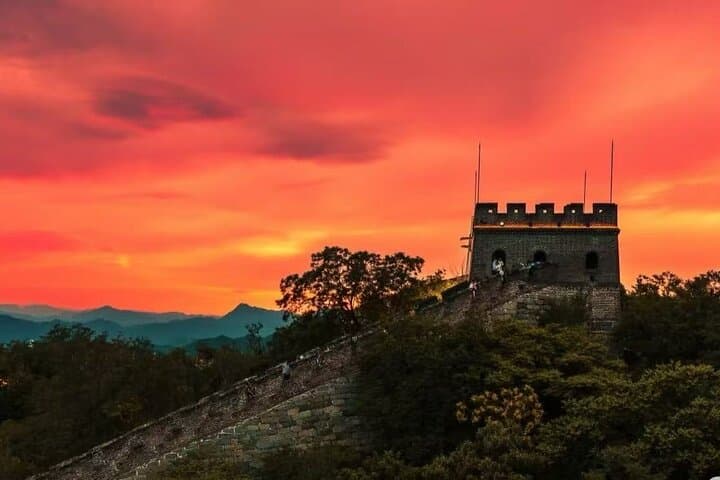
The road out of Beijing tightens into hairpin curves and then opens onto a ridge where the Great Wall threads along serrated peaks. At Mutianyu the stones rise and fall with the mountains; watchtowers punctuate the skyline and the air carries the crisp, pine-scented suggestion of altitude.
The road out of Beijing tightens into hairpin curves and then opens onto a ridge where the Great Wall threads along serrated peaks. At Mutianyu the stones rise and fall with the mountains; watchtowers punctuate the skyline and the air carries the crisp, pine-scented suggestion of altitude.
Mutianyu is a restored Ming-dynasty section built to defend the capital, set on granite ridgelines carved during the uplift of the North China Craton. Villages in Huairou district keep pastoral rhythms—farmers, tea-stands, and the steady click of cameras from visiting travelers. The Wall here was reinforced with local stone and brick, giving it a heavier, enduring feel compared with other sections.
A private 8-hour visit lets travelers bypass crowds: shuttle to the cable car, ride up and spend 3–4 hours walking between defensible towers, or choose a sunset option when amber lights bring the masonry alive and the soundscape quiets. Daytime options include a toboggan descent for a playful finish; evening trips rely on the round-trip cable car.
Practical guidance: expect uneven stone steps and long stair sections—good ankle support and steady pacing matter. Bring water and a wind layer; weather shifts quickly on exposed ridgelines. Passport is required for ticket entry. Photography is easiest during golden hour but crowds thin most on weekday afternoons and winter months.
Whether mapped as a long walk between towers or a curated photo run during sunset, Mutianyu rewards patience: history underfoot, mountains urging you forward, and a clear sense of why this wall was built where it stands.