THE ADVENTURE COLLECTIVE® · Independent discovery and booking for outdoor travel

Short on time in Beijing? A private Mutianyu layover tour pairs a fast round-trip transfer with a cable-car ascent, a walk along restored Ming-era ramparts, and an optional toboggan descent so you can experience the Great Wall without missing your flight.
Short on time in Beijing? A private Mutianyu layover tour pairs a fast round-trip transfer with a cable-car ascent, a walk along restored Ming-era ramparts, and an optional toboggan descent so you can experience the Great Wall without missing your flight.
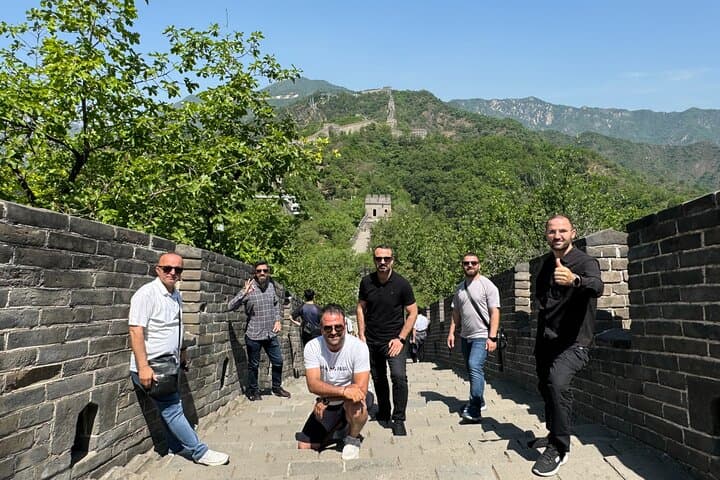
You step out of the car onto a stone ledge that angles away into a serried line of watchtowers—the Wall here rises and falls like a long, patient animal shaped from rock and earth. The air in Huairou is colder than the city center, and the first view from the cable-car station makes the hour-and-a-half drive from Beijing worth every minute.
Verified experiences and guided adventures in the surrounding area.
Operated by Beijing Mutianyu Greatwall Tour With Private English Speaking Guide &english Speaking Driver · Beijing, Beijing
You step out of the car onto a stone ledge that angles away into a serried line of watchtowers—the Wall here rises and falls like a long, patient animal shaped from rock and earth. The air in Huairou is colder than the city center, and the first view from the cable-car station makes the hour-and-a-half drive from Beijing worth every minute.
Mutianyu is a well-preserved Ming-dynasty section built on dense granite ridges; foundations date back to earlier Northern dynasties, but the visible fortifications are largely 14th–17th century reconstruction. Geologically the ridge is composed of hard, erosion-resistant bedrock that gave builders a durable spine for the Wall. Local life still centers on mountain villages and farms; many visitors combine Mutianyu with nearby Gubei Water Town for a fuller cultural snapshot.
For a layover visit the rhythm is pragmatic: private pickup at PEK, a 10-minute cable-car ascent, two to three hours of walking across gentle to steep paved ramps and restored towers, then an optional toboggan descent and return to the airport with time to spare. Expect stairs, exposed ridge-line winds, and panoramic photo points at the towers.
Practical tips: bring a printed passport for entrance, wear grippy shoes for uneven steps, carry water and layered clothing for wind and sun, and leave time for traffic back to the airport. Guides and private transport remove the guesswork—this tour is an efficient, scenic way to touch one of the Great Wall’s most photogenic stretches during a Beijing stopover.
easy.
3–7 hours.
Light walking and stair-climbing; suitable for travelers in average health who can manage uneven steps and short steep sections.
Yes—this private transfer tour is designed for layovers, with a typical round trip of about 7 hours; confirm pickup time to ensure you return with ample time for international check-in.
Cable car and Great Wall entrance ticket are included in the standard layover itinerary; optional extras like the toboggan ride are usually paid on-site.
No—the toboggan is optional. Visitors may choose to walk down or take the chair/cable options depending on preference and time.
The Mutianyu area offers cable access and relatively well-restored paths, but there are many steps; discuss mobility needs with the operator to confirm accessibility and transportation options.
Mutianyu’s visible fortifications are mostly Ming-dynasty construction (14th–17th centuries) built on earlier defensive works; the section served as a northern defense line protecting approaches to Beijing.
Visitor impact is managed through maintained walkways and restricted off-path access; stay on paved routes, avoid littering, and respect local restoration work to protect the site.
Beijing Mutianyu Greatwall Tour With Private English Speaking Guide &english Speaking Driver operates guided outdoor trips and adventures with an emphasis on safety, stewardship, and memorable experiences.
You step out of the car onto a stone ledge that angles away into a serried line of watchtowers—the Wall here rises and falls like a long, patient animal shaped from rock and earth. The air in Huairou is colder than the city center, and the first view from the cable-car station makes the hour-and-a-half drive from Beijing worth every minute.
You step out of the car onto a stone ledge that angles away into a serried line of watchtowers—the Wall here rises and falls like a long, patient animal shaped from rock and earth. The air in Huairou is colder than the city center, and the first view from the cable-car station makes the hour-and-a-half drive from Beijing worth every minute.
Mutianyu is a well-preserved Ming-dynasty section built on dense granite ridges; foundations date back to earlier Northern dynasties, but the visible fortifications are largely 14th–17th century reconstruction. Geologically the ridge is composed of hard, erosion-resistant bedrock that gave builders a durable spine for the Wall. Local life still centers on mountain villages and farms; many visitors combine Mutianyu with nearby Gubei Water Town for a fuller cultural snapshot.
For a layover visit the rhythm is pragmatic: private pickup at PEK, a 10-minute cable-car ascent, two to three hours of walking across gentle to steep paved ramps and restored towers, then an optional toboggan descent and return to the airport with time to spare. Expect stairs, exposed ridge-line winds, and panoramic photo points at the towers.
Practical tips: bring a printed passport for entrance, wear grippy shoes for uneven steps, carry water and layered clothing for wind and sun, and leave time for traffic back to the airport. Guides and private transport remove the guesswork—this tour is an efficient, scenic way to touch one of the Great Wall’s most photogenic stretches during a Beijing stopover.