THE ADVENTURE COLLECTIVE® · Independent discovery and booking for outdoor travel

Walk a lesser-crowded Ming section of the Great Wall at Mutianyu and finish with serene imperial vistas at Beihai Park on this full-day private tour from Beijing. Cable car up and toboggan down keep the focus on scenery and history, not logistics.
Walk a lesser-crowded Ming section of the Great Wall at Mutianyu and finish with serene imperial vistas at Beihai Park on this full-day private tour from Beijing. Cable car up and toboggan down keep the focus on scenery and history, not logistics.
You arrive to a wide northern sky and a road that climbs into pine-scattered ridgelines—Mutianyu’s stone band appears above a belt of green, watchtowers popping like punctuation along the ridge. The morning light burns clean across the crenellations as your private guide leads you onto restored ramparts, while afternoons unfold quieter courtyards and imperial water gardens at Beihai Park back in the city.
Verified experiences and guided adventures in the surrounding area.
Operated by MoreFunAsia Beijing Tours · Beijing, Beijing
You arrive to a wide northern sky and a road that climbs into pine-scattered ridgelines—Mutianyu’s stone band appears above a belt of green, watchtowers popping like punctuation along the ridge. The morning light burns clean across the crenellations as your private guide leads you onto restored ramparts, while afternoons unfold quieter courtyards and imperial water gardens at Beihai Park back in the city.
Mutianyu is a Ming-dynasty section of the Great Wall, rebuilt and reinforced to guard the approaches to Beijing; its fortifications reveal practical military geometry and local granite shaped by centuries of weather. Beihai Park dates to successive imperial eras and centers on a large artificial lake and the white pagoda—an example of Buddhism’s visual influence on Chinese garden design.
On the wall expect well-preserved stone steps, frequent watchtowers, and exposed ridgewalking with intermittent steep pitches; cable car access reduces ascent and a toboggan lets you descend with speed. In the park, paths curve around ponds, pavilions, and historic screens—flat walking with short stair sections to viewpoints.
Practical guidance: bring sturdy, broken-in shoes for uneven stone; carry water and sun protection; schedule the wall in the morning to avoid midday crowds; allow 8–9 hours for airport transfers and both sites. Mobility accommodations are available but sections of the wall remain stepped. Your guide handles tickets, lunch and transport, leaving you to read the layers of history and take the views.
moderate.
8–9 hours.
Suitable for travelers in average fitness who can handle several hundred stone steps and short uphill sections.
Yes—cable car access reduces climbing, and many families and older visitors enjoy shorter walks between watchtowers; however there are stepped areas that may be challenging for limited mobility.
This private tour typically includes entrance fees, lunch, cable car and toboggan, and private transportation—confirm inclusions when booking.
Expect 1–3 kilometers of walking on restored paths with several hundred cumulative steps depending on how many watchtowers you visit and whether you opt to hike versus using the cable car.
Yes—this itinerary is commonly offered as a layover option with pick-up at Beijing Capital Airport and return timed for departures; check transfer windows closely to allow buffer for traffic.
Mutianyu was expanded and fortified during the Ming dynasty as part of Beijing’s northern defenses; Beihai Park evolved over centuries as an imperial garden centered on a man-made lake and the White Pagoda.
High visitor numbers can stress trails and historic fabric—stick to marked paths, avoid climbing on battlements, and carry out waste; support local conservation through respectful behavior.
MoreFunAsia Beijing Tours operates guided outdoor trips and adventures with an emphasis on safety, stewardship, and memorable experiences.
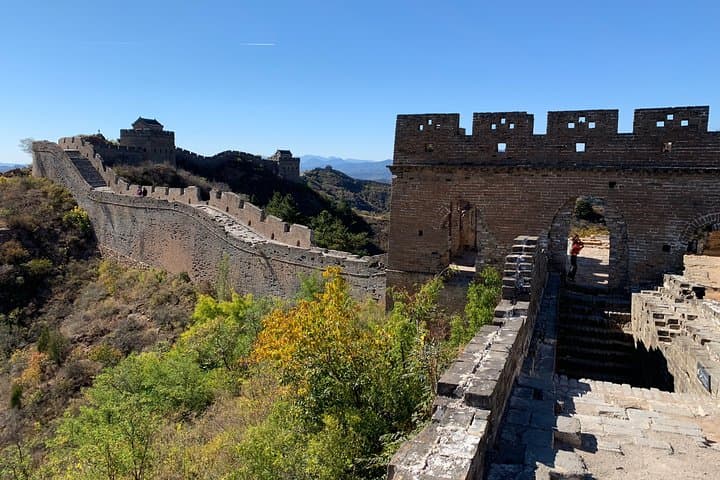
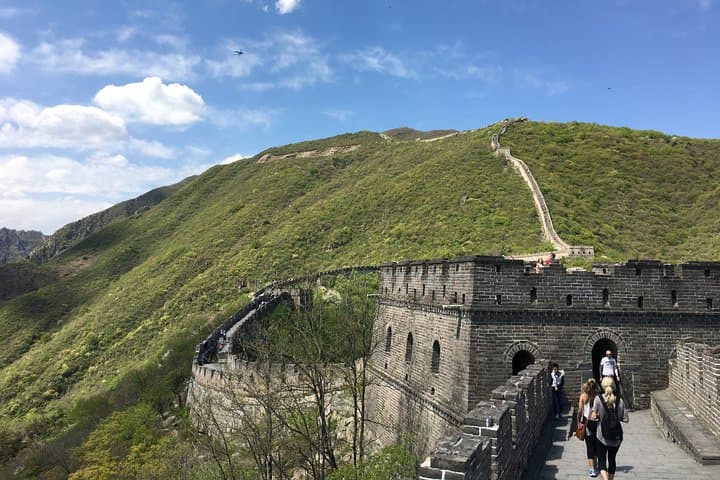
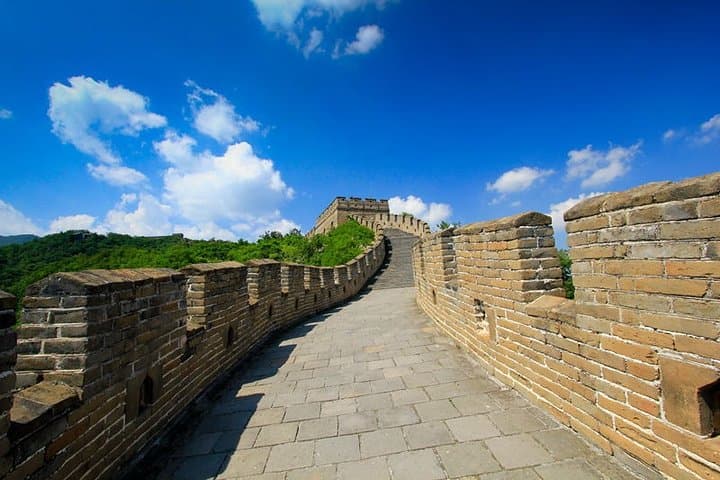
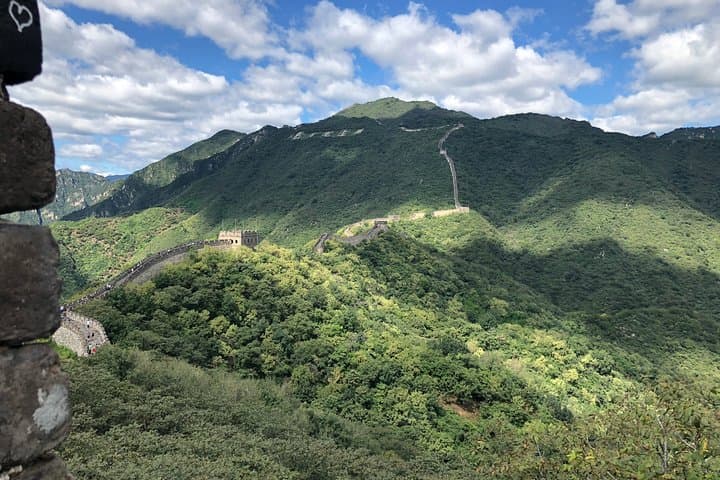
You arrive to a wide northern sky and a road that climbs into pine-scattered ridgelines—Mutianyu’s stone band appears above a belt of green, watchtowers popping like punctuation along the ridge. The morning light burns clean across the crenellations as your private guide leads you onto restored ramparts, while afternoons unfold quieter courtyards and imperial water gardens at Beihai Park back in the city.
You arrive to a wide northern sky and a road that climbs into pine-scattered ridgelines—Mutianyu’s stone band appears above a belt of green, watchtowers popping like punctuation along the ridge. The morning light burns clean across the crenellations as your private guide leads you onto restored ramparts, while afternoons unfold quieter courtyards and imperial water gardens at Beihai Park back in the city.
Mutianyu is a Ming-dynasty section of the Great Wall, rebuilt and reinforced to guard the approaches to Beijing; its fortifications reveal practical military geometry and local granite shaped by centuries of weather. Beihai Park dates to successive imperial eras and centers on a large artificial lake and the white pagoda—an example of Buddhism’s visual influence on Chinese garden design.
On the wall expect well-preserved stone steps, frequent watchtowers, and exposed ridgewalking with intermittent steep pitches; cable car access reduces ascent and a toboggan lets you descend with speed. In the park, paths curve around ponds, pavilions, and historic screens—flat walking with short stair sections to viewpoints.
Practical guidance: bring sturdy, broken-in shoes for uneven stone; carry water and sun protection; schedule the wall in the morning to avoid midday crowds; allow 8–9 hours for airport transfers and both sites. Mobility accommodations are available but sections of the wall remain stepped. Your guide handles tickets, lunch and transport, leaving you to read the layers of history and take the views.