THE ADVENTURE COLLECTIVE® · Independent discovery and booking for outdoor travel

Glide narrow channels through Sri Lanka’s Muthurajawela Wetlands on a two-hour guided boat tour from Colombo. Expect close bird encounters, mangrove-lined waterways, and a compact but biodiverse wetland that’s both easy to access and rich in natural history.
Glide narrow channels through Sri Lanka’s Muthurajawela Wetlands on a two-hour guided boat tour from Colombo. Expect close bird encounters, mangrove-lined waterways, and a compact but biodiverse wetland that’s both easy to access and rich in natural history.
Morning light slices across mangrove crowns as a narrow motorboat parts the green like a pen through paper. The air tastes of brackish water and wet earth; small channels funnel the current and the mangroves lean close, daring you to peer deeper. On this two-hour stretch of the Muthurajawela Wetlands, birds call from branches and a guide points out reed-fringed pools where kingfishers hover and herons stand statue-still.
Verified experiences and guided adventures in the surrounding area.
Operated by Overa Tours · Colombo, Western Province
Morning light slices across mangrove crowns as a narrow motorboat parts the green like a pen through paper. The air tastes of brackish water and wet earth; small channels funnel the current and the mangroves lean close, daring you to peer deeper. On this two-hour stretch of the Muthurajawela Wetlands, birds call from branches and a guide points out reed-fringed pools where kingfishers hover and herons stand statue-still.
This marshland—formed over millennia and recognized as one of Sri Lanka’s 12 priority wetlands—has buffered the coast and stored carbon while supporting dense biodiversity. Geologically it’s young peat and alluvial deposits shaped by tidal rhythms; culturally the wetland sits at the edge of Colombo’s urban sprawl, where fishing hamlets meet conservation initiatives. Local guides often weave natural history with stories of traditional lagoon fisheries and the role the marsh plays in local livelihoods.
Practical guidance: tours depart early to catch peak bird activity and cooler temperatures; expect narrow, low-sided boats and simple boarding. Wear non-slip shoes and long sleeves for sun and insects. Bring binoculars, a hat, and water; avoid strong perfumes that can disturb wildlife. The wetland’s channels are shallow—water levels change with tides and monsoon seasons—so trips can feel intimate and quiet or, in rainy months, broader and more water-filled.
Respect the ecosystem: stay seated during close approaches, do not feed wildlife, and follow guide instructions for safe stopping points. The result is a concentrated, accessible wetland encounter within reach of Colombo—a compact wilderness that rewards attention with close bird sightings and the steady, breathing presence of mangrove forest.
easy.
3 hours (including transfer).
Suitable for most fitness levels; requires basic balance for boarding and standing in a low-sided boat
The advertised experience runs about two hours on the water with roughly three hours total including hotel pick-up and drop-off.
Yes—pickup and drop-off from most Colombo and Mount Lavinia hotels is provided, typically by tuk-tuk to the launch point.
Yes; the tour is rated easy physically, but infants must sit on laps and the operator advises caution for those with spinal or serious heart conditions.
Expect a range of wetland birds—herons, kingfishers, egrets—and occasionally mammals like the slender loris; sightings vary by season and time of day.
Muthurajawela developed over thousands of years from tidal and river deposits and is recognized as one of Sri Lanka’s 12 priority wetlands for its ecological and carbon-sequestration value.
The wetland faces pressure from urban expansion and pollution; responsible tours minimize disturbance, stick to channels, and emphasize leave-no-trace practices.
Overa Tours operates guided outdoor trips and adventures with an emphasis on safety, stewardship, and memorable experiences.
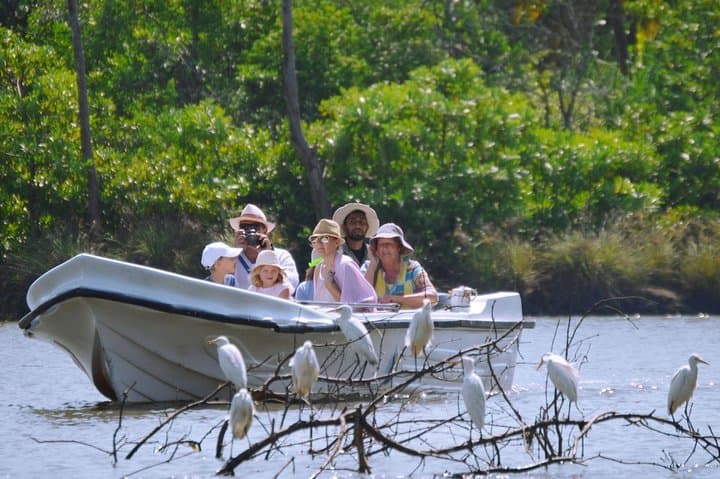
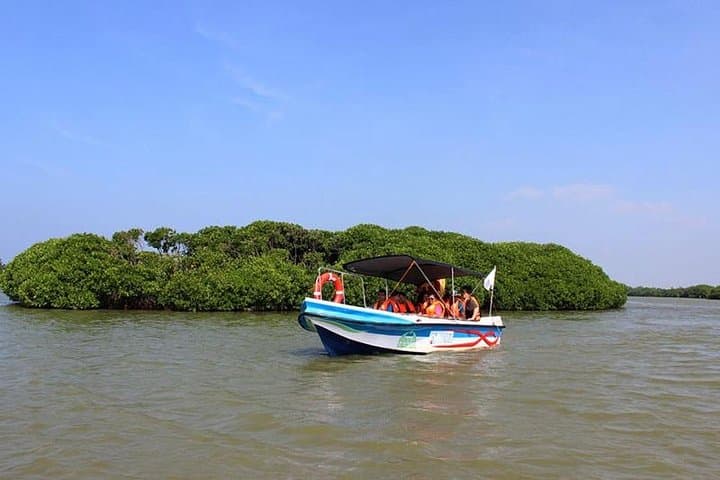
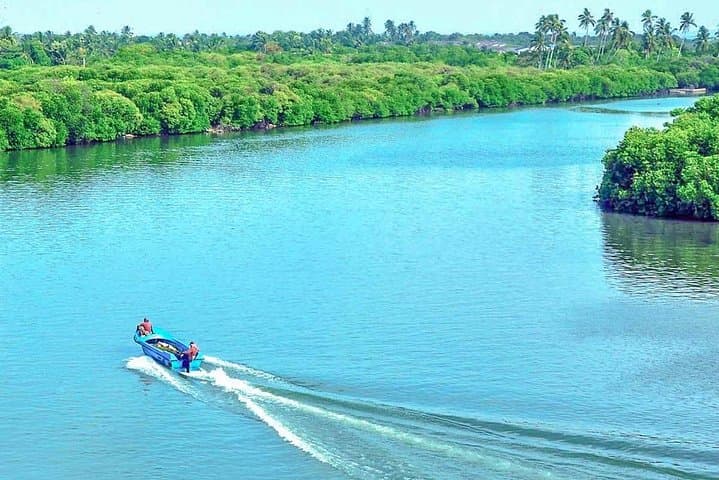
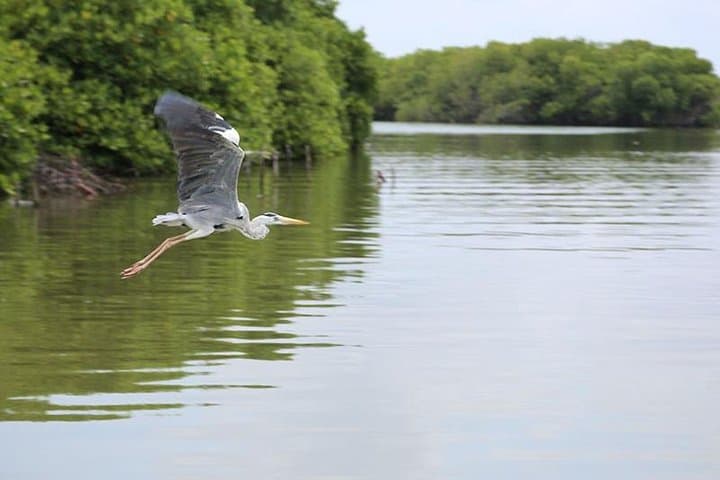
Morning light slices across mangrove crowns as a narrow motorboat parts the green like a pen through paper. The air tastes of brackish water and wet earth; small channels funnel the current and the mangroves lean close, daring you to peer deeper. On this two-hour stretch of the Muthurajawela Wetlands, birds call from branches and a guide points out reed-fringed pools where kingfishers hover and herons stand statue-still.
Morning light slices across mangrove crowns as a narrow motorboat parts the green like a pen through paper. The air tastes of brackish water and wet earth; small channels funnel the current and the mangroves lean close, daring you to peer deeper. On this two-hour stretch of the Muthurajawela Wetlands, birds call from branches and a guide points out reed-fringed pools where kingfishers hover and herons stand statue-still.
This marshland—formed over millennia and recognized as one of Sri Lanka’s 12 priority wetlands—has buffered the coast and stored carbon while supporting dense biodiversity. Geologically it’s young peat and alluvial deposits shaped by tidal rhythms; culturally the wetland sits at the edge of Colombo’s urban sprawl, where fishing hamlets meet conservation initiatives. Local guides often weave natural history with stories of traditional lagoon fisheries and the role the marsh plays in local livelihoods.
Practical guidance: tours depart early to catch peak bird activity and cooler temperatures; expect narrow, low-sided boats and simple boarding. Wear non-slip shoes and long sleeves for sun and insects. Bring binoculars, a hat, and water; avoid strong perfumes that can disturb wildlife. The wetland’s channels are shallow—water levels change with tides and monsoon seasons—so trips can feel intimate and quiet or, in rainy months, broader and more water-filled.
Respect the ecosystem: stay seated during close approaches, do not feed wildlife, and follow guide instructions for safe stopping points. The result is a concentrated, accessible wetland encounter within reach of Colombo—a compact wilderness that rewards attention with close bird sightings and the steady, breathing presence of mangrove forest.