THE ADVENTURE COLLECTIVE® · Independent discovery and booking for outdoor travel

Explore the core Islamic landmarks of Makkah on a focused, respectful half-day route that combines a steep historical hike, sacred plains, and compact museum exhibits. Learn what to expect, how to prepare, and best times to visit these deeply significant sites.
Explore the core Islamic landmarks of Makkah on a focused, respectful half-day route that combines a steep historical hike, sacred plains, and compact museum exhibits. Learn what to expect, how to prepare, and best times to visit these deeply significant sites.
The morning air in Makkah carries a steady cadence of prayer — voices flowing across courtyards, engines humming softly on ring roads, and stone slopes that have seen centuries of passage. Start the day near the Kaaba and you quickly move into a quieter geography: the steep trail up Jabal al-Noor where the Cave of Hira sits, narrow switchbacks cutting through bare rock. From the summit the city folds away; the hills and the plain of Arafat lay out like a map of pilgrimage itself.
Verified experiences and guided adventures in the surrounding area.
Operated by Makkah Tour · Makkah, Makkah Province
The morning air in Makkah carries a steady cadence of prayer — voices flowing across courtyards, engines humming softly on ring roads, and stone slopes that have seen centuries of passage. Start the day near the Kaaba and you quickly move into a quieter geography: the steep trail up Jabal al-Noor where the Cave of Hira sits, narrow switchbacks cutting through bare rock. From the summit the city folds away; the hills and the plain of Arafat lay out like a map of pilgrimage itself.
These stops are archaeological and spiritual waypoints. Jabal al-Noor is where the Prophet Muhammad received the first revelation; Mount Arafat (Jabal al-Rahmah) is the site of the Farewell Sermon and the focal point of the Day of Arafah. Masjid Nimrah and Masjid al-Jinn mark moments in early Islamic practices, and the Museum of the Holy Quran offers manuscripts that trace textual history and preservation.
Geologically, the area is composed of ancient igneous and metamorphic rock — compact, heat-baked ridges that drain quickly and reflect desert sun. Culturally, expect solemnity and cadence: prayer times structure the day and pilgrims’ movement shapes crowds. Local guides keep visits respectful and paced; air-conditioned transport is commonly provided.
Practical guidance: dress modestly and for heat, bring a refillable water bottle and sun protection, and plan the Jabal al-Noor ascent in cooler morning hours — the climb is short but steep with uneven stone steps. Non-Muslims are not permitted to enter Mecca; visitors should time any museum visits and mosque stops outside of peak prayer windows. Carry identification, be ready for pedestrian crowds, and allow extra time for prayer and quiet reflection at each site.
moderate.
5 hours.
Suitable for reasonably fit travelers who can handle short, steep climbs and several hours of walking in heat.
Non-Muslims are not permitted to enter the precincts of the city of Makkah or its holy sites; tours of these Islamic sites are intended for Muslim visitors.
The trail is short but steep, typically taking 45–90 minutes round-trip depending on pace; expect uneven stone steps and brief sections requiring careful footing.
Some sites offer level access and nearby viewpoints, and vehicles with air conditioning are commonly used for transfers, but the Jabal al-Noor ascent is not wheelchair accessible.
Photography policies vary: exterior and general photography is common, but always follow signage and staff guidance inside mosques and the Museum of the Holy Quran where restrictions may apply.
Makkah’s hills and plains are core to Islamic origin stories: the Cave of Hira, the Farewell Sermon at Arafat, and numerous early-mosque sites mark events from the Prophet’s life.
Authorities manage pilgrim flow and infrastructure heavily to protect fragile historic areas; visitors should minimize waste, follow marked paths, and respect restricted zones.
Makkah Tour operates guided outdoor trips and adventures with an emphasis on safety, stewardship, and memorable experiences.
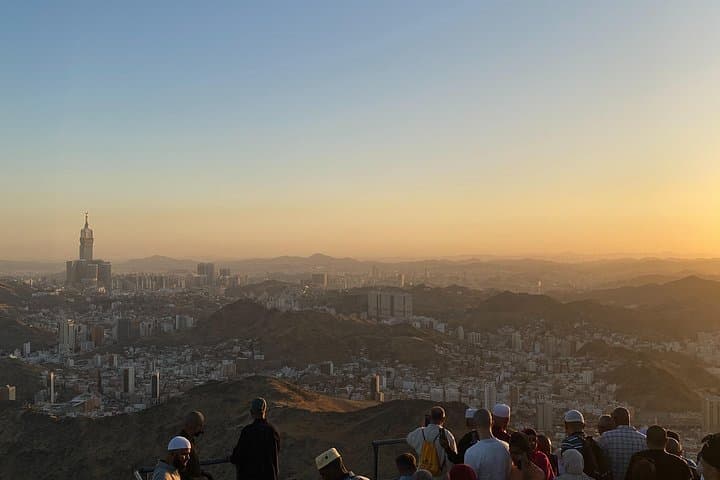
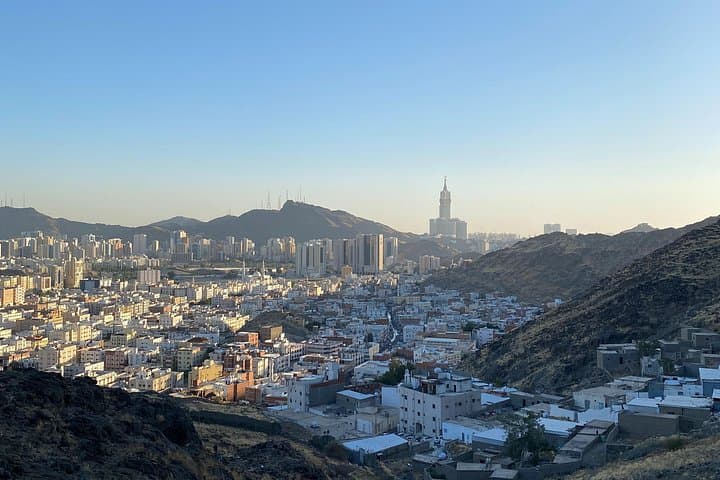
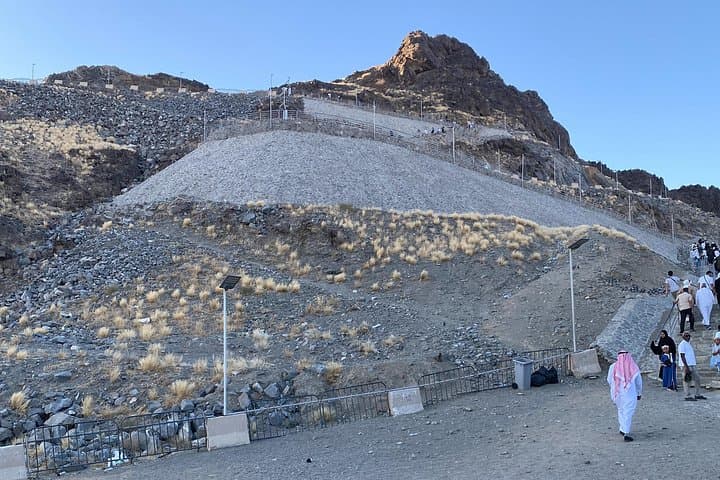
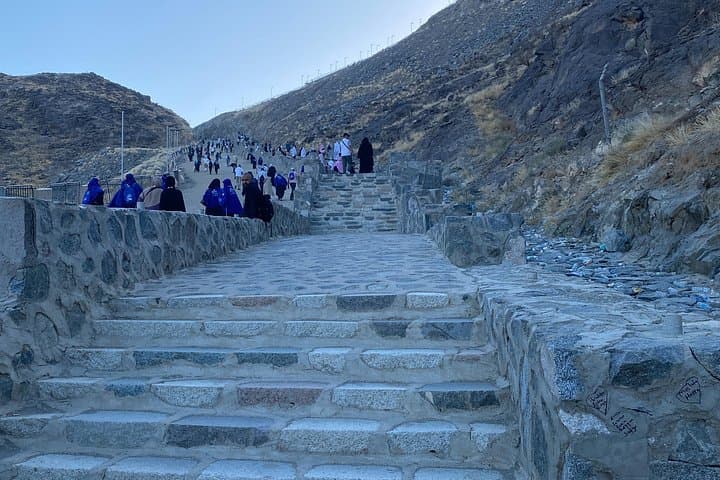
The morning air in Makkah carries a steady cadence of prayer — voices flowing across courtyards, engines humming softly on ring roads, and stone slopes that have seen centuries of passage. Start the day near the Kaaba and you quickly move into a quieter geography: the steep trail up Jabal al-Noor where the Cave of Hira sits, narrow switchbacks cutting through bare rock. From the summit the city folds away; the hills and the plain of Arafat lay out like a map of pilgrimage itself.
The morning air in Makkah carries a steady cadence of prayer — voices flowing across courtyards, engines humming softly on ring roads, and stone slopes that have seen centuries of passage. Start the day near the Kaaba and you quickly move into a quieter geography: the steep trail up Jabal al-Noor where the Cave of Hira sits, narrow switchbacks cutting through bare rock. From the summit the city folds away; the hills and the plain of Arafat lay out like a map of pilgrimage itself.
These stops are archaeological and spiritual waypoints. Jabal al-Noor is where the Prophet Muhammad received the first revelation; Mount Arafat (Jabal al-Rahmah) is the site of the Farewell Sermon and the focal point of the Day of Arafah. Masjid Nimrah and Masjid al-Jinn mark moments in early Islamic practices, and the Museum of the Holy Quran offers manuscripts that trace textual history and preservation.
Geologically, the area is composed of ancient igneous and metamorphic rock — compact, heat-baked ridges that drain quickly and reflect desert sun. Culturally, expect solemnity and cadence: prayer times structure the day and pilgrims’ movement shapes crowds. Local guides keep visits respectful and paced; air-conditioned transport is commonly provided.
Practical guidance: dress modestly and for heat, bring a refillable water bottle and sun protection, and plan the Jabal al-Noor ascent in cooler morning hours — the climb is short but steep with uneven stone steps. Non-Muslims are not permitted to enter Mecca; visitors should time any museum visits and mosque stops outside of peak prayer windows. Carry identification, be ready for pedestrian crowds, and allow extra time for prayer and quiet reflection at each site.