THE ADVENTURE COLLECTIVE® · Independent discovery and booking for outdoor travel

Spend two hours with an expert guide photographing the vivid fungi of Cairns Botanic Gardens. Learn composition and macro techniques while exploring wet-season microhabitats in a small-group walk.
Spend two hours with an expert guide photographing the vivid fungi of Cairns Botanic Gardens. Learn composition and macro techniques while exploring wet-season microhabitats in a small-group walk.
Dawn in Cairns Botanic Gardens feels humid and deliberate — palms drip, leaf litter softens underfoot, and a guide points out a neon-capped mushroom pushing through the mulch. The small group crouches, lenses tilt, and the morning becomes a study in scale: rings, gills and spore-dusted stems rendered by macro glass.
Verified experiences and guided adventures in the surrounding area.
Operated by Aussie Macro Photos · Cairns, Queensland
Dawn in Cairns Botanic Gardens feels humid and deliberate — palms drip, leaf litter softens underfoot, and a guide points out a neon-capped mushroom pushing through the mulch. The small group crouches, lenses tilt, and the morning becomes a study in scale: rings, gills and spore-dusted stems rendered by macro glass.
The gardens sit within the Wet Tropics region, an old and rain-fed landscape whose high humidity creates ideal conditions for fungi. Flecker Botanic Gardens formally expanded in the early 20th century as a living collection of tropical plants; today its planted rainforest fragments, palms and planted water features create microhabitats where saprophytic and mycorrhizal mushrooms thrive.
Local custodianship matters here — the Gardens lie on country of the Gimuy-Walubarra Yidinji people, and the site is managed for education as well as display. Visitors will notice fungal diversity peak during the wet season after sustained rains; the shapes and colors reflect both the soil chemistry and the decay processes at work.
Practical guidance: the two-hour tour is a slow, low-impact walk on flat paths starting at the Nature Playground in Edge Hill. Expect humid conditions, muddy edges and close-up shooting angles; bring a macro lens or a camera that performs well at high ISO, a small tripod or beanbag for stabilization, and closed footwear. The guide/photographer helps with composition and exposure, but basic camera familiarity speeds your workflow. Respect posted signs — do not pick fungi or remove substrate — and aim for early morning light for the richest colors and soft shadows.
moderate.
2 hours.
Suitable for people who can walk several flat garden paths and crouch or kneel briefly; moderate mobility required.
Yes — the meeting point and many main paths in the Botanic Gardens are wheelchair accessible; confirm specific access needs when booking.
No — for conservation and safety, guests must not remove or disturb fungi; guides may demonstrate non-invasive techniques for close study.
The wet season (roughly November–April) produces the most and most colorful fungal fruitings, especially after sustained rain.
Yes, bring your own camera; some operators offer rental equipment but check availability in advance and bring spare batteries and memory cards.
The Flecker Botanic Gardens expanded its tropical plant collections in the early 20th century and now functions as both a conservation and education site within the Wet Tropics.
Stay on paths, avoid disturbing leaf litter, and never collect specimens — the gardens balance public access with scientific and conservation goals.
Aussie Macro Photos operates guided outdoor trips and adventures with an emphasis on safety, stewardship, and memorable experiences.
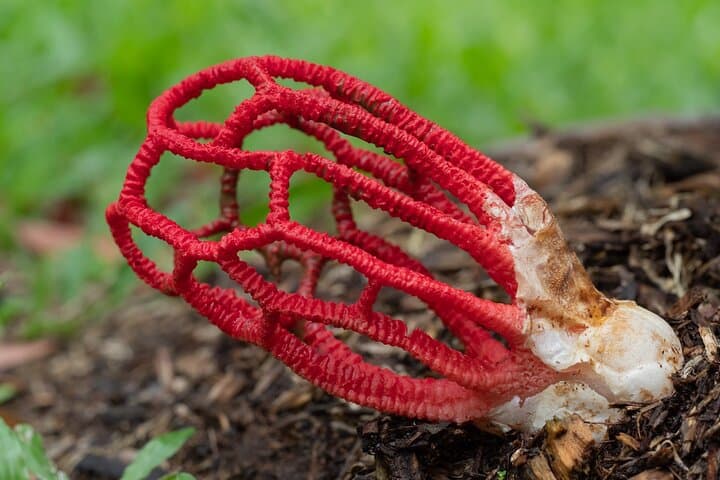
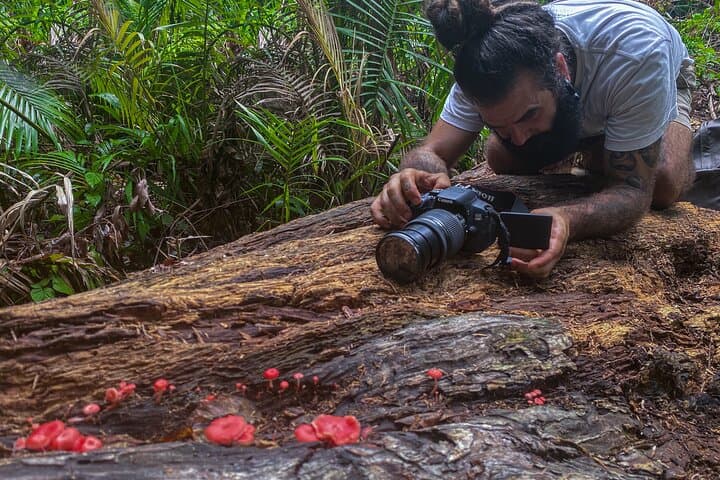
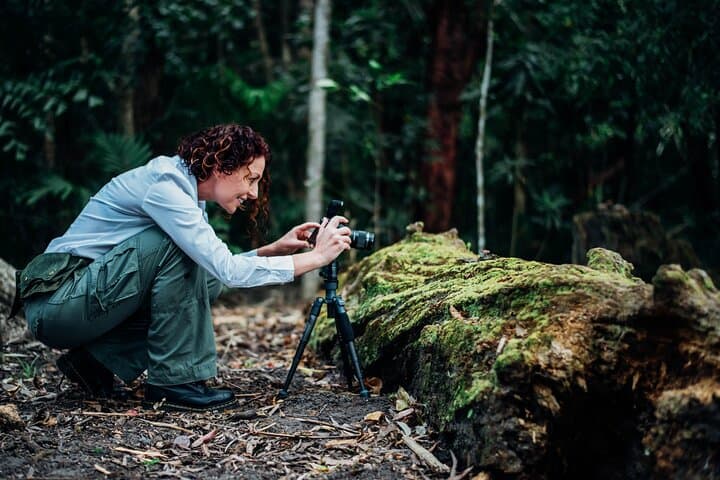
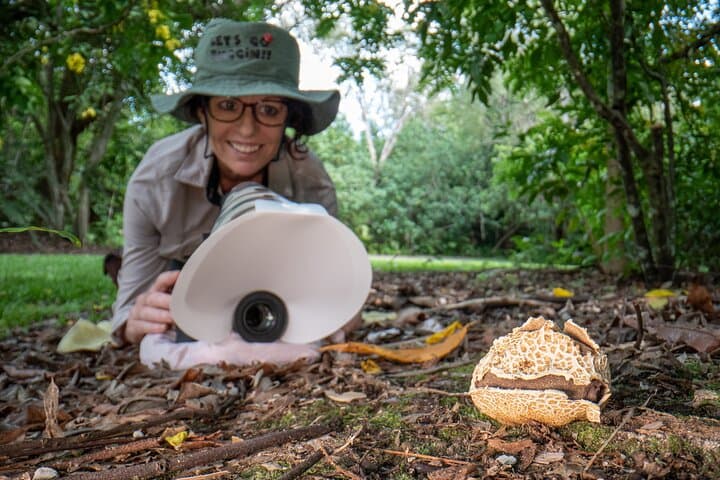
Dawn in Cairns Botanic Gardens feels humid and deliberate — palms drip, leaf litter softens underfoot, and a guide points out a neon-capped mushroom pushing through the mulch. The small group crouches, lenses tilt, and the morning becomes a study in scale: rings, gills and spore-dusted stems rendered by macro glass.
Dawn in Cairns Botanic Gardens feels humid and deliberate — palms drip, leaf litter softens underfoot, and a guide points out a neon-capped mushroom pushing through the mulch. The small group crouches, lenses tilt, and the morning becomes a study in scale: rings, gills and spore-dusted stems rendered by macro glass.
The gardens sit within the Wet Tropics region, an old and rain-fed landscape whose high humidity creates ideal conditions for fungi. Flecker Botanic Gardens formally expanded in the early 20th century as a living collection of tropical plants; today its planted rainforest fragments, palms and planted water features create microhabitats where saprophytic and mycorrhizal mushrooms thrive.
Local custodianship matters here — the Gardens lie on country of the Gimuy-Walubarra Yidinji people, and the site is managed for education as well as display. Visitors will notice fungal diversity peak during the wet season after sustained rains; the shapes and colors reflect both the soil chemistry and the decay processes at work.
Practical guidance: the two-hour tour is a slow, low-impact walk on flat paths starting at the Nature Playground in Edge Hill. Expect humid conditions, muddy edges and close-up shooting angles; bring a macro lens or a camera that performs well at high ISO, a small tripod or beanbag for stabilization, and closed footwear. The guide/photographer helps with composition and exposure, but basic camera familiarity speeds your workflow. Respect posted signs — do not pick fungi or remove substrate — and aim for early morning light for the richest colors and soft shadows.