THE ADVENTURE COLLECTIVE® · Independent discovery and booking for outdoor travel

Meet sled dogs, hear musher stories, and try gold panning on the Taiya River at Dyea—an accessible half-day experience that layers living mushing culture over Gold Rush history. Practical, family-friendly, and rich in hands-on learning.
Meet sled dogs, hear musher stories, and try gold panning on the Taiya River at Dyea—an accessible half-day experience that layers living mushing culture over Gold Rush history. Practical, family-friendly, and rich in hands-on learning.
A cold wind threads through the Sitka spruce as you step off the minivan onto a gravel clearing beside a low, chattering stream. Dogs lift their heads, tongues lolling, and the guide’s voice cuts across the camp: practical, warm, full of names and lineage. This is Dyea—an old Gold Rush corridor where sled dogs remain both sport and working culture, and where the river still carries small, bright hints of the rush for fortune.
Verified experiences and guided adventures in the surrounding area.
Operated by AlaskaX · Dyea, Alaska
A cold wind threads through the Sitka spruce as you step off the minivan onto a gravel clearing beside a low, chattering stream. Dogs lift their heads, tongues lolling, and the guide’s voice cuts across the camp: practical, warm, full of names and lineage. This is Dyea—an old Gold Rush corridor where sled dogs remain both sport and working culture, and where the river still carries small, bright hints of the rush for fortune.
The camp sits on the lower Taiya River drainage at the foot of coastal mountains carved by glaciers. Dyea was once a boomtown in the 1898 Klondike Gold Rush and the stamped-earth roads nearby recall that frantic era; today the landscape is defined by braided streams, muskeg, and the seasonal pulse of meltwater. Mushers will explain kennel management, sled harnessing, and the athletic lineage of the dogs while you meet puppies and veterans alike. After the musher talk, a riverside sluice puts historical prospecting in your hands—learn the motions that separate sand from tiny flakes of gold and the patience that defined Alaska’s early settlers.
Expect short, self-guided walks through dense forest and to nearby falls; trails are uneven and can be muddy. Wear sturdy footwear, layer for variable coastal weather, and bring a small daypack with water and rain protection. Families will find this accessible and educational—bring a camera, respect the kennel rules, and leave no trace. The camp blends living cultural history with a hands-on frontier skill, giving a compact yet authentic Alaskan field experience.
easy.
2–3 hours.
Suitable for most fitness levels; involves short walks and standing during presentations
Yes—this family-friendly tour welcomes children; infants may need to sit on an adult’s lap and kids should always follow handler instructions around dogs.
Gold panning is educational and low-yield; participants often recover small flakes or black sand—large nuggets are extremely rare.
The provider notes wheelchair-accessible options for transportation and portions of the site, but some outdoor paths and sluice banks are uneven—contact the operator for specific accessibility needs.
Morning to early afternoon visits tend to be less crowded and cooler; timing may also depend on nearby cruise schedules if arriving by ship.
Dyea was a major trailhead during the 1898 Klondike Gold Rush; remnants of the Chilkoot Trail route and early stamping-era features remain in the landscape.
Respect riparian zones and kennel rules—stay on marked paths and do not feed wildlife; local operators emphasize small-group visits to limit trampling and disturbance.
AlaskaX operates guided outdoor trips and adventures with an emphasis on safety, stewardship, and memorable experiences.


A cold wind threads through the Sitka spruce as you step off the minivan onto a gravel clearing beside a low, chattering stream. Dogs lift their heads, tongues lolling, and the guide’s voice cuts across the camp: practical, warm, full of names and lineage. This is Dyea—an old Gold Rush corridor where sled dogs remain both sport and working culture, and where the river still carries small, bright hints of the rush for fortune.
A cold wind threads through the Sitka spruce as you step off the minivan onto a gravel clearing beside a low, chattering stream. Dogs lift their heads, tongues lolling, and the guide’s voice cuts across the camp: practical, warm, full of names and lineage. This is Dyea—an old Gold Rush corridor where sled dogs remain both sport and working culture, and where the river still carries small, bright hints of the rush for fortune.
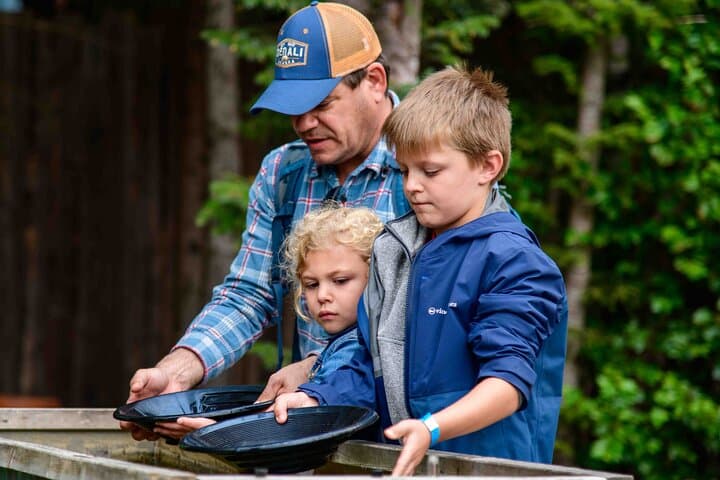
The camp sits on the lower Taiya River drainage at the foot of coastal mountains carved by glaciers. Dyea was once a boomtown in the 1898 Klondike Gold Rush and the stamped-earth roads nearby recall that frantic era; today the landscape is defined by braided streams, muskeg, and the seasonal pulse of meltwater. Mushers will explain kennel management, sled harnessing, and the athletic lineage of the dogs while you meet puppies and veterans alike. After the musher talk, a riverside sluice puts historical prospecting in your hands—learn the motions that separate sand from tiny flakes of gold and the patience that defined Alaska’s early settlers.
Expect short, self-guided walks through dense forest and to nearby falls; trails are uneven and can be muddy. Wear sturdy footwear, layer for variable coastal weather, and bring a small daypack with water and rain protection. Families will find this accessible and educational—bring a camera, respect the kennel rules, and leave no trace. The camp blends living cultural history with a hands-on frontier skill, giving a compact yet authentic Alaskan field experience.