THE ADVENTURE COLLECTIVE® · Independent discovery and booking for outdoor travel

A full-day private drive from Muscat to Nizwa that combines 17th-century forts, terraced mountain villages and ancient falaj irrigation—ideal for travelers who want cultural depth with outdoor moments. Read on for what to expect and how to prepare.
A full-day private drive from Muscat to Nizwa that combines 17th-century forts, terraced mountain villages and ancient falaj irrigation—ideal for travelers who want cultural depth with outdoor moments. Read on for what to expect and how to prepare.
Dawn breaks over Muscat as the road unfurls toward Oman’s interior—rugged escarpments rising like folded pages and the first sip of strong Omani coffee setting the pace. The drive to Nizwa is part of the day: about 160 km (roughly 1.5–2 hours) each way, with highways that give way to narrower mountain roads as you climb into Ad Dakhiliyah.
Verified experiences and guided adventures in the surrounding area.
Operated by Muadh Alqasmi · Nizwa, Ad Dakhiliyah Governorate
Dawn breaks over Muscat as the road unfurls toward Oman’s interior—rugged escarpments rising like folded pages and the first sip of strong Omani coffee setting the pace. The drive to Nizwa is part of the day: about 160 km (roughly 1.5–2 hours) each way, with highways that give way to narrower mountain roads as you climb into Ad Dakhiliyah.
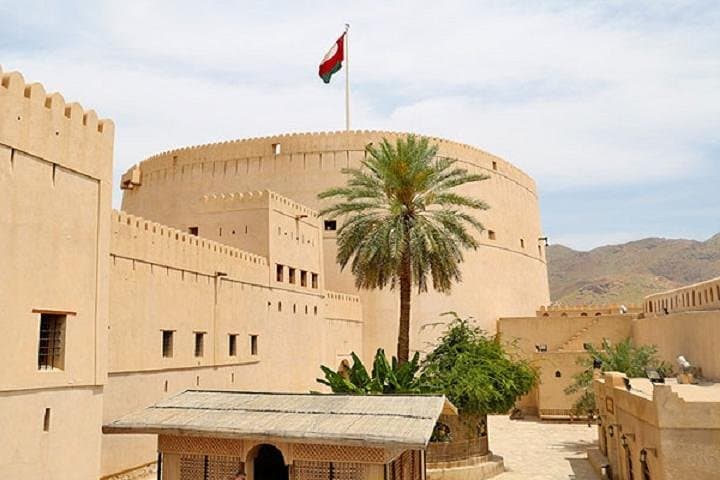
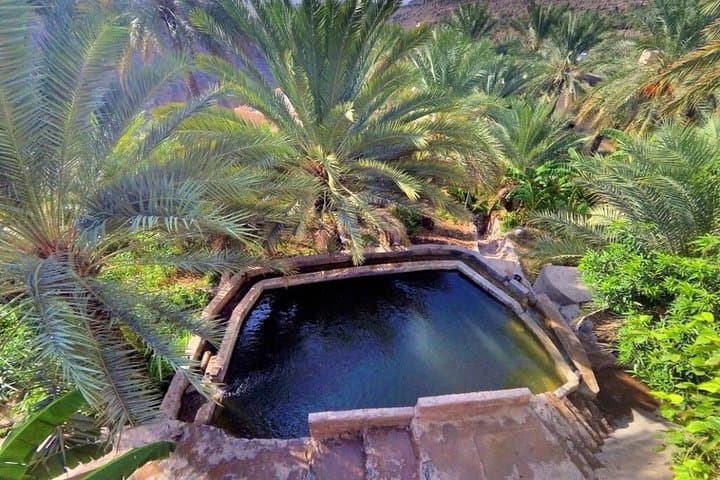
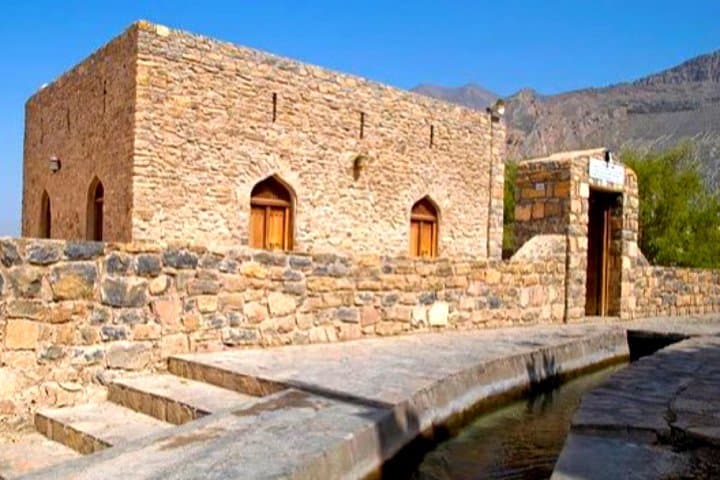
Nizwa Fort dominates the old city: a 17th-century circular keep built around 1660 whose ramparts read the region’s history of tribal power and trade. Nearby, falaj channels—ancient irrigation systems recognized by UNESCO—still thread water into terraced farms at Misfat al Abriyeen, where stone houses cling to steep wadi walls and natural pools invite a cool dip. Birkat Al Mouz offers a quieter echo: a partly ruined village and Falaj Al Khatmeen, one of Oman’s longest traditional waterworks.
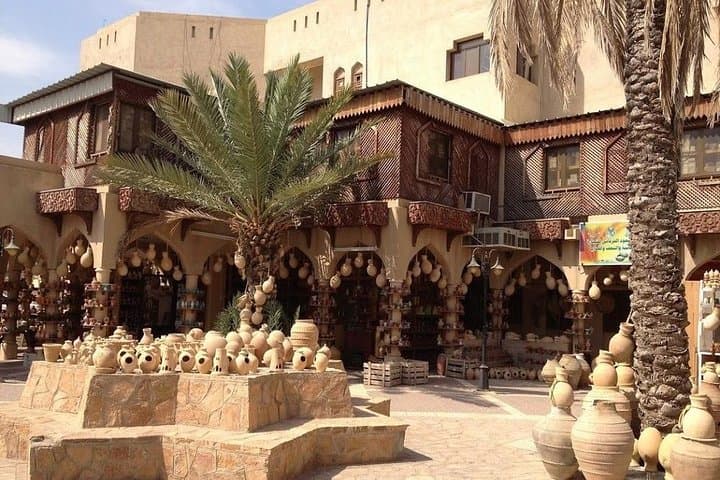
Culturally, the route is frank and tactile: date plantations, goats on terraced fields, and market stalls in Nizwa selling silver khanjars and frankincense. Geologically, limestone and volcanic outcrops shape sudden cliffs and narrow wadis; expect steep steps and slippery rock near pools.
Practical guidance: start early to avoid midday heat, bring at least 2 liters of water, sturdy shoes with grip, sun protection, and modest clothing for village and mosque visits. The day is paced—short guided stops of 30–90 minutes—so plan light layers and a camera with spare battery. Whether you linger by a falaj or climb the fort tower, the route rewards curiosity and sensible preparation.
easy.
9 hours.
Suitable for travelers in normal physical condition; involves short walks, some stair-climbing and uneven ground.
Expect approximately 1.5–2 hours each way depending on traffic and stops; the full private tour runs about 9 hours.
Nizwa Fort admission is typically included in guided itineraries; confirm with the operator for any changes or special events.
The trip is family-friendly, but village streets and fort steps are uneven; strollers may be usable in flat sections but not on steep paths.
You can often dip in a natural pool at Misfat, but bring swimwear and a towel; access depends on local conditions and park rules that day.
Nizwa was a political and religious center for centuries; the fort’s tower was designed for both defense and as a visible seat of power built in the 17th century.
Respect falaj channels and private terraces—these ancient irrigation systems are fragile and critical to local agriculture; avoid walking on irrigated terraces and pack out any trash.
Muadh Alqasmi operates guided outdoor trips and adventures with an emphasis on safety, stewardship, and memorable experiences.
Dawn breaks over Muscat as the road unfurls toward Oman’s interior—rugged escarpments rising like folded pages and the first sip of strong Omani coffee setting the pace. The drive to Nizwa is part of the day: about 160 km (roughly 1.5–2 hours) each way, with highways that give way to narrower mountain roads as you climb into Ad Dakhiliyah.
Dawn breaks over Muscat as the road unfurls toward Oman’s interior—rugged escarpments rising like folded pages and the first sip of strong Omani coffee setting the pace. The drive to Nizwa is part of the day: about 160 km (roughly 1.5–2 hours) each way, with highways that give way to narrower mountain roads as you climb into Ad Dakhiliyah.
Nizwa Fort dominates the old city: a 17th-century circular keep built around 1660 whose ramparts read the region’s history of tribal power and trade. Nearby, falaj channels—ancient irrigation systems recognized by UNESCO—still thread water into terraced farms at Misfat al Abriyeen, where stone houses cling to steep wadi walls and natural pools invite a cool dip. Birkat Al Mouz offers a quieter echo: a partly ruined village and Falaj Al Khatmeen, one of Oman’s longest traditional waterworks.
Culturally, the route is frank and tactile: date plantations, goats on terraced fields, and market stalls in Nizwa selling silver khanjars and frankincense. Geologically, limestone and volcanic outcrops shape sudden cliffs and narrow wadis; expect steep steps and slippery rock near pools.
Practical guidance: start early to avoid midday heat, bring at least 2 liters of water, sturdy shoes with grip, sun protection, and modest clothing for village and mosque visits. The day is paced—short guided stops of 30–90 minutes—so plan light layers and a camera with spare battery. Whether you linger by a falaj or climb the fort tower, the route rewards curiosity and sensible preparation.