THE ADVENTURE COLLECTIVE® · Independent discovery and booking for outdoor travel

Board a traditional Omani dhow at Marina Bandar Rawdha for a 2-hour sunset cruise past Muscat Yacht Club, Sidab fishing village, the Sultan’s Palace and the upscale Al Bustan and Shangri‑La resorts. Kahwa and dates are served aboard—an easy, atmospheric way to see Muscat from the water.
Board a traditional Omani dhow at Marina Bandar Rawdha for a 2-hour sunset cruise past Muscat Yacht Club, Sidab fishing village, the Sultan’s Palace and the upscale Al Bustan and Shangri‑La resorts. Kahwa and dates are served aboard—an easy, atmospheric way to see Muscat from the water.
The dhow slips away from Marina Bandar Rawdha just as the sky begins to cool, the city’s limestone facades softening into ochre. Salted air fills the deck; the mast creaks and the dhow arcs past the Muscat Yacht Club and Sidab fishing boats, the fishermen’s nets bobbing like punctuation marks against the water.
Verified experiences and guided adventures in the surrounding area.
Operated by Oman Day Tours · Muscat, Muscat Governorate
The dhow slips away from Marina Bandar Rawdha just as the sky begins to cool, the city’s limestone facades softening into ochre. Salted air fills the deck; the mast creaks and the dhow arcs past the Muscat Yacht Club and Sidab fishing boats, the fishermen’s nets bobbing like punctuation marks against the water.
This short evening sail is rooted in Oman’s seafaring past—the wooden dhow has been the backbone of Omani trade and coastal life for centuries. Geologically, you skirt the jagged folds of the Al Hajar foothills where sedimentary cliffs drop quickly into the Gulf of Oman, giving way to small coastal coves at Qantab and the sheltered bowl of Bandar Jissah.
Culturally, you’ll pass Muscat’s historic harbor and the Sultan’s Palace—symbols of a port city that long connected Arabia with East Africa and South Asia. Onboard, traditional kahwa and dates are offered, a small ritual of hospitality that links the modern excursion to the region’s customs.
Practical guidance: the cruise runs about 2 hours (plan 2–3 with transfers). Arrive 15–20 minutes early for check-in and passport verification; a current passport is required. The dhow is stable and suitable for most fitness levels, but dress for wind on the water—light layers and sun protection are advisable. Photography is best during the golden hour; binoculars will reward you with coastal vignettes and occasional dolphin sightings. If the forecast brings high winds or rough seas, operators may reschedule; confirm transfer details with your booking. This is an easy, sensory introduction to Muscat from the water—short, social, and atmospheric.
easy.
2–3 hours.
Suitable for all fitness levels; mostly seated with short boarding steps
The dhow cruise lasts about 2 hours; allow 2–3 hours including transfers and check‑in.
Round‑trip private transfer from select hotels or ports is included—confirm your pickup point when booking.
Yes; the activity is rated easy but children must be accompanied by an adult and infant seats are available on request.
Operators may reschedule or cancel for rough seas or unsafe conditions—check cancellation policies and contact the provider if conditions look poor.
The wooden dhow is central to Omani maritime history; Muscat’s harbor served as a trade hub between Arabia, India, and East Africa for centuries.
Respect local marine areas by not throwing waste overboard; many operators support coastal cleanups and avoid disturbing feeding wildlife.
Oman Day Tours operates guided outdoor trips and adventures with an emphasis on safety, stewardship, and memorable experiences.


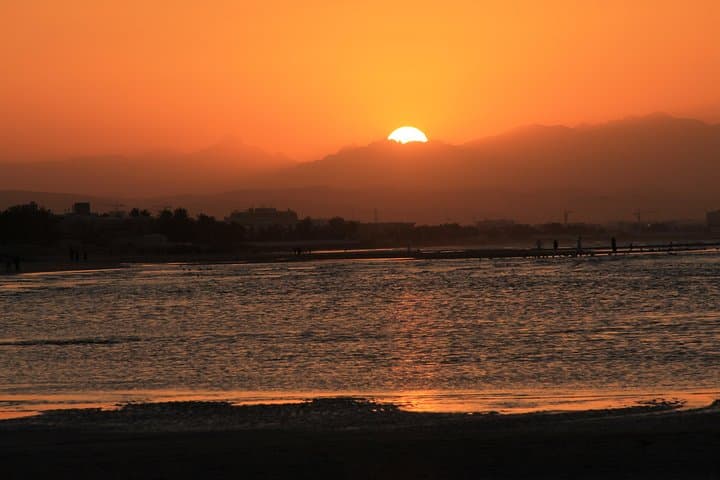
The dhow slips away from Marina Bandar Rawdha just as the sky begins to cool, the city’s limestone facades softening into ochre. Salted air fills the deck; the mast creaks and the dhow arcs past the Muscat Yacht Club and Sidab fishing boats, the fishermen’s nets bobbing like punctuation marks against the water.
The dhow slips away from Marina Bandar Rawdha just as the sky begins to cool, the city’s limestone facades softening into ochre. Salted air fills the deck; the mast creaks and the dhow arcs past the Muscat Yacht Club and Sidab fishing boats, the fishermen’s nets bobbing like punctuation marks against the water.
This short evening sail is rooted in Oman’s seafaring past—the wooden dhow has been the backbone of Omani trade and coastal life for centuries. Geologically, you skirt the jagged folds of the Al Hajar foothills where sedimentary cliffs drop quickly into the Gulf of Oman, giving way to small coastal coves at Qantab and the sheltered bowl of Bandar Jissah.
Culturally, you’ll pass Muscat’s historic harbor and the Sultan’s Palace—symbols of a port city that long connected Arabia with East Africa and South Asia. Onboard, traditional kahwa and dates are offered, a small ritual of hospitality that links the modern excursion to the region’s customs.
Practical guidance: the cruise runs about 2 hours (plan 2–3 with transfers). Arrive 15–20 minutes early for check-in and passport verification; a current passport is required. The dhow is stable and suitable for most fitness levels, but dress for wind on the water—light layers and sun protection are advisable. Photography is best during the golden hour; binoculars will reward you with coastal vignettes and occasional dolphin sightings. If the forecast brings high winds or rough seas, operators may reschedule; confirm transfer details with your booking. This is an easy, sensory introduction to Muscat from the water—short, social, and atmospheric.