THE ADVENTURE COLLECTIVE® · Independent discovery and booking for outdoor travel

Two hours off Muscat’s coast can put you within touching distance of playful dolphins and a living coastline shaped by ocean currents and maritime history. This short cruise pairs wildlife sightings with practical guidance on timing, gear, and accessibility.
Two hours off Muscat’s coast can put you within touching distance of playful dolphins and a living coastline shaped by ocean currents and maritime history. This short cruise pairs wildlife sightings with practical guidance on timing, gear, and accessibility.
The bow parts Muscat’s blue-green water and salt air snaps awake your senses — dolphins soon answer with rolling backs and playful arcs. On a two-hour coastal cruise from Muscat you move from harbor skyline to open sea, watching pods thread the swell while guides point out behavior and calling patterns.
Verified experiences and guided adventures in the surrounding area.
Operated by Sidab Sea Tours · Muscat, Muscat
The bow parts Muscat’s blue-green water and salt air snaps awake your senses — dolphins soon answer with rolling backs and playful arcs. On a two-hour coastal cruise from Muscat you move from harbor skyline to open sea, watching pods thread the swell while guides point out behavior and calling patterns.
Oman’s coastline is shaped by tectonic uplift and the steady push of the Indian Ocean; low limestone headlands give way to sheltered bays and coral platforms where fish, turtles, and dolphins feed. The maritime culture here runs deep: dhows and modern fishing boats share the same horizons that once carried frankincense to far ports. Guides often weave local history — ports, pearl and spice trade routes — into wildlife notes, so the trip reads as both natural and cultural observation.
Expect dynamic sightings rather than guarantees: Indo-Pacific bottlenose and spinner dolphins are common year-round, but sightings depend on currents and where baitfish concentrate. The best light is morning when winds are light and the sea is glassy; late afternoon can be equally dramatic for golden light on the water.
Practical edge: bring sun protection, a light wind layer, and a camera with a zoom. If you’re prone to motion sickness take preventive measures before boarding. Boats typically include bottled water and snacks and are accessible, but check operator rules for infants and special needs. Plan arrival time for check-in, and allow an extra hour before or after the trip to visit the Mutrah fish market or Corniche if your schedule allows.
easy.
2 hours.
Suitable for people of average fitness; involves short periods standing and boarding via marina gangway
No — sightings are common year-round but depend on currents and prey; reputable operators will be transparent about sighting rates.
Yes, but infants usually must sit on an adult’s lap and parents should alert the operator about special needs at booking.
Bring or take motion-sickness medication before boarding, sit midship, and focus on the horizon; some operators provide small remedies but come prepared.
Most standard dolphin-watching cruises are observation-only; ask the operator beforehand if snorkeling stops are included or available as an add-on.
Oman’s coast has been a maritime corridor for millennia—its ports were linked to Indian Ocean trade routes for frankincense, pearls, and spices, shaping local seafaring traditions.
Choose operators that follow no-approach rules and avoid feeding wildlife; marine areas near Muscat include protected bays where disturbance can impact feeding and breeding.
Sidab Sea Tours operates guided outdoor trips and adventures with an emphasis on safety, stewardship, and memorable experiences.
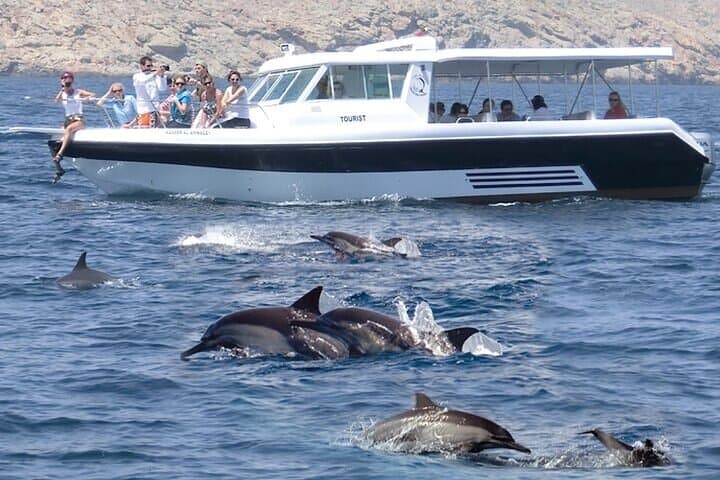


The bow parts Muscat’s blue-green water and salt air snaps awake your senses — dolphins soon answer with rolling backs and playful arcs. On a two-hour coastal cruise from Muscat you move from harbor skyline to open sea, watching pods thread the swell while guides point out behavior and calling patterns.
The bow parts Muscat’s blue-green water and salt air snaps awake your senses — dolphins soon answer with rolling backs and playful arcs. On a two-hour coastal cruise from Muscat you move from harbor skyline to open sea, watching pods thread the swell while guides point out behavior and calling patterns.
Oman’s coastline is shaped by tectonic uplift and the steady push of the Indian Ocean; low limestone headlands give way to sheltered bays and coral platforms where fish, turtles, and dolphins feed. The maritime culture here runs deep: dhows and modern fishing boats share the same horizons that once carried frankincense to far ports. Guides often weave local history — ports, pearl and spice trade routes — into wildlife notes, so the trip reads as both natural and cultural observation.
Expect dynamic sightings rather than guarantees: Indo-Pacific bottlenose and spinner dolphins are common year-round, but sightings depend on currents and where baitfish concentrate. The best light is morning when winds are light and the sea is glassy; late afternoon can be equally dramatic for golden light on the water.
Practical edge: bring sun protection, a light wind layer, and a camera with a zoom. If you’re prone to motion sickness take preventive measures before boarding. Boats typically include bottled water and snacks and are accessible, but check operator rules for infants and special needs. Plan arrival time for check-in, and allow an extra hour before or after the trip to visit the Mutrah fish market or Corniche if your schedule allows.