THE ADVENTURE COLLECTIVE® · Independent discovery and booking for outdoor travel

A compact, 4–5 hour guided loop through Muscat’s leading sights: the Sultan Qaboos Grand Mosque, Royal Opera House, Muttrah Souq and palace viewpoints. Expect cultural context, practical guidance on dress and photography, and easily walkable stops.
A compact, 4–5 hour guided loop through Muscat’s leading sights: the Sultan Qaboos Grand Mosque, Royal Opera House, Muttrah Souq and palace viewpoints. Expect cultural context, practical guidance on dress and photography, and easily walkable stops.
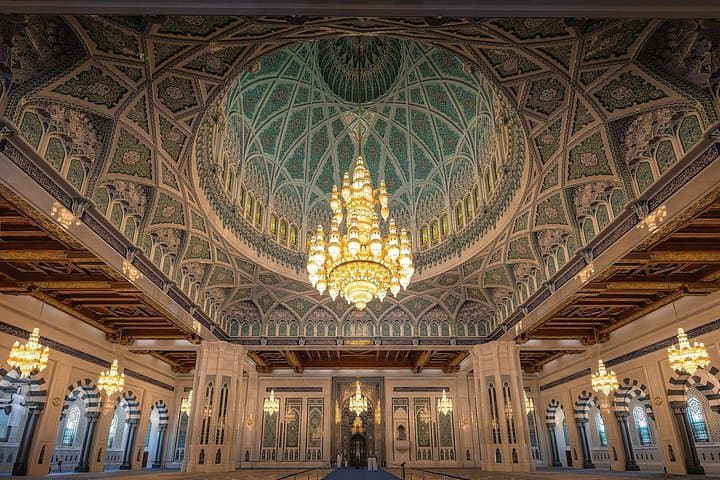
You step from an air-conditioned minivan into a courtyard of pale marble where the sun lays a slow hand on a vast domed ceiling — this is Sultan Qaboos Grand Mosque, the tour's opening act.
Verified experiences and guided adventures in the surrounding area.
Operated by GidOman · Muscat, Muscat Governorate
You step from an air-conditioned minivan into a courtyard of pale marble where the sun lays a slow hand on a vast domed ceiling — this is Sultan Qaboos Grand Mosque, the tour's opening act.
The route moves like a daylong conversation with Muscat: ceremonial architecture, seaside markets and palace façades. The mosque, completed in 2001, showcases imported marble, hand-woven carpets and crystal chandeliers; nearby the Royal Opera House speaks to Oman’s modern cultural investment. At Muttrah Souq, spices and brassware crowd narrow alleys where bargaining is part practical skill and part social ritual.
Geology frames the city — granite hills slope abruptly into the Gulf of Oman, and forts cling to headlands that once controlled trade routes. Culture here is measured and visible: dress codes at religious sites, ritual hospitality in cafés, and forts that mark centuries of coastal defense.
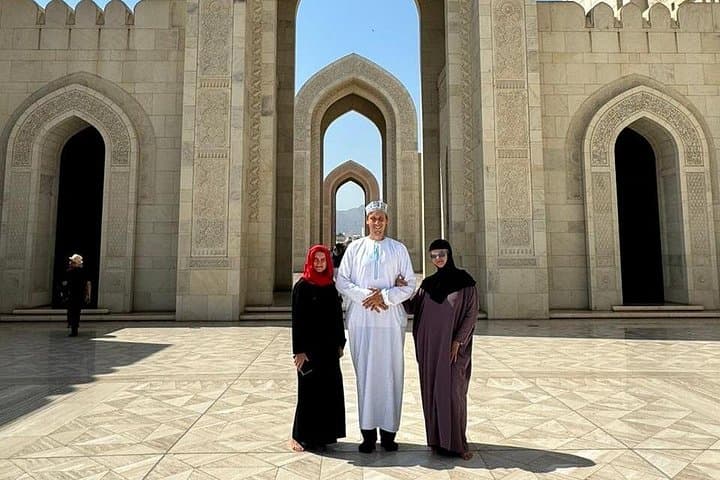
Expect a paced, 4–5 hour loop with photo stops at Al Alam Palace and a short museum visit at Bait Al Zubair; guides provide local context and bottled water on board. Practicalities are straightforward: modest dress and a headscarf for women are required at the mosque, shoes are removed before entering prayer areas, and mornings are cooler for walking the souq. Wear closed-toe shoes for uneven alleys, carry sunscreen, and allow time to absorb the rhythms of bargaining and tea culture.
This is a city tour that balances monumentality with approachable urban life — efficient transport, focused stops, and a clear sense of place make it a useful primer for first-time visitors to Muscat.
easy.
4–5 hours.
Suitable for most fitness levels; involves standing and short walks up to 30–60 minutes at each stop
Yes, women must wear a headscarf and both men and women should wear long sleeves and long trousers; modest clothing is enforced at the entrance.
No, the tour typically offers an external or group-viewing stop at the Opera House; paid admission to performances is separate.
Photography is allowed in public areas; avoid photographing people without permission and follow guide instructions near the palace for restricted vantage points.
Yes — the itinerary notes stroller accessibility and infant seating; expect short walking segments and vehicle transfers between sites.
Muscat’s coastal forts and palaces reflect its strategic role in Indian Ocean trade; Sultan Qaboos commissioned the Grand Mosque as a national symbol opened in 2001.
Oman faces water scarcity and sensitive coastal ecosystems; stick to marked paths, avoid disturbing marine life, and minimize single-use plastics to reduce impact.
GidOman operates guided outdoor trips and adventures with an emphasis on safety, stewardship, and memorable experiences.
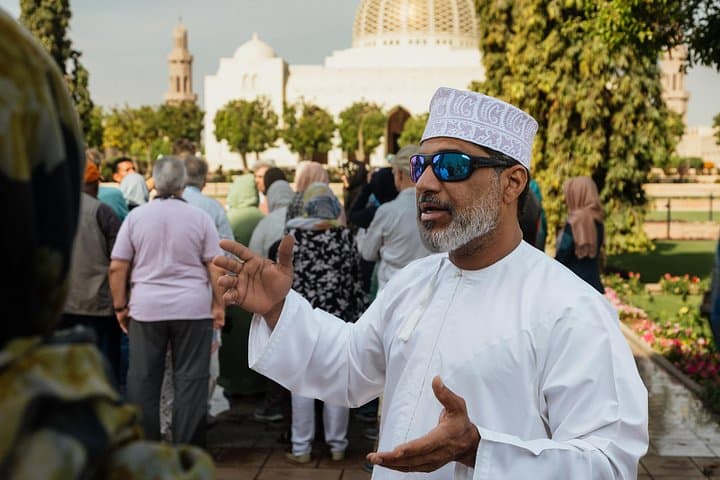
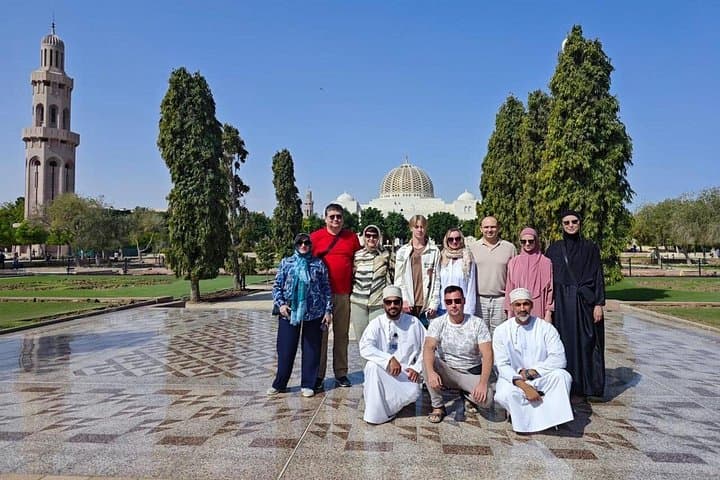
You step from an air-conditioned minivan into a courtyard of pale marble where the sun lays a slow hand on a vast domed ceiling — this is Sultan Qaboos Grand Mosque, the tour's opening act.
You step from an air-conditioned minivan into a courtyard of pale marble where the sun lays a slow hand on a vast domed ceiling — this is Sultan Qaboos Grand Mosque, the tour's opening act.
The route moves like a daylong conversation with Muscat: ceremonial architecture, seaside markets and palace façades. The mosque, completed in 2001, showcases imported marble, hand-woven carpets and crystal chandeliers; nearby the Royal Opera House speaks to Oman’s modern cultural investment. At Muttrah Souq, spices and brassware crowd narrow alleys where bargaining is part practical skill and part social ritual.
Geology frames the city — granite hills slope abruptly into the Gulf of Oman, and forts cling to headlands that once controlled trade routes. Culture here is measured and visible: dress codes at religious sites, ritual hospitality in cafés, and forts that mark centuries of coastal defense.
Expect a paced, 4–5 hour loop with photo stops at Al Alam Palace and a short museum visit at Bait Al Zubair; guides provide local context and bottled water on board. Practicalities are straightforward: modest dress and a headscarf for women are required at the mosque, shoes are removed before entering prayer areas, and mornings are cooler for walking the souq. Wear closed-toe shoes for uneven alleys, carry sunscreen, and allow time to absorb the rhythms of bargaining and tea culture.
This is a city tour that balances monumentality with approachable urban life — efficient transport, focused stops, and a clear sense of place make it a useful primer for first-time visitors to Muscat.