THE ADVENTURE COLLECTIVE® · Independent discovery and booking for outdoor travel

Walk Austin’s gaslit streets after dark and hear true stories of 19th-century crime, hauntings, and the city features that still hold those memories. This 90-minute, adult-focused tour blends local history with immersive storytelling.
Walk Austin’s gaslit streets after dark and hear true stories of 19th-century crime, hauntings, and the city features that still hold those memories. This 90-minute, adult-focused tour blends local history with immersive storytelling.
Night tightens across downtown Austin and the gas lamps throw long, honest shadows. You join a small band of walkers beneath the low hum of traffic, footsteps echoing off limestone façades as a guide peels back layers of the city’s rougher 19th-century chapters. The Driskill’s grand staircase, a boarded merchant’s alley, and the last surviving moonlight towers all become stages for stories of violent crimes, restless spirits, and a city reshaped by loss.
Verified experiences and guided adventures in the surrounding area.
Operated by Ghost City Tours Austin · Austin, Texas
Night tightens across downtown Austin and the gas lamps throw long, honest shadows. You join a small band of walkers beneath the low hum of traffic, footsteps echoing off limestone façades as a guide peels back layers of the city’s rougher 19th-century chapters. The Driskill’s grand staircase, a boarded merchant’s alley, and the last surviving moonlight towers all become stages for stories of violent crimes, restless spirits, and a city reshaped by loss.
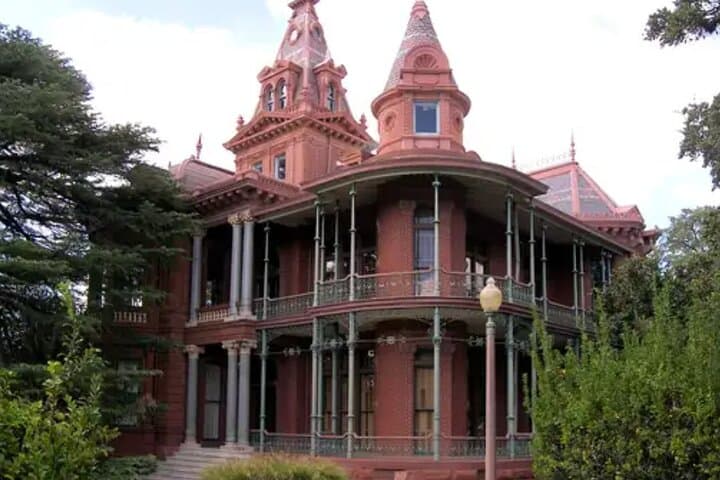
Austin’s downtown sits on the edge of the Edwards Plateau; limestone bedrock and the Colorado River have directed the city’s growth and given its streets a compact, walkable geometry that keeps old neighborhoods close. The moonlight towers — late-1800s experiments in urban lighting — still punctuate the lore here, and the Driskill Hotel’s redbrick shell carries Victorian-era scandals in its margins. The tour threads cultural notes with cold facts: Victorian attitudes toward crime, how early policing worked, and how public spaces became places of memory.
Practically, expect 90 minutes of paved sidewalks and short stair segments. The walking pace is moderate and the material is mature; guides may discuss suicide, murder, and other sensitive topics. Bring a small flashlight for alleys, wear sturdy shoes for uneven curbs, and arrive 10 minutes early to check in at 214 W 4th St (look for the Big D sign by DuMont’s). Tours run year-round after dark — in summer, bring water; in winter, layer up. Respect historic properties and private entrances; stay with the group and follow the guide’s directions for the best experience.
easy.
1.5 hours.
Minimal fitness required — able to stand and walk on paved sidewalks for 90 minutes
Meet at 214 W 4th St next to the Big D sign at DuMont's; tours start promptly—arrive 10 minutes early to check in.
The operator notes wheelchair accessibility; contact them in advance for specific assistance and meeting logistics.
This tour is intended for guests aged 16 and older due to mature themes; ID may be requested on arrival.
Full refunds are available when canceled at least 24 hours before the scheduled departure time; tours may cancel for weather or insufficient bookings.
Austin’s downtown grew rapidly in the late 1800s; crowded streets, evolving policing, and new technologies like moonlight towers shaped both daily life and the stories that followed acts of violence.
Respect for historic buildings and street furniture helps preserve the urban fabric; stay on public sidewalks, avoid touching preserved interiors, and obey local regulations to minimize impact.
Ghost City Tours Austin operates guided outdoor trips and adventures with an emphasis on safety, stewardship, and memorable experiences.
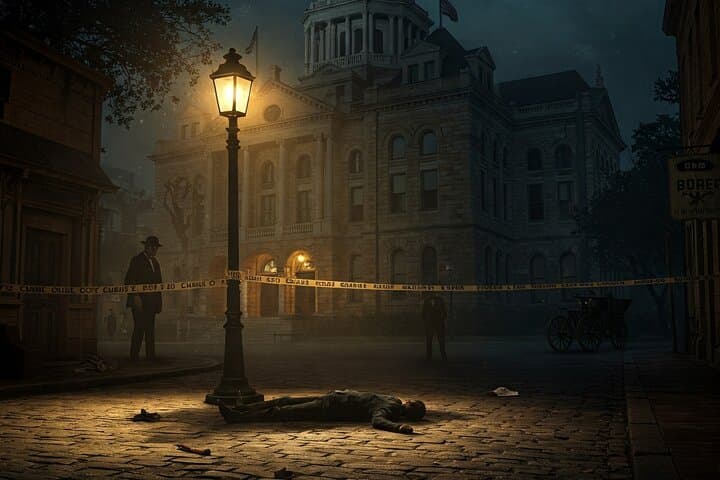

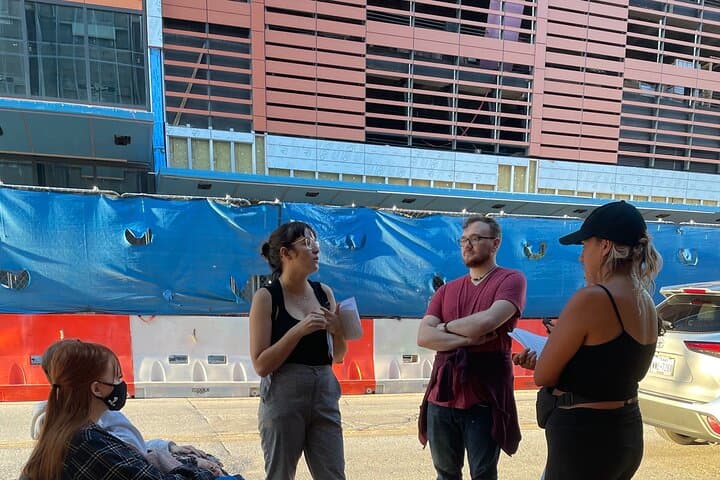
Night tightens across downtown Austin and the gas lamps throw long, honest shadows. You join a small band of walkers beneath the low hum of traffic, footsteps echoing off limestone façades as a guide peels back layers of the city’s rougher 19th-century chapters. The Driskill’s grand staircase, a boarded merchant’s alley, and the last surviving moonlight towers all become stages for stories of violent crimes, restless spirits, and a city reshaped by loss.
Night tightens across downtown Austin and the gas lamps throw long, honest shadows. You join a small band of walkers beneath the low hum of traffic, footsteps echoing off limestone façades as a guide peels back layers of the city’s rougher 19th-century chapters. The Driskill’s grand staircase, a boarded merchant’s alley, and the last surviving moonlight towers all become stages for stories of violent crimes, restless spirits, and a city reshaped by loss.
Austin’s downtown sits on the edge of the Edwards Plateau; limestone bedrock and the Colorado River have directed the city’s growth and given its streets a compact, walkable geometry that keeps old neighborhoods close. The moonlight towers — late-1800s experiments in urban lighting — still punctuate the lore here, and the Driskill Hotel’s redbrick shell carries Victorian-era scandals in its margins. The tour threads cultural notes with cold facts: Victorian attitudes toward crime, how early policing worked, and how public spaces became places of memory.
Practically, expect 90 minutes of paved sidewalks and short stair segments. The walking pace is moderate and the material is mature; guides may discuss suicide, murder, and other sensitive topics. Bring a small flashlight for alleys, wear sturdy shoes for uneven curbs, and arrive 10 minutes early to check in at 214 W 4th St (look for the Big D sign by DuMont’s). Tours run year-round after dark — in summer, bring water; in winter, layer up. Respect historic properties and private entrances; stay with the group and follow the guide’s directions for the best experience.