THE ADVENTURE COLLECTIVE® · Independent discovery and booking for outdoor travel

Walk the Letchmi Hills around Munnar for six hours of tea gardens, rainforest, grassland and spice plots. This guided trek moves through seven landscapes and pairs natural history with hands-on local insights.
Walk the Letchmi Hills around Munnar for six hours of tea gardens, rainforest, grassland and spice plots. This guided trek moves through seven landscapes and pairs natural history with hands-on local insights.
You step onto a narrow track at dawn on Letchmi Hills and the hills answer with cool, wet air and the sharp scent of crushed tea leaves. The path threads between manicured tea terraces, a strip of rainforest that seems to breathe, open grassland that lets the sky push forward, and small spice gardens tucked like shaded secrets. Over six hours you move through seven distinct landscapes — each with a slightly different green.
Verified experiences and guided adventures in the surrounding area.
Operated by Amazing Munnar Tourism · Munnar, Kerala
You step onto a narrow track at dawn on Letchmi Hills and the hills answer with cool, wet air and the sharp scent of crushed tea leaves. The path threads between manicured tea terraces, a strip of rainforest that seems to breathe, open grassland that lets the sky push forward, and small spice gardens tucked like shaded secrets. Over six hours you move through seven distinct landscapes — each with a slightly different green.
Munnar sits on the high slopes of the Western Ghats, a geologic uplift of ancient gneiss and laterite soils that support one of India’s richest montane floras. The tea gardens here date to the late 19th century when colonial planters reshaped slopes and local labor practices evolved around plantation life; today you’ll pass simple field houses and terraces that keep that history visible.
Locals grow cardamom, pepper and clove in small plots, and keen ears pick up Malayalam and the soft rhythm of village life. Wildlife is present but discreet: monkeys and birds move through the canopy; the region is a biodiversity hotspot with endemic species tucked in higher ridges.
Practically: expect uneven trails, muddy sections in wet months, and sustained walking for up to six hours. Start early to catch the light and avoid mid-afternoon showers, wear sturdy boots, bring layered rain protection, 1–1.5 liters of water plus snacks, and a small first-aid kit. Guides typically point out tea techniques and local plant uses; follow their lead on private land access. Leave no trace — these slopes sustain both families and fragile ecosystems, and a light footprint keeps the hill green for the next group.
easy.
6 hours.
Able to walk up to six hours at a steady, moderate pace on uneven ground; suitable for most fitness levels.
The activity is approximately 6 hours on marked paths and plantation trails, covering multiple small climbs and descents.
Yes—organizers list it as suitable for all fitness levels, though participants should be able to walk steadily for several hours.
Local guides lead the route and typically explain tea cultivation, spice farming and basic natural-history notes about the Western Ghats.
All sales are final; the operator cancels only for bad weather but typically does not offer refunds for customer cancellations.
Tea cultivation expanded here in the late 19th century under British planters, reshaping land use and creating the terraces still worked today.
The Western Ghats are a biodiversity hotspot; stick to trails, avoid single-use plastics, and follow local guidelines to reduce impact.
Amazing Munnar Tourism operates guided outdoor trips and adventures with an emphasis on safety, stewardship, and memorable experiences.
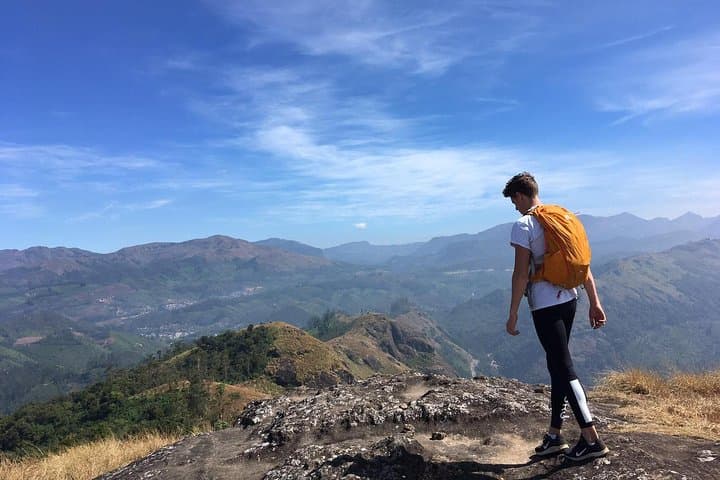
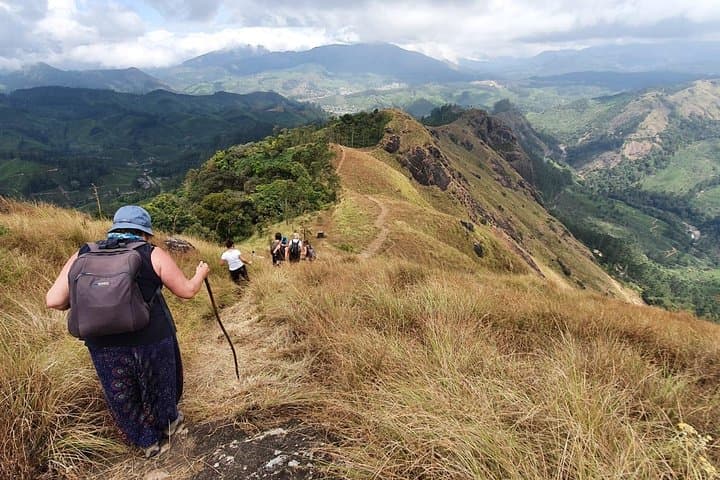
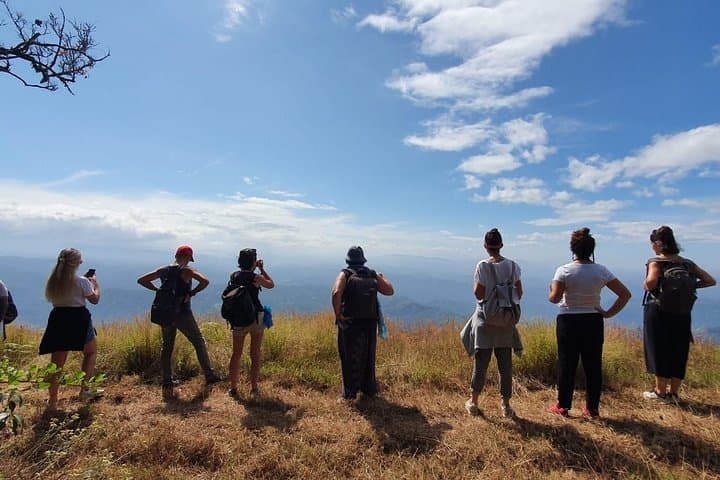
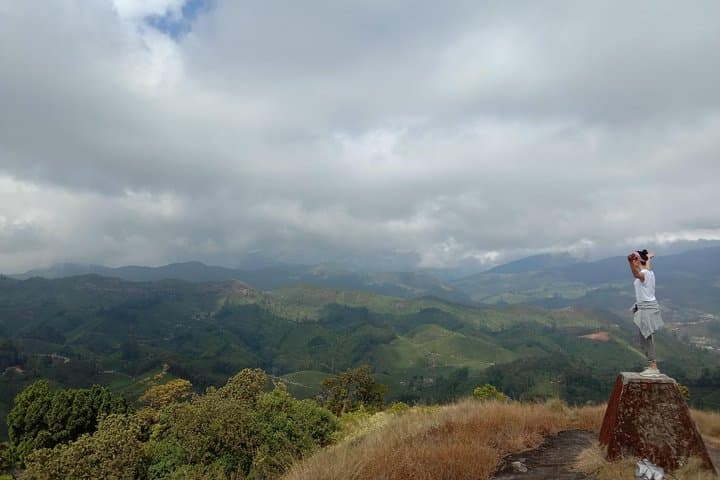
You step onto a narrow track at dawn on Letchmi Hills and the hills answer with cool, wet air and the sharp scent of crushed tea leaves. The path threads between manicured tea terraces, a strip of rainforest that seems to breathe, open grassland that lets the sky push forward, and small spice gardens tucked like shaded secrets. Over six hours you move through seven distinct landscapes — each with a slightly different green.
You step onto a narrow track at dawn on Letchmi Hills and the hills answer with cool, wet air and the sharp scent of crushed tea leaves. The path threads between manicured tea terraces, a strip of rainforest that seems to breathe, open grassland that lets the sky push forward, and small spice gardens tucked like shaded secrets. Over six hours you move through seven distinct landscapes — each with a slightly different green.
Munnar sits on the high slopes of the Western Ghats, a geologic uplift of ancient gneiss and laterite soils that support one of India’s richest montane floras. The tea gardens here date to the late 19th century when colonial planters reshaped slopes and local labor practices evolved around plantation life; today you’ll pass simple field houses and terraces that keep that history visible.
Locals grow cardamom, pepper and clove in small plots, and keen ears pick up Malayalam and the soft rhythm of village life. Wildlife is present but discreet: monkeys and birds move through the canopy; the region is a biodiversity hotspot with endemic species tucked in higher ridges.
Practically: expect uneven trails, muddy sections in wet months, and sustained walking for up to six hours. Start early to catch the light and avoid mid-afternoon showers, wear sturdy boots, bring layered rain protection, 1–1.5 liters of water plus snacks, and a small first-aid kit. Guides typically point out tea techniques and local plant uses; follow their lead on private land access. Leave no trace — these slopes sustain both families and fragile ecosystems, and a light footprint keeps the hill green for the next group.