THE ADVENTURE COLLECTIVE® · Independent discovery and booking for outdoor travel

Walk Munich’s Old Town with a private guide and visit five landmark churches—from the Frauenkirche’s twin domes to Asamkirche’s Rococo interior. Choose a 3- or 4-hour route that includes a climb of St. Peter’s tower for city-and-Alps views on clear days.
Walk Munich’s Old Town with a private guide and visit five landmark churches—from the Frauenkirche’s twin domes to Asamkirche’s Rococo interior. Choose a 3- or 4-hour route that includes a climb of St. Peter’s tower for city-and-Alps views on clear days.
A late-morning in Munich’s Old Town begins at Marienplatz, where the Glockenspiel clicks into motion and the guide nudges you toward narrow lanes lined with baroque facades. You step off the square and into a compact cathedral crawl: domes, gilded altars, carved pulpits and a tower that dares you to climb for an Alpine horizon.
Verified experiences and guided adventures in the surrounding area.
Operated by Rosotravel - Munich · Munich, Bavaria
A late-morning in Munich’s Old Town begins at Marienplatz, where the Glockenspiel clicks into motion and the guide nudges you toward narrow lanes lined with baroque facades. You step off the square and into a compact cathedral crawl: domes, gilded altars, carved pulpits and a tower that dares you to climb for an Alpine horizon.
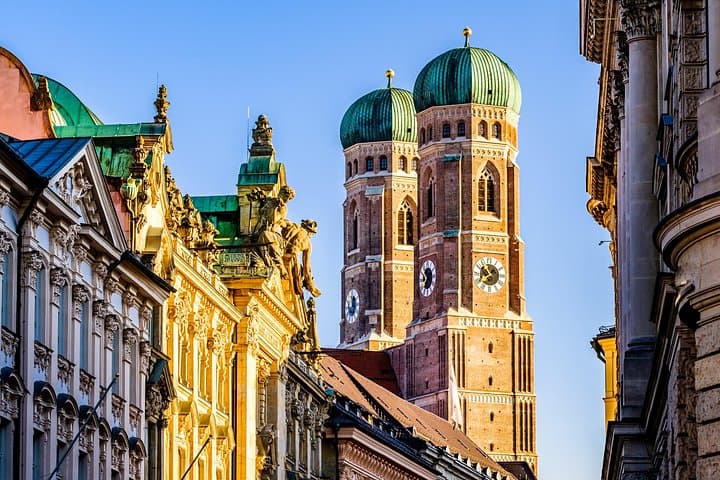
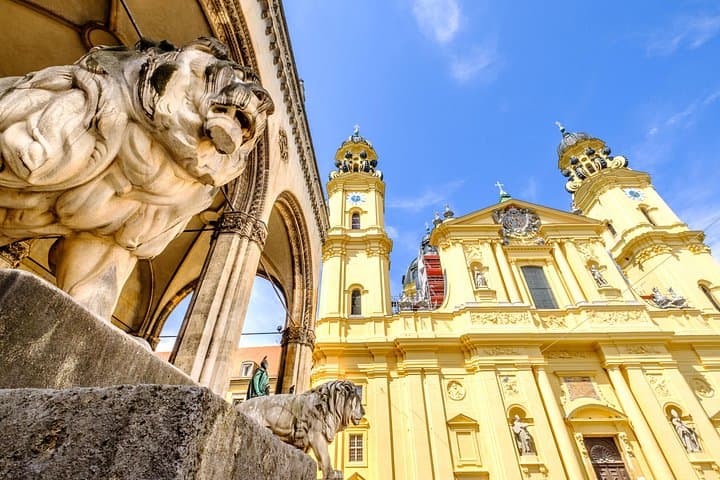
These churches map Munich’s civic and religious history. St. Peter’s (Peterskirche) is the oldest parish church and its tower has watched over traders and processions for centuries; the Frauenkirche’s twin domes anchor the skyline and hold the Devil’s Footprint legend. Asamkirche is a concentrated burst of Rococo detail by brothers who built it as a private chapel. St. Michael’s, a grand Renaissance church, reflects Bavaria’s Counter-Reformation ambitions, and Theatinerkirche’s pale-yellow façade on Odeonsplatz recalls Italian influence after the Thirty Years’ War.
The geology of the region — the broad Munich plain near the Isar — means flat walking, with a chance to see the Alps on clear days from elevated viewpoints. Culture here is tactile: votive offerings, choir music, and conservation work that keeps frescoes visible to the public.
Practical guide: tours run 3–4 hours, are private and wheelchair accessible; the 4-hour option includes St. Peter’s tower access (tower hours typically 12:00–16:30). Churches may restrict entry during services or concerts; bring small cash for donations, wear comfortable shoes, and hope for a clear day if you want Alpine views. The guide provides local stories, skip-the-line entries for most sites, and a walking rhythm that balances detail with time to look up.
easy.
3–4 hours.
Suitable for most fitness levels; involves 2–4 miles of walking on mostly flat city streets and some stairs for tower access.
The 3-hour tour visits four churches; the 4-hour tour adds Theatinerkirche and includes tickets for St. Peter’s tower when available.
Yes—this tour is listed as wheelchair accessible, but access to the St. Peter tower requires climbing stairs and may be excluded for wheelchair users.
Most church entries are covered; the 4-hour option explicitly includes the St. Peter’s tower ticket and free entry to Theatine Church as listed in inclusions.
Guides will provide commentary outside or lower-volume explanations during services; some churches limit tours during mass and special events.
Munich’s major churches trace the city’s growth from medieval market town to Baroque court center; many were rebuilt or embellished during the Counter-Reformation and 17th–18th centuries.
Historic churches rely on donations and careful restoration; visitors are asked to respect interior conservation rules and avoid flash photography where prohibited.
Rosotravel - Munich operates guided outdoor trips and adventures with an emphasis on safety, stewardship, and memorable experiences.
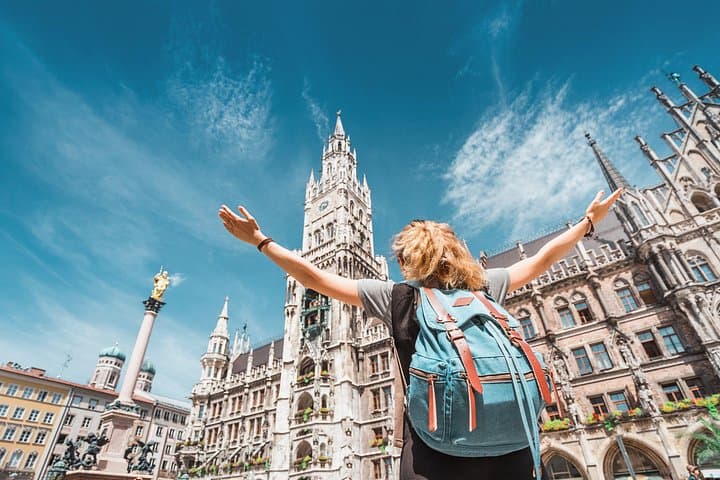
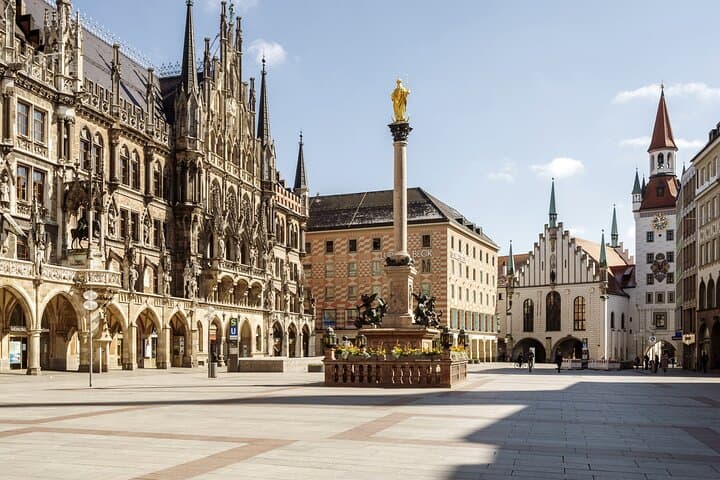
A late-morning in Munich’s Old Town begins at Marienplatz, where the Glockenspiel clicks into motion and the guide nudges you toward narrow lanes lined with baroque facades. You step off the square and into a compact cathedral crawl: domes, gilded altars, carved pulpits and a tower that dares you to climb for an Alpine horizon.
A late-morning in Munich’s Old Town begins at Marienplatz, where the Glockenspiel clicks into motion and the guide nudges you toward narrow lanes lined with baroque facades. You step off the square and into a compact cathedral crawl: domes, gilded altars, carved pulpits and a tower that dares you to climb for an Alpine horizon.
These churches map Munich’s civic and religious history. St. Peter’s (Peterskirche) is the oldest parish church and its tower has watched over traders and processions for centuries; the Frauenkirche’s twin domes anchor the skyline and hold the Devil’s Footprint legend. Asamkirche is a concentrated burst of Rococo detail by brothers who built it as a private chapel. St. Michael’s, a grand Renaissance church, reflects Bavaria’s Counter-Reformation ambitions, and Theatinerkirche’s pale-yellow façade on Odeonsplatz recalls Italian influence after the Thirty Years’ War.
The geology of the region — the broad Munich plain near the Isar — means flat walking, with a chance to see the Alps on clear days from elevated viewpoints. Culture here is tactile: votive offerings, choir music, and conservation work that keeps frescoes visible to the public.
Practical guide: tours run 3–4 hours, are private and wheelchair accessible; the 4-hour option includes St. Peter’s tower access (tower hours typically 12:00–16:30). Churches may restrict entry during services or concerts; bring small cash for donations, wear comfortable shoes, and hope for a clear day if you want Alpine views. The guide provides local stories, skip-the-line entries for most sites, and a walking rhythm that balances detail with time to look up.