THE ADVENTURE COLLECTIVE® · Independent discovery and booking for outdoor travel

Take the train from Munich to Neuschwanstein for a day of alpine panoramas, lakeside walks and a timed castle visit. This guided small-group option walks you through logistics while leaving time to explore Füssen or the lakeshore on your own.
Take the train from Munich to Neuschwanstein for a day of alpine panoramas, lakeside walks and a timed castle visit. This guided small-group option walks you through logistics while leaving time to explore Füssen or the lakeshore on your own.
You step out onto platform 30 at Munich Hauptbahnhof as the city hums behind you, then the train eases west toward ragged ridgelines and lakes that glint like slate coins. The ride is its own transition: urban stations give way to pasture, then the Alps rise, compact and stony, until the village of Hohenschwangau appears beneath Neuschwanstein’s white silhouette.
Verified experiences and guided adventures in the surrounding area.
Operated by Munich Art Tours · Schwangau, Bavaria
You step out onto platform 30 at Munich Hauptbahnhof as the city hums behind you, then the train eases west toward ragged ridgelines and lakes that glint like slate coins. The ride is its own transition: urban stations give way to pasture, then the Alps rise, compact and stony, until the village of Hohenschwangau appears beneath Neuschwanstein’s white silhouette.
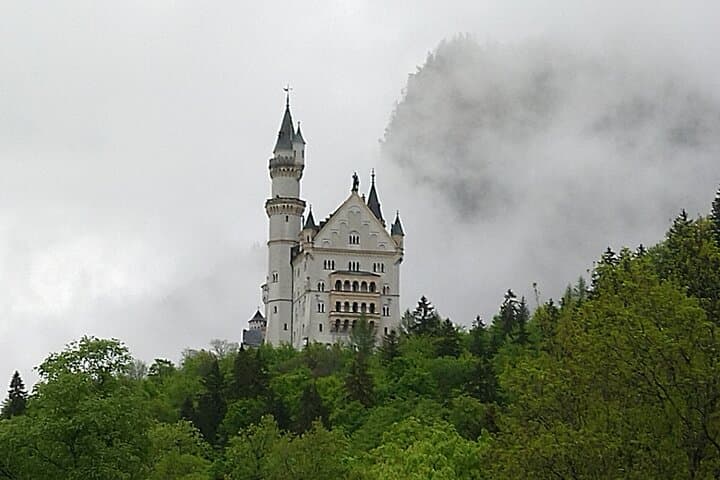
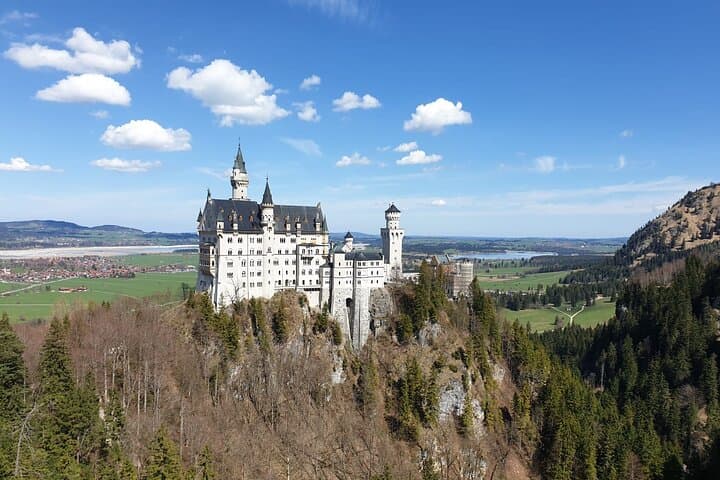
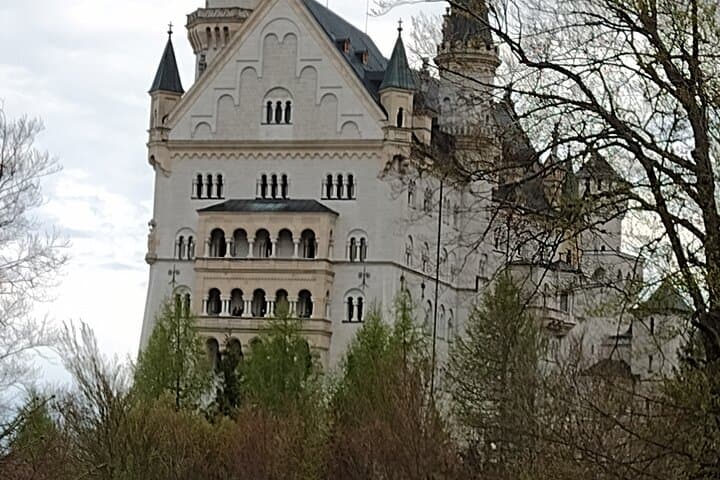
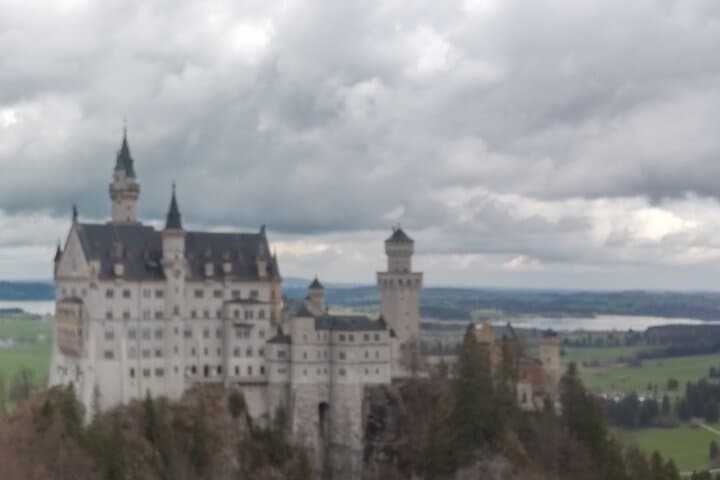
Neuschwanstein is a 19th‑century product of King Ludwig II’s Romantic vision, built atop a limestone ridge that was sculpted by glaciers and streams. From the valley the castle looks theatrical — a deliberate gesture against the alpine backdrop — while the nearby Alpsee reflects forested shorelines and old Bavarian farmhouses. Culture here is quietly Bavarian: small guesthouses, lederhosen at market stalls, and guides who pair local lore with architecture.
Expect a brisk uphill walk or shuttle from the village; paved paths give way to stepped approaches and viewpoints such as Marienbrücke, which frames the best angle of the façade. Inside, note there are roughly 400 interior steps and strictly timed entry slots; audio tours and guided explanations put Ludwig’s obsession into context.
Practical edge: plan 9–10 hours for train travel plus site time, book or request castle tickets in advance, carry layers for sudden mountain weather, and wear shoes that handle both pavement and stone steps. Bring local cash for guide‑collected admission if needed, and be ready to trade the bustle of Munich for crisp alpine air and a very walkable piece of Bavarian history.
moderate.
9–10 hours (full day).
Moderate fitness: able to walk 30–45 minutes uphill and climb multiple flights of stairs within a short period.
Yes — interiors are timed and limited; tell the operator when booking so they can reserve tickets (paid locally to the guide).
Typical S-Bahn/Regional trains to Füssen take about 2 to 2.5 hours, plus a short bus or walk to Hohenschwangau and the castle approach.
The village and lower viewpoints are accessible, but the final approach to Neuschwanstein and the castle interior include steep paths and steps; an elevator is not available for standard tours.
Yes — this option uses your personal train ticket for flexibility, allowing you to return the same day outside the group’s schedule if you prefer.
Neuschwanstein was begun in the late 19th century by King Ludwig II as an idealized medieval palace; it sits near the older Hohenschwangau Castle where Ludwig spent childhood summers.
Visitor numbers are managed through timed entries to reduce wear; stick to marked paths, pack out waste, and respect fragile lakeshore habitats.
Munich Art Tours operates guided outdoor trips and adventures with an emphasis on safety, stewardship, and memorable experiences.
You step out onto platform 30 at Munich Hauptbahnhof as the city hums behind you, then the train eases west toward ragged ridgelines and lakes that glint like slate coins. The ride is its own transition: urban stations give way to pasture, then the Alps rise, compact and stony, until the village of Hohenschwangau appears beneath Neuschwanstein’s white silhouette.
You step out onto platform 30 at Munich Hauptbahnhof as the city hums behind you, then the train eases west toward ragged ridgelines and lakes that glint like slate coins. The ride is its own transition: urban stations give way to pasture, then the Alps rise, compact and stony, until the village of Hohenschwangau appears beneath Neuschwanstein’s white silhouette.
Neuschwanstein is a 19th‑century product of King Ludwig II’s Romantic vision, built atop a limestone ridge that was sculpted by glaciers and streams. From the valley the castle looks theatrical — a deliberate gesture against the alpine backdrop — while the nearby Alpsee reflects forested shorelines and old Bavarian farmhouses. Culture here is quietly Bavarian: small guesthouses, lederhosen at market stalls, and guides who pair local lore with architecture.
Expect a brisk uphill walk or shuttle from the village; paved paths give way to stepped approaches and viewpoints such as Marienbrücke, which frames the best angle of the façade. Inside, note there are roughly 400 interior steps and strictly timed entry slots; audio tours and guided explanations put Ludwig’s obsession into context.
Practical edge: plan 9–10 hours for train travel plus site time, book or request castle tickets in advance, carry layers for sudden mountain weather, and wear shoes that handle both pavement and stone steps. Bring local cash for guide‑collected admission if needed, and be ready to trade the bustle of Munich for crisp alpine air and a very walkable piece of Bavarian history.