THE ADVENTURE COLLECTIVE® · Independent discovery and booking for outdoor travel

A private, full‑day drive from Munich into Bavaria’s alpine foothills visiting Linderhof and Neuschwanstein. Expect sweeping mountain views, short uphill walks to panoramic points, and a guided, flexible itinerary tailored to your group.
A private, full‑day drive from Munich into Bavaria’s alpine foothills visiting Linderhof and Neuschwanstein. Expect sweeping mountain views, short uphill walks to panoramic points, and a guided, flexible itinerary tailored to your group.
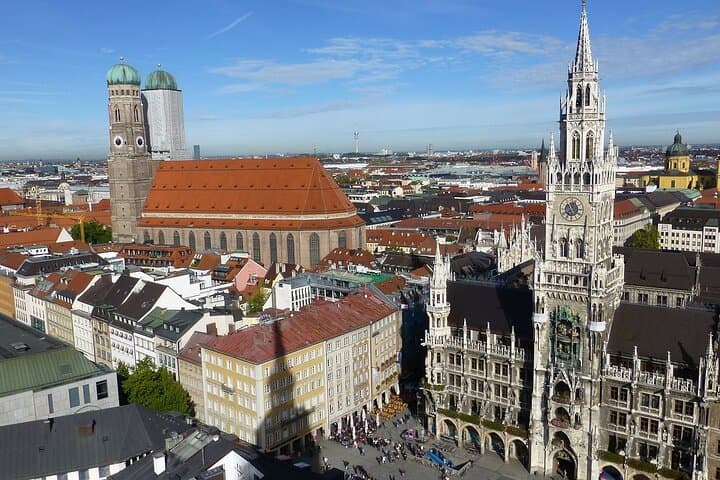
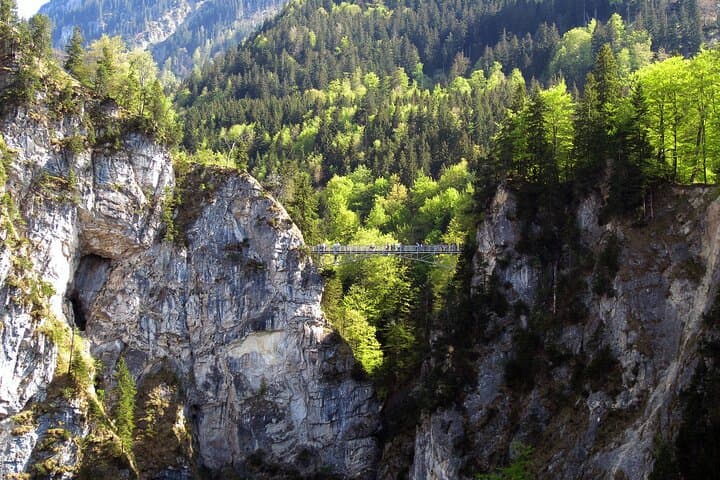
You leave Munich on a quiet morning and the autobahn thins into rolling farmland; the Alps start to lift at the horizon like a promise. In the rearview, the city recedes and village steeples appear between pine and pasture. By the time you climb toward Hohenschwangau, the air tastes sharper and the Pöllat Gorge below the castle seems to pull the valley inward, daring you to peer over the rail.
Verified experiences and guided adventures in the surrounding area.
Operated by Welcome Pickups · Füssen, Bavaria
You leave Munich on a quiet morning and the autobahn thins into rolling farmland; the Alps start to lift at the horizon like a promise. In the rearview, the city recedes and village steeples appear between pine and pasture. By the time you climb toward Hohenschwangau, the air tastes sharper and the Pöllat Gorge below the castle seems to pull the valley inward, daring you to peer over the rail.
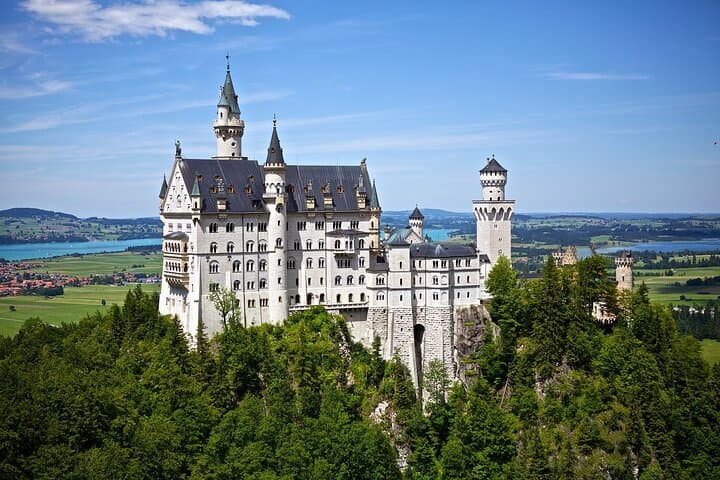
These two 19th‑century projects of King Ludwig II—Linderhof, his intimate Versailles‑in‑Bavaria, and Neuschwanstein, the dramatic hilltop folly—speak to a period of Romantic nationalism and Wagnerian obsession. Geologically the region is young Alpine terrain: limestone ridges, steep-cut gorges, and moraine-shaped valleys carved during the last ice age. Locals still keep small-scale alpine farming and craft traditions alive; Schloss Linderhof’s mirrored grotto and Neuschwanstein’s turrets are cultural oddities set against honest mountain work.
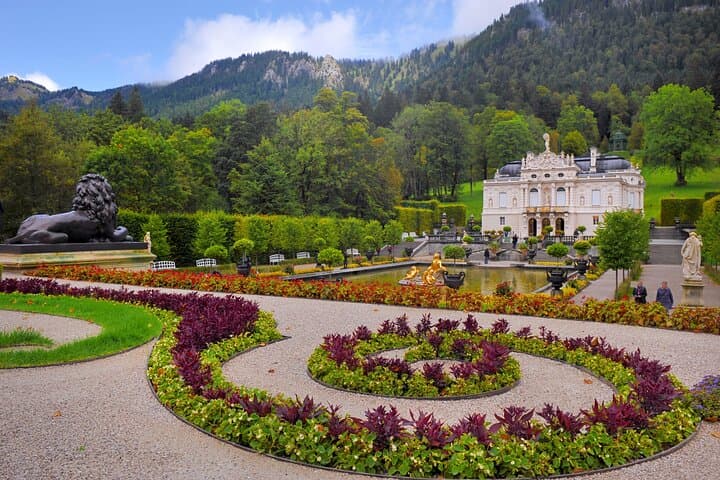
Expect ups and downs: short paved climbs from parking to viewpoints, stairs at the bridge, and forested walking paths around both sites. Photography windows—Marienbrücke and the Linderhof gardens—reward patience with wide alpine panoramas. Carry euros, check attraction opening times in advance, and consider pre-booking castle entry slots; drivers act as informed guides but cannot enter interiors.
Practical guidance: wear supportive shoes for cobbled paths and steps, layer for wind on exposed viewpoints, and bring water—Alpine weather switches fast. If you want flexibility, the private format lets you linger at a viewpoint, add a village stop, or head into nearby trails for a short hike before returning to Munich.
easy.
10 hours.
Suitable for most fitness levels; expect moderate walking with short uphill sections and stairs to viewpoints.
Each direction is about 1.5–2 hours depending on traffic; the full experience is a 10‑hour private daytrip including stops.
This tour provides transport and driver-guide services; verify whether specific ticketed castle tours are included when booking and pre-book timed entries if needed.
Yes—most areas are accessible for families, though access to some interior spaces and steep paths may be limited; infant seats are available on request.
Yes—the private format allows adjustments via the app or directly with your driver, subject to attraction opening hours and travel time constraints.
Both palaces were built in the late 19th century under King Ludwig II, reflecting Romantic ideals and his fascination with opera and medieval imagery.
High visitor numbers strain trails and fragile alpine meadows; stick to marked paths, avoid trampling vegetation, and use official parking and ticketing to support site management.
Welcome Pickups operates guided outdoor trips and adventures with an emphasis on safety, stewardship, and memorable experiences.
You leave Munich on a quiet morning and the autobahn thins into rolling farmland; the Alps start to lift at the horizon like a promise. In the rearview, the city recedes and village steeples appear between pine and pasture. By the time you climb toward Hohenschwangau, the air tastes sharper and the Pöllat Gorge below the castle seems to pull the valley inward, daring you to peer over the rail.
You leave Munich on a quiet morning and the autobahn thins into rolling farmland; the Alps start to lift at the horizon like a promise. In the rearview, the city recedes and village steeples appear between pine and pasture. By the time you climb toward Hohenschwangau, the air tastes sharper and the Pöllat Gorge below the castle seems to pull the valley inward, daring you to peer over the rail.
These two 19th‑century projects of King Ludwig II—Linderhof, his intimate Versailles‑in‑Bavaria, and Neuschwanstein, the dramatic hilltop folly—speak to a period of Romantic nationalism and Wagnerian obsession. Geologically the region is young Alpine terrain: limestone ridges, steep-cut gorges, and moraine-shaped valleys carved during the last ice age. Locals still keep small-scale alpine farming and craft traditions alive; Schloss Linderhof’s mirrored grotto and Neuschwanstein’s turrets are cultural oddities set against honest mountain work.
Expect ups and downs: short paved climbs from parking to viewpoints, stairs at the bridge, and forested walking paths around both sites. Photography windows—Marienbrücke and the Linderhof gardens—reward patience with wide alpine panoramas. Carry euros, check attraction opening times in advance, and consider pre-booking castle entry slots; drivers act as informed guides but cannot enter interiors.
Practical guidance: wear supportive shoes for cobbled paths and steps, layer for wind on exposed viewpoints, and bring water—Alpine weather switches fast. If you want flexibility, the private format lets you linger at a viewpoint, add a village stop, or head into nearby trails for a short hike before returning to Munich.