THE ADVENTURE COLLECTIVE® · Independent discovery and booking for outdoor travel

Walk Munich’s Old Town with a private guide on a focused two-hour tour tracing the sites of the Third Reich. Expect flat, paved routes, frank historical interpretation, and meaningful memorials tucked into the city center.
Walk Munich’s Old Town with a private guide on a focused two-hour tour tracing the sites of the Third Reich. Expect flat, paved routes, frank historical interpretation, and meaningful memorials tucked into the city center.
A gray morning in Marienplatz puts the city's stone façades into relief: coats of arms and carved faces watch as your guide gathers the group and unfolds a story that changed the 20th century.
Verified experiences and guided adventures in the surrounding area.
Operated by Radius Tours GmbH · Munich, Bavaria
A gray morning in Marienplatz puts the city's stone façades into relief: coats of arms and carved faces watch as your guide gathers the group and unfolds a story that changed the 20th century.
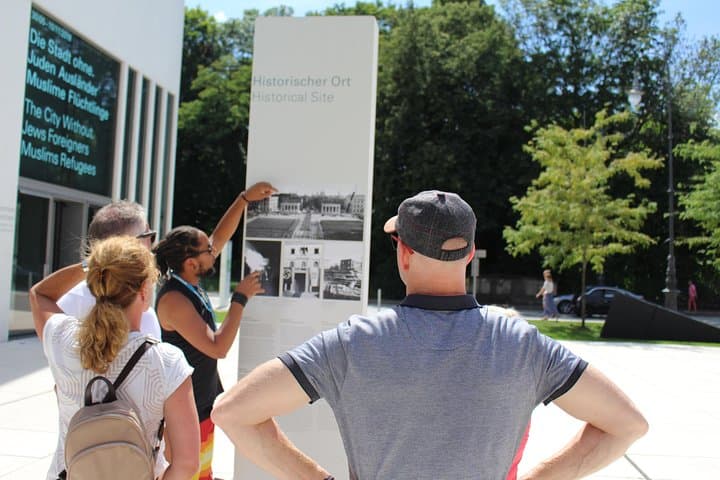
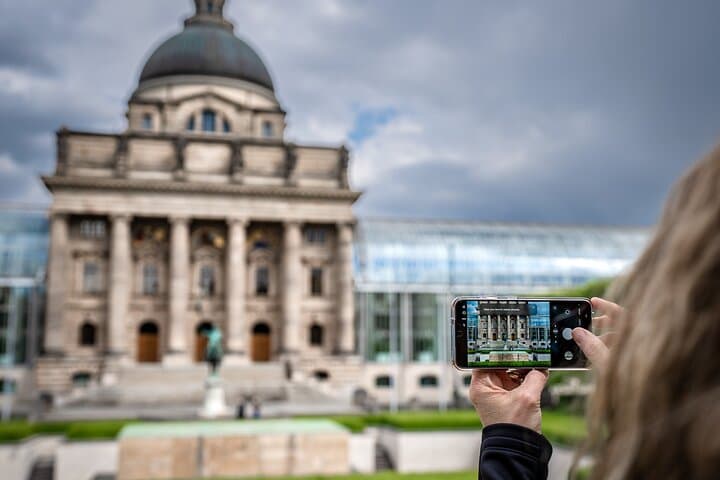
This private, two-hour walking tour threads the Old Town streets where the Nazi movement rose from agitation to power. You move from the center square past the Hofbräuhaus and to sites where meetings, speeches and party offices once stood; a quiet stop at the Memorial to the Victims of Nazism reframes the familiar city center as a landscape of memory.
Munich sits on the Bavarian plain beside the Isar—geology that shaped trade routes and a compact medieval street plan that concentrates history into short walks. The tour balances architecture and documentary context: early 20th-century beer halls, postwar memorials, and period façades that survived wartime bombing.
Local culture is direct; Germans are frank about this chapter of history and expect respectful engagement. Guides typically present primary facts, contemporaneous images, and survivor testimony to ground the narrative.
Practical notes: the route is flat and mostly paved, wheelchair-accessible, and suitable for all fitness levels. Book a private tour for focused questions and hotel pickup; morning departures avoid the midday crowds and summer heat. Wear comfortable shoes, bring water and a compact umbrella in unpredictable weather, and allow time after the tour to visit the nearby pinakothek museums or the quiet St. Michael’s church crypt for further reflection.
easy.
2 hours.
Suitable for most fitness levels; requires ability to stand and walk on paved streets for up to two hours.
Yes—this private walking tour uses mainly paved, level routes in the Old Town and is listed as wheelchair-accessible; notify the operator at booking for any specific transport needs.
Photography is generally allowed in public spaces, but guides may request silence or no photos at memorials and sensitive sites—follow their guidance.
Hotel pickup and drop-off are included as part of the private tour; you’ll be asked for pickup details when you book.
Guides commonly operate in English and German; request your preferred language at booking and confirm availability.
Munich was a political crucible in the 1920s–30s: it hosted early National Socialist meetings and key party infrastructure before becoming the ceremonial ‘Capital of the Movement.’
Sites and memorials are actively preserved; visitors are asked to behave respectfully, avoid touching plaques or installations, and follow local signage to minimize wear on historic fabric.
Radius Tours GmbH operates guided outdoor trips and adventures with an emphasis on safety, stewardship, and memorable experiences.
A gray morning in Marienplatz puts the city's stone façades into relief: coats of arms and carved faces watch as your guide gathers the group and unfolds a story that changed the 20th century.
A gray morning in Marienplatz puts the city's stone façades into relief: coats of arms and carved faces watch as your guide gathers the group and unfolds a story that changed the 20th century.
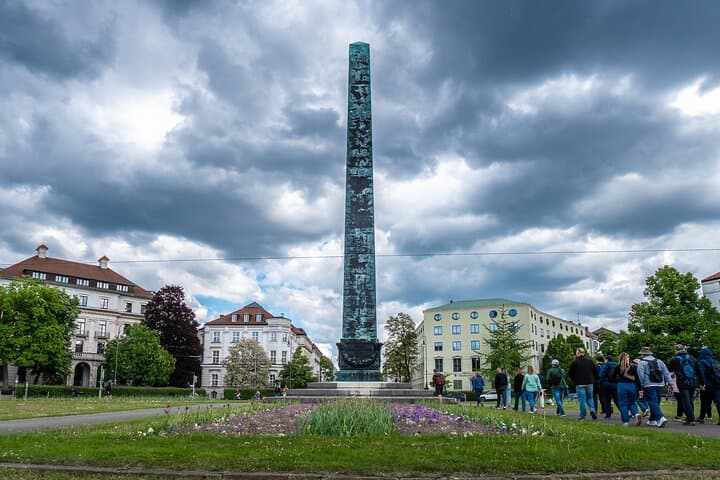
This private, two-hour walking tour threads the Old Town streets where the Nazi movement rose from agitation to power. You move from the center square past the Hofbräuhaus and to sites where meetings, speeches and party offices once stood; a quiet stop at the Memorial to the Victims of Nazism reframes the familiar city center as a landscape of memory.
Munich sits on the Bavarian plain beside the Isar—geology that shaped trade routes and a compact medieval street plan that concentrates history into short walks. The tour balances architecture and documentary context: early 20th-century beer halls, postwar memorials, and period façades that survived wartime bombing.
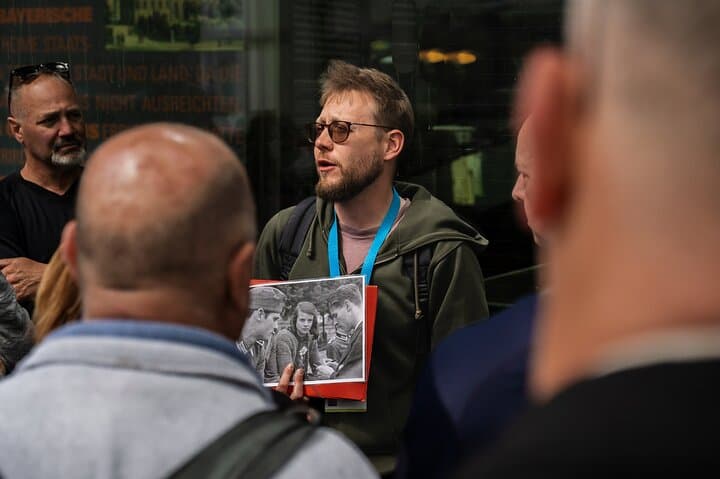
Local culture is direct; Germans are frank about this chapter of history and expect respectful engagement. Guides typically present primary facts, contemporaneous images, and survivor testimony to ground the narrative.
Practical notes: the route is flat and mostly paved, wheelchair-accessible, and suitable for all fitness levels. Book a private tour for focused questions and hotel pickup; morning departures avoid the midday crowds and summer heat. Wear comfortable shoes, bring water and a compact umbrella in unpredictable weather, and allow time after the tour to visit the nearby pinakothek museums or the quiet St. Michael’s church crypt for further reflection.